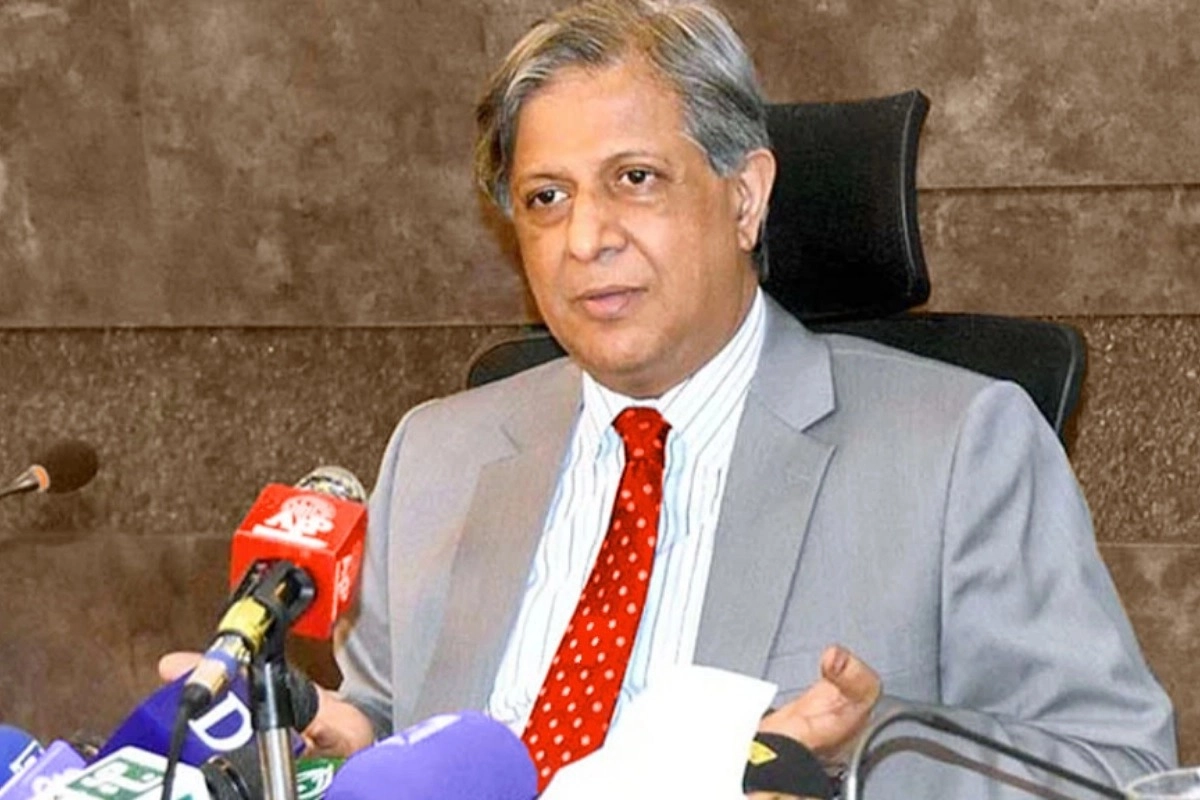


















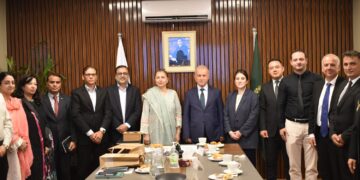
























Lahore: Federal Minister for Law, Justice and Human Rights Senator Azam Nazeer Tarar has emphasized that the articles enshrined in the Constitution of Pakistan 1973 are not mere words on paper but guarantee equality, freedom, and rights. He highlighted that Article 36 of the 1973 Constitution pertains specifically to the protection of the rights of minorities in Pakistan. This article is included in the chapter of the Constitution that outlines the fundamental principles of the state and points to its moral and social responsibilities.
Addressing a ceremony as the chief guest at the Civil Services Academy, he said young people must be made aware that running the country is a shared responsibility. “We must collectively think about building our society. Pakistan today needs those who spread love, not those who merely issue commands,” he remarked.
Azam Nazeer Tarar stressed that all citizens, whether belonging to the majority or minority communities, share a common identity as Pakistanis. “The white color in our national flag is not just a symbol—it should be reflected in our attitudes as well,” he noted. He added that he was present on the Prime Minister’s directive to assure that the dream envisioned by Quaid-e-Azam Muhammad Ali Jinnah and enshrined in the Constitution is not just an aspiration but a living reality. “We are one nation, and we must also turn our attention to the Pakistan that is underprivileged and in need of care,” he said.
The federal minister stated that the Civil Services Academy has a crucial role in producing the builders and public servants of the nation. “This is the institution from where one must set out with a mission. Gone are the days when we viewed affairs through the lens of colonial times. Now is the time for compassion, empathy, and understanding, not hatred,” he underlined. He added that the Academy should produce officers who not only enforce the law but also champion tolerance, and inclusivity.
Senator Tarar also mentioned the establishment of the National Commission for Minority Rights, explaining that it was formed under Articles 20, 26, 27, and 36 of the Constitution to protect minorities, ensure equal opportunities, and promote their inclusion. “These constitutional provisions are not mere formalities—they are a living reality, and implementing them is essential for national progress,” he said.
The Law Minister expressed optimism that if everyone works with sincerity, the day is not far when special measures for minorities will no longer be necessary and every third or fourth officer will naturally be from minority communities. He thanked the Academy’s management, special performers, and all participants, concluding with prayers for Pakistan’s development and interfaith harmony.
Senator Dr. Ramesh Kumar, also addressing the event, noted that the term “non-Muslim” is used in Pakistan’s Constitution instead of “minority” because the latter reflects a narrow mindset. He urged that the word “non-Muslim” should be formally adopted across all institutions, including the Academy.
Senator Kumar also proposed that while a 50% quota is in place for government jobs, the upper age limit for competitive examinations should be raised to 35 years to allow more young people to access opportunities. On this occasion, Civil Services Academy Director General Farhan Aziz Khawaja shed light on the Academy’s objectives and its pivotal role.