




















































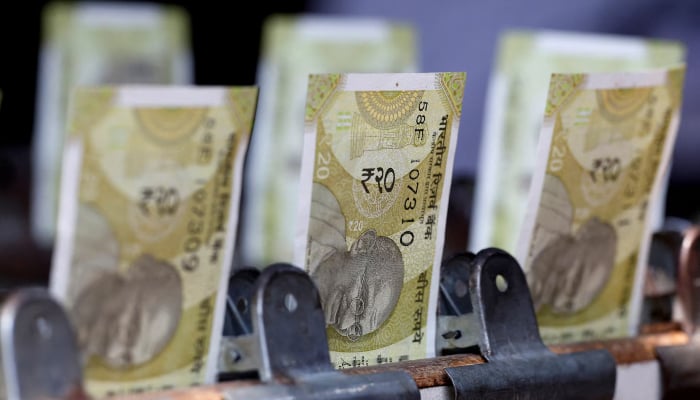
(Reuters): The Indian rupee slipped to a record low against the US dollar on Thursday, reflecting growing market concerns over surging global oil prices and economic fallout from the ongoing US-Iran conflict.
The currency fell to “95.33 per dollar”, down 0.5% intraday, surpassing its previous all-time low of 95.21 recorded in March. It later recovered slightly to trade at 95.19. Since the start of 2026, the rupee has weakened by nearly “6%”, extending losses from the previous year as India faces mounting external pressures, including capital outflows, trade tensions, and rising energy costs.
Oil price surge adds pressure
The rupee’s decline coincided with a sharp rise in global crude oil prices, with Brent crude reaching “$126 per barrel”, the highest level in four years. As a major oil importer, India remains highly vulnerable to energy price shocks, which increase import bills and fuel inflation.
Analysts warn that sustained high oil prices could force the Reserve Bank of India (RBI) to intervene through policy measures, including tighter monetary conditions or steps to reduce dollar demand linked to oil imports.
Foreign investors pull out
Investor sentiment has also weakened, with foreign funds withdrawing more than “$20 billion” from Indian equities and bonds during March and April alone—almost double the total outflows recorded in 2025. Market analysts say persistent currency depreciation could further discourage foreign inflows by reducing investor returns and increasing inflationary pressures through higher import costs.
Outlook remains fragile
Experts caution that if pressure on the rupee continues, it could approach “96.80 per dollar” by year-end, as previously projected by global financial institutions.
The currency also came under additional strain following a more hawkish stance from the US Federal Reserve and ongoing global uncertainty linked to geopolitical tensions.With energy markets volatile and capital flows weakening, India’s currency outlook remains highly sensitive to global developments in the coming months.