














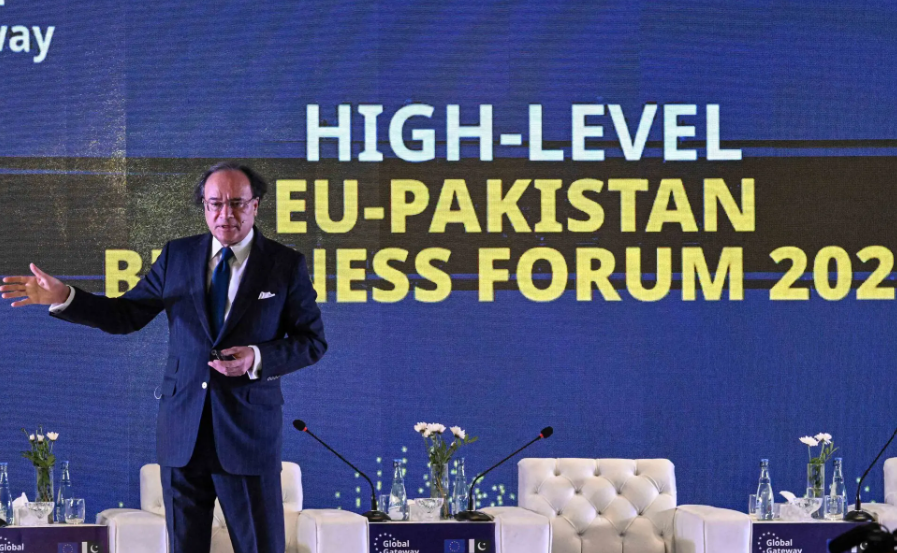
ISLAMABAD: Finance Minister Muhammad Aurangzeb said on Tuesday that Pakistan’s economy is expected to expand by 4% in the current fiscal year, pointing to strengthening macroeconomic indicators as evidence of recovery.
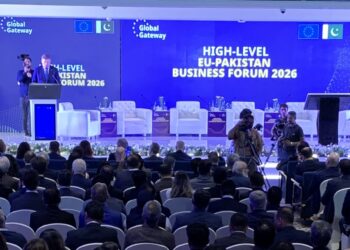
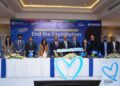
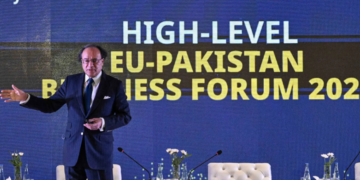
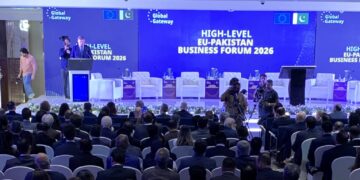
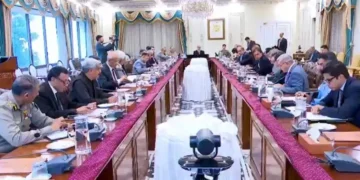
He made these remarks while opening the first high-level EU–Pakistan Business Forum in Islamabad, jointly organised by the European Union and the Government of Pakistan to boost bilateral economic engagement.
The event gathered around 1,000 participants, including senior policymakers, business leaders, investors, and financial institutions from both Europe and Pakistan. Given that the EU is the world’s largest single market, a major source of outward foreign direct investment, and Pakistan’s top export destination, the forum is seen as an important platform to deepen economic ties.
During his presentation, Aurangzeb highlighted notable improvements compared to the previous fiscal year, stating that macroeconomic stability had strengthened. He pointed out that the current account recorded a surplus of just over $1 billion in March.
The State Bank of Pakistan had earlier reported a surplus of $1,070 million for March, up significantly from $23 million in February.
Aurangzeb also noted encouraging trends in IT exports, growth in value-added sectors, and rising remittances. He added that foreign exchange reserves are projected to reach around $18 billion by the end of June, enough to cover three months of imports.
Earlier in April, the Asian Development Bank revised Pakistan’s growth forecast upward to 3.5% for the ongoing fiscal year. Meanwhile, the National Accounts Committee reported that the economy grew by 3.89% during the October–December quarter of FY26, compared to 2.18% in the same period last year.
Haroon Akhtar Khan, Special Assistant to the Prime Minister on Industries and Production, also addressed the forum. He emphasized that while the EU remains Pakistan’s largest export destination—particularly under the GSP+ scheme—the relationship must evolve beyond trade toward investment, technology partnerships, and integration into global value chains.
EU Ambassador Raimundas Karobolis highlighted the strength of economic ties, stating: “It is a source of pride for me to say that the EU is the top export destination for Pakistan. The purpose of the forum is not just to celebrate our trade relations, but to deepen, diversify, ‘green’, and transform them into long-lasting investments. Through this, our mutual prosperity will thrive”.
The forum also marked the launch of the EU-Pakistan Business Network, bringing together over 300 European companies operating in Pakistan to facilitate dialogue and support new investment opportunities.
Sessions during the event focused on sectors such as agribusiness, fintech, green logistics, sustainable textiles, and responsible mining. More than 600 business-to-business meetings are scheduled, reflecting strong interest in partnerships and joint ventures.
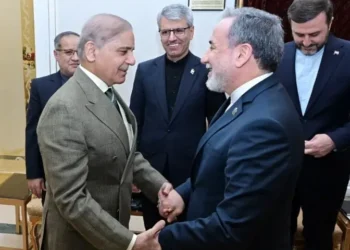
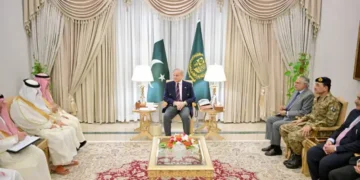
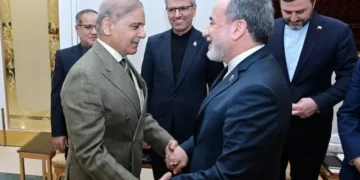
Separately, Prime Minister Shehbaz Sharif met EU officials and business representatives at the Prime Minister’s House. He reiterated that the EU is Pakistan’s largest trading partner and expressed confidence that the forum would further strengthen trade and investment ties.
The prime minister reaffirmed Pakistan’s commitment to economic stability despite regional challenges, including rising oil prices. Referring to the Middle East situation, he noted that he had held discussions with EU Council President Antonio Costa on regional security and bilateral relations.
The EU delegation praised Pakistan’s role in regional peace efforts and highlighted strong potential for expanding business ties in sectors such as energy, communications, and IT.