

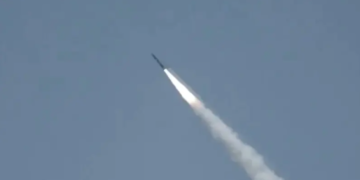







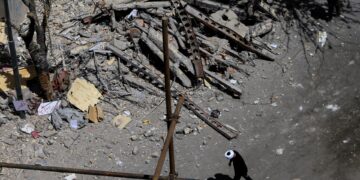






















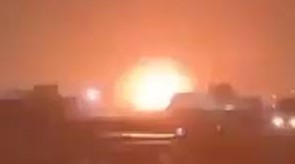
News Desk (MNN); Qatar’s Ministry of Interior confirmed on Wednesday that civil defence teams were responding to a fire at the country’s main gas facility following an Iranian missile strike, marking a serious escalation in the ongoing regional conflict.
In an official statement, QatarEnergy reported “extensive damage” to the Ras Laffan Industrial City after what it described as missile attacks. Despite the scale of the damage, the company confirmed that all personnel were safe and no casualties had been reported so far.
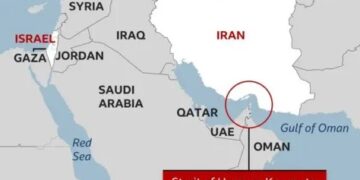
The incident comes amid rapidly intensifying tensions after Iran warned it would target oil and gas installations across the Gulf region. The warning followed Israeli strikes on Iran’s South Pars gas field, further fuelling the broader confrontation linked to the ongoing United States-Israel conflict with Tehran.
Iran had specifically identified key energy sites as potential targets, including Qatar’s Mesaieed Petrochemical Complex, Mesaieed Holding Company, and Ras Laffan Refinery. It also named facilities in Saudi Arabia such as the Samref Refinery and Jubail Petrochemical Complex, as well as the Al Hosn gasfield in the United Arab Emirates.
Reacting strongly, Qatar’s Ministry of Foreign Affairs condemned the attack, calling it a “brutal” act and a clear violation of national sovereignty. The ministry described the strike as a dangerous escalation that threatens not only Qatar’s security but also regional stability.
“Qatar considers this assault a flagrant violation of its sovereignty and a direct threat to its national security,” the statement said, warning that Iran’s actions risk dragging uninvolved countries deeper into the conflict.
Earlier this month, on March 2, Qatar had already suspended liquefied natural gas (LNG) production after an earlier attack targeted the Ras Laffan facility as well as a water tank at a power plant in Mesaieed Industrial City. The latest strike has further compounded concerns about energy security and supply disruptions.
Located approximately 80 kilometres northeast of Doha, Ras Laffan is the world’s largest LNG production hub, accounting for nearly 20 percent of global LNG supply. The facility plays a crucial role in stabilising energy markets across Asia and Europe.
“This is the backbone of Qatar’s economy,” said Al Jazeera correspondent Victoria Gatenby, noting that heightened security alerts had also been issued in the capital, Doha, amid fears of further attacks.
Energy analysts have warned that while immediate global supply disruptions may be limited due to the earlier production halt, the long-term implications could be significant. Rachel Ziemba, a senior fellow at the Center for a New American Security, said the pause in LNG output may prevent an immediate supply shock but could tighten regional energy availability.
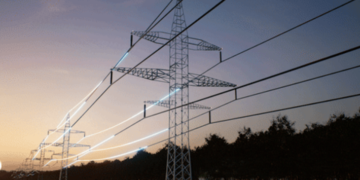
“It could place additional pressure on regional power systems and keep global LNG prices elevated for a longer period,” she noted.
Babak Hafezi, a professor of international business, highlighted the broader global impact, particularly on European markets that have become increasingly dependent on LNG imports following the Ukraine conflict and the destruction of the Nord Stream pipelines.
Countries such as Japan, Turkiye, and India, which rely heavily on LNG imports, may also face increased costs. However, developing economies in the Global South are expected to bear the brunt of rising prices, as higher energy costs could reduce demand and strain weaker economies.
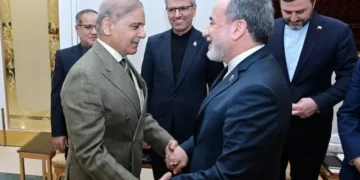
The strike on Ras Laffan coincided with a high-level diplomatic meeting in Riyadh, where foreign ministers from Arab and Muslim-majority countries were gathering to discuss ways to de-escalate the conflict.
Observers noted that the focus of the meeting is now likely to shift toward addressing the growing security threats posed by Iran and managing the fallout from these attacks.
Meanwhile, Saudi Arabia reported that its air defence systems intercepted four ballistic missiles targeting Riyadh and two more aimed at its eastern region. Emergency alerts were issued in Riyadh and Al-Kharj as a precaution.
Similarly, the United Arab Emirates said its air defences had successfully intercepted 13 ballistic missiles and 27 drones launched from Iran. Officials revealed that since the start of hostilities, the UAE has faced a barrage of 327 ballistic missiles, 15 cruise missiles, and 1,699 drones.
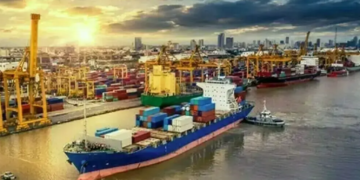
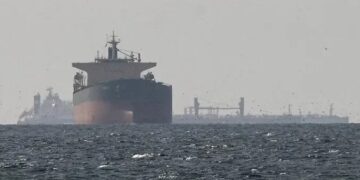
The scale and frequency of these attacks underline the rapidly deteriorating security environment in the Gulf, raising fears of a wider regional war that could disrupt global energy markets and international trade routes.