





























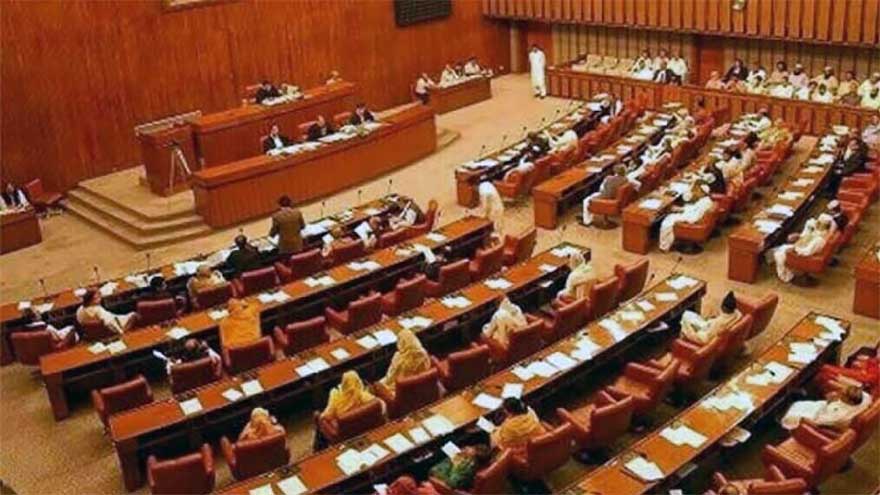
ISLAMABAD (MNN); The government on Monday categorically ruled out any dialogue with terrorists as the Senate unanimously adopted a resolution condemning the recent wave of terrorist attacks in Balochistan and called for a transparent, swift and conclusive investigation into the incidents.
The resolution urged the government to bring all perpetrators, facilitators and local and international sponsors of terrorism to justice in accordance with the law. It also called for further strengthening intelligence coordination, border security and counter-terrorism mechanisms, particularly in Balochistan. The Senate expressed condolences to the families of martyrs and paid tribute to the sacrifices of security forces and law enforcement agencies, reaffirming that the unity of the state and the will of the people would defeat terrorism and extremism.
Speaking in the House, Prime Minister’s Adviser on Political Affairs Rana Sanaullah rejected the notion of talks with terrorists and called on all political forces to adopt a united national stance against terrorism. He urged full support for the armed forces and law enforcement agencies and stressed honouring the sacrifices of martyrs and their families.
Responding to opposition leader Raja Nasir Abbas, Sanaullah said there was no issue of rights in Balochistan and no public anger, claiming that terrorists were acting against Pakistan on the instructions of hostile forces. He said terrorists must be called terrorists without any ambiguity and dealt with decisively, adding that just as the enemy was humiliated during Marka-i-Haq, these elements would meet the same fate.
He said while criminal acts could occur anywhere, the violence witnessed in Balochistan reflected organised terrorism rather than isolated crimes. Referring to incidents where passengers were pulled off buses, identity cards checked and innocent civilians, including women and children, executed, Sanaullah described such acts as extreme brutality that no sane person could justify. He also cited attacks on trains, including the Jaffar Express, to underline the savagery of the militants.
The adviser said security forces had foiled attempts to breach the Quetta Red Zone and neutralised terrorists wherever they appeared, forcing them to flee under pressure. He rejected linking terrorism with political demands such as elections, saying these groups had no mandate, no political agenda and no belief in democracy.
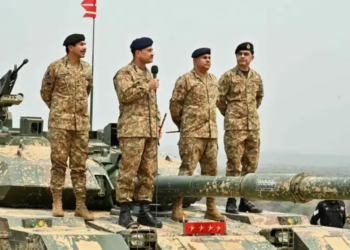
Earlier, according to the military’s media wing, 92 terrorists were killed on Saturday as security forces repelled coordinated attacks by members of banned organisations in Quetta and around a dozen other cities and towns of Balochistan. ISPR said the terrorists, described as part of Indian-sponsored Fitna al Hindustan, attempted to destabilise the province through attacks in areas including Quetta, Mastung, Nushki, Dalbandin, Kharan, Panjgur, Tump, Gwadar and Pasni.
ISPR added that 15 security personnel were martyred while repulsing the attacks and 18 civilians lost their lives. Interior Minister Mohsin Naqvi held India responsible for the incidents, saying the attacks were planned with foreign backing and that all those involved, along with their handlers, would be pursued.
During the debate, Senate opposition leader Raja Nasir Abbas called for adherence to the rule of law to steer the country out of crisis and stressed the need for dialogue and inclusive politics. He questioned security lapses during the attacks, noting that terrorists operated for hours, banks were blown up and no one was stopped. He also demanded accountability, pointing out that despite billions spent annually on security in Balochistan, government writ remained weak at night.
Meanwhile, PTI’s parliamentary leader Ali Zafar rejected any impression that his party sided with terrorists, saying enemies of Pakistan were also enemies of PTI. He said those who killed citizens, burnt the national flag and damaged state property were terrorists and should be treated as such, while reiterating PTI’s support for peaceful rights movements. He stressed that public support was essential to counter terrorism and said PTI must be taken on board for any effective national plan. (UPDATED)
The Senate on Monday unanimously passed a resolution strongly condemning the recent wave of terrorist attacks in Balochistan and called on the government to conduct a transparent, swift and conclusive investigation into the incidents.
The resolution urged authorities to ensure that all perpetrators, facilitators and both local and international sponsors of terrorism are brought to justice in accordance with the law. It also stressed the need for enhanced coordination between federal and provincial governments to further strengthen intelligence sharing, border management and counter-terrorism mechanisms, with particular emphasis on Balochistan.
While denouncing the attacks, the Senate expressed deep condolences to the families of the martyrs and paid tribute to the bravery and sacrifices of the armed forces and law enforcement agencies. The resolution reaffirmed the nation’s collective resolve to thwart all terrorist designs.
It stated that the unity of the state and the will of the people would prevail against violence, extremism and terrorism. The Senate also reiterated its commitment to peace, development and political inclusion in Balochistan, acknowledging that lasting security is closely linked with socio-economic development, good governance and respect for constitutional rights.
According to the military’s media wing, 92 terrorists were killed on Saturday when security forces foiled coordinated attacks carried out by members of banned organisations in Quetta and around a dozen other cities and towns across the province.
In a statement, Inter-Services Public Relations (ISPR) said terrorists affiliated with Indian-sponsored Fitna al Hindustan attempted to destabilise Balochistan through multiple attacks in areas including Quetta, Mastung, Nushki, Dalbandin, Kharan, Panjgur, Tump, Gwadar and Pasni.
The ISPR said the attacks, allegedly carried out on the instructions of foreign handlers, were aimed at disrupting daily life and development in the province. It added that 15 security personnel were martyred while repelling the assaults, and 18 civilians also lost their lives.
Interior Minister Mohsin Naqvi held India responsible for the attacks. Speaking to the media alongside Balochistan Chief Minister Sarfraz Bugti on Saturday night, he said the assaults were planned with foreign backing and vowed that all those involved, along with their handlers, would be pursued and brought to justice.