


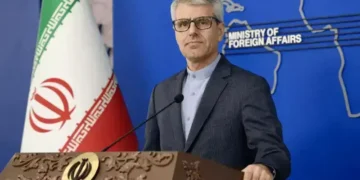



























NEWS DESK (MNN); Prime Minister’s Spokesperson for Foreign Media Mosharraf Zaidi has reaffirmed Pakistan’s strong commitment to Saudi Arabia, saying that Islamabad will stand by Riyadh whenever required, stressing that the relationship between the two countries goes beyond formal agreements.
Speaking in an interview with Bloomberg TV on Wednesday, Zaidi said Pakistan would always be there for Saudi Arabia even before assistance was formally requested.
“The question is not whether Pakistan might come to Saudi Arabia’s aid. Both countries have long operated on the principle of supporting each other before the need even arises,” he said.
Zaidi added that the partnership between Pakistan and Saudi Arabia was based on deep trust and cooperation that existed long before the recently signed strategic mutual defence agreement.
“So there is no question that we might come to Saudi Arabia’s aid. We will. No matter what, no matter when,” he said.
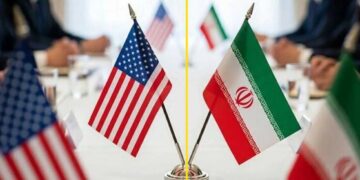
His remarks came amid growing tensions in the Middle East following recent US and Israeli strikes on Iran, which have heightened concerns about a wider regional conflict.
Zaidi said the more important question was what Pakistan was doing to prevent the situation from escalating to a point where its close allies could be dragged into a larger war.
“The real question is what Pakistan is doing to ensure that things do not escalate to a point where any of its closest partners are further embroiled in a conflict that could undermine stability and prosperity in the region, and especially affect the Pakistani people,” he said.
He highlighted Pakistan’s ongoing diplomatic engagement with regional and global leaders to promote restraint and stability.
Zaidi referred to the recent visit of Chief of Defence Forces and Chief of Army Staff Field Marshal Asim Munir to Saudi Arabia, noting that Pakistan remained in regular contact with both Saudi and Iranian leadership.
He also said that Pakistan’s leadership maintained strong ties with the United States.
“Our prime minister and the field marshal have a very strong relationship with the US leadership,” Zaidi said.
According to him, during the past several days there had been numerous diplomatic conversations aimed at preventing further escalation in the region.
He praised Saudi Arabia and other Gulf states for exercising restraint despite pressure from some quarters to become more directly involved in the conflict.
“One of the things Pakistan admires is the way Saudi Arabia and other Gulf countries have resisted being drawn into the conflict,” he said.
Zaidi said that although there had been calls from certain voices in the United States and elsewhere urging Gulf Cooperation Council countries to take a more active role in the conflict, the regional states had so far chosen a cautious approach.
“That is exactly what Pakistan wants to see,” he added.
When asked how close Pakistan was to providing military assistance to Saudi Arabia, Zaidi declined to speculate on specific defence arrangements.
“It would be speculative and irresponsible to comment on that,” he said.
However, he reiterated that Pakistan’s support for Saudi Arabia remained unquestionable.
“Whatever is needed from Pakistan with regard to Saudi Arabia, Pakistan will be there before it is needed, and Saudi Arabia would do the same for Pakistan,” he said.
Zaidi also pointed out that Saudi Arabia had already extended important support to Pakistan in maintaining supply chain stability, particularly in the supply of oil, diesel and crude petroleum.
He said the two countries shared a relationship built on formal agreements as well as longstanding informal cooperation.
“There is no question of whether there would be support between the two countries,” he said.
Pakistan and Saudi Arabia have historically maintained close relations rooted in strategic military cooperation, economic collaboration and shared religious and cultural ties. Saudi Arabia has often provided financial assistance and energy supplies to Pakistan during times of economic difficulty.
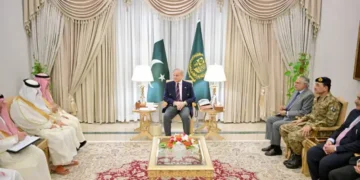
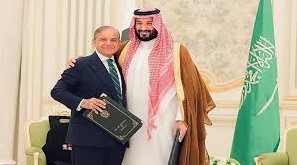
In September last year, Prime Minister Shehbaz Sharif and Saudi Crown Prince Mohammed bin Salman signed a Strategic Mutual Defence Agreement in Riyadh. The agreement states that any attack on either country would be treated as an act of aggression against both nations.
Meanwhile, Deputy Prime Minister and Foreign Minister Ishaq Dar recently revealed that Pakistan’s diplomatic engagement had helped prevent more severe Iranian strikes on Saudi Arabia during the ongoing crisis.
Field Marshal Asim Munir also met Saudi Defence Minister Khalid bin Salman Al Saud last week, where both sides discussed the evolving situation in the Middle East and Iran’s attacks on Saudi territory.
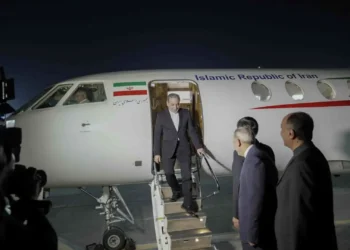
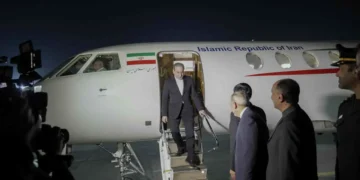
During the interview, Zaidi also discussed Pakistan’s diplomatic engagement with Iran.
He said Pakistan remained mindful of its responsibility as a close friend of multiple countries in the region and was working to reduce tensions.
Zaidi said there had been several conversations between Foreign Minister Ishaq Dar and Iranian Foreign Minister Abbas Araghchi in recent weeks.
“These discussions and other diplomatic engagements are part of the reason you have seen Iran making conciliatory efforts towards Gulf countries,” he said.
He added that Pakistan remained in constant contact with all countries in the region.
“We do not like our friends getting into disputes with each other, and we certainly do not want innocent people to lose their lives unnecessarily,” he said.
Zaidi emphasized that dialogue remained the only sustainable path to resolving conflicts.
“There is always a pathway through dialogue, and it is achievable if all sides show restraint,” he said.
He also stressed that Pakistan did not support attacks on Gulf countries or continued bombardment of Iranian civilians.
“Pakistan believes there should never be a situation where Iran attacks Gulf states, nor should the people of Iran suffer from bombing campaigns,” he said.
Zaidi also addressed concerns about the global fuel crisis triggered by instability in the Middle East.
He said Pakistan’s fuel supply situation was currently stable despite the rising global prices of petroleum products.
“Things are stable to good,” he said.
However, he acknowledged that the increase in petrol and diesel prices had placed a heavy burden on Pakistani consumers.
Zaidi explained that the government had taken early and difficult decisions to mitigate the impact of the crisis.
He said Pakistan was among the first countries to increase fuel prices in anticipation of global market disruptions caused by the conflict.
According to him, the decision drew criticism from the public and political circles, but it helped ensure supply chain stability.
“These measures created a cushion that allows our oil marketing companies to maintain sufficient stocks and secure alternative supply routes,” he said.
Zaidi explained that alternative supply chains could take 18 to 20 days to deliver fuel shipments to Pakistan, compared to the usual five to six days.
“That creates a significant gap which must be managed carefully,” he added.
He also highlighted austerity measures introduced by the government to conserve energy and resources.
These measures include a four-day work week for certain departments, work-from-home policies and a significant reduction in the use of government vehicles.
“Every crisis is an opportunity for change,” Zaidi said.
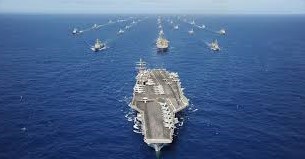
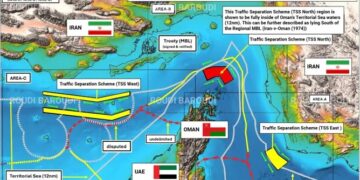
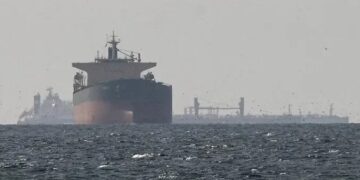
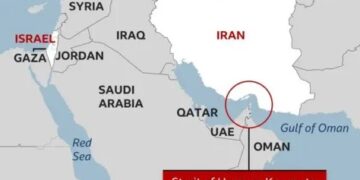
Responding to a question about whether Pakistan could provide naval escorts through the Strait of Hormuz — a crucial global oil shipping route — Zaidi said Pakistan’s immediate responsibility was to secure its own maritime domain.
He noted that the Pakistan Navy had already been providing escorts to commercial vessels within Pakistani waters.
If there were any expansion of such missions, he said, it would require multilateral arrangements and international coordination.
“The Strait of Hormuz is a very sensitive area and Pakistan is not currently considering support missions for escort operations there,” he said.
Zaidi added that the government had been closely monitoring maritime security and ensuring the safety of shipping routes within Pakistani waters over the past several days.