
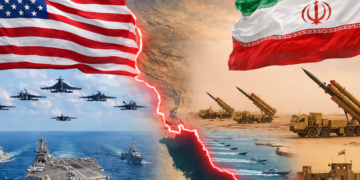
























NEWS DESK (MNN); Mojtaba Khamenei has been appointed as the new Supreme Leader of Iran, more than a week after the killing of his father, Ayatollah Ali Khamenei, in joint strikes by the United States and Israel that triggered a major regional conflict.
Iranian clerics confirmed the appointment on Sunday, entrusting Mojtaba Khamenei with guiding the Islamic Republic through one of the most serious crises since the country’s founding more than four decades ago.
Although he has never held elected office or faced a public vote, Mojtaba Khamenei has long been considered a powerful figure within Iran’s leadership circle. Over the years, he built strong ties with the influential Islamic Revolutionary Guard Corps (IRGC) and has frequently been mentioned as a possible successor to his father.
His selection may signal that hardline factions within Iran’s political establishment remain firmly in control, potentially reducing the likelihood of negotiations or diplomatic compromises as the conflict enters its second week.
The decision was made by the Assembly of Experts, an 88-member clerical body responsible for appointing the country’s supreme leader. Earlier, members had indicated that a majority consensus had been reached without publicly revealing the candidate.
The late Ayatollah Ali Khamenei had ruled Iran for 37 years after succeeding Ayatollah Ruhollah Khomeini, the leader of the 1979 Iranian Revolution. He was reportedly killed in a US-Israeli strike on Tehran on February 28 at the beginning of the ongoing war.
Tensions have remained high since the announcement. The Israel Defense Forces has warned that it could target any future Iranian leadership, while US President Donald Trump previously said Iran’s next leader would not remain in power without Washington’s approval.
Iranian officials, however, rejected such statements, insisting that the leadership decision is solely the right of the Iranian people.
Meanwhile, Iran’s parliament speaker Mohammad Bagher Ghalibaf dismissed Trump’s claim that the United States could influence the selection of Iran’s leader, stressing that the country’s future would be decided only by the Iranian nation. (UPDATED)
TEHRAN, IRAN (MNN); Senior Iranian clerics have indicated that the country may soon announce a new supreme leader as internal deliberations continue during the escalating conflict involving the United States and Israel.
According to officials within the Assembly of Experts, the body responsible for appointing the supreme leader, discussions are underway following the death of Ayatollah Ali Khamenei, who was reportedly killed in Tehran on February 28.
Prominent cleric Mohammad Mehdi Mirbagheri stated that the decision must be made carefully to ensure the choice is widely accepted within the country. He noted that a strong majority opinion has already formed but some issues still need to be resolved before an official announcement.
Among the potential candidates, Mojtaba Khamenei—the late leader’s second son—is widely considered a leading contender, reportedly supported by powerful commanders of the Islamic Revolutionary Guard Corps (IRGC).
Another influential cleric, Ahmad Alamolhoda, suggested that the decision may already have been finalized and that the Assembly’s secretariat could soon release the official result.
Meanwhile, senior Guardian Council member Abbas Kaabi said that Khamenei had not nominated specific individuals before his death but had outlined key qualities for a future leader. These included financial integrity, commitment to the principles of the 1979 Iranian Revolution, and firm resistance against the United States and Israel.
The issue has drawn international attention as Donald Trump has publicly opposed Mojtaba Khamenei’s potential rise to power. Israel has also intensified military strikes in Iran, reportedly targeting leadership facilities in cities including Tehran and Qom.
Israeli media reported that senior official Asghar Hejazi was killed in overnight airstrikes on an underground compound in Tehran, though Iranian authorities have not confirmed the claim.
Amid the crisis, President Masoud Pezeshkian faced criticism after releasing a video message apologizing to regional countries affected by Iranian missile and drone attacks.
Hardline figures and religious leaders are urging the Assembly of Experts to quickly finalize the leadership transition, with cleric Hossein Nouri-Hamedani calling for swift action to maintain national unity.
The situation has also intensified divisions between conservatives and reformists. Former president Mohammad Khatami expressed condolences over Khamenei’s death while calling for reforms within the Islamic Republic.
Other political figures, including former presidents Hassan Rouhani and Mahmoud Ahmadinejad, have remained largely quiet during the leadership discussions, though Iranian media reported that Ahmadinejad recently survived an assassination attempt.
Meanwhile, Israeli airstrikes reportedly targeted fuel reserves and oil refineries in Tehran, sending thick smoke across the capital as the conflict threatens to intensify further.