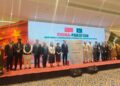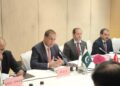
















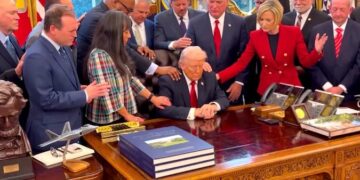



ISLAMABAD (MNN); Prime Minister Shehbaz Sharif on Friday formally relaunched the state-run health insurance initiative, commonly known as the Sehat Card Programme, for residents of the federal capital, Azad Jammu and Kashmir (AJK), and Gilgit-Baltistan.
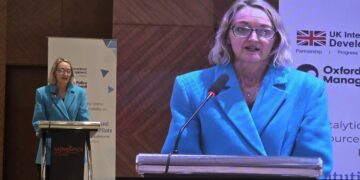
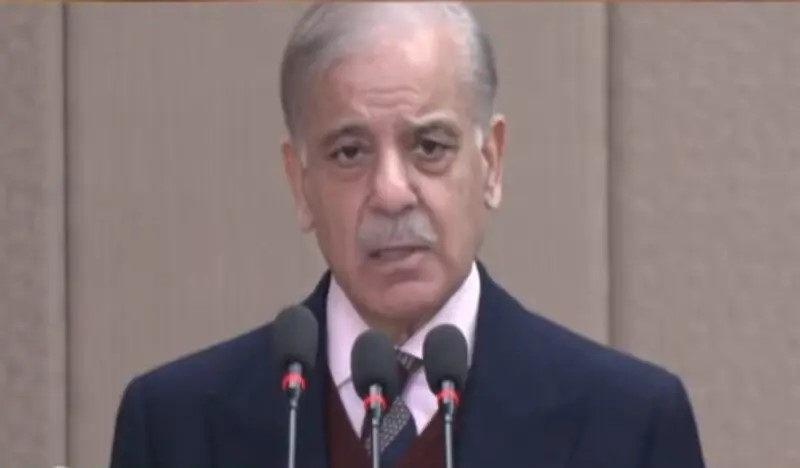
Addressing the launch ceremony in Islamabad, the prime minister said access to healthcare was a fundamental right of every citizen and that such facilities should be made available at people’s doorsteps. He said the revival of the Sehat Card marked another swift step by his government to serve the public.
PM Shehbaz said the programme was a continuation of the initiative first introduced in 2016 under the leadership of Nawaz Sharif. The scheme was initially launched during the PML-N government and provided health coverage in Punjab, Balochistan, the then FATA regions and the Islamabad Capital Territory, with plans for gradual expansion.
He noted that the programme was later relaunched by the PTI government in 2019 as the Sehat Insaf Card, with amendments including annual medical coverage of up to Rs720,000 per family and inclusion of low-income earners with minimal contribution.
The prime minister said the service had remained partially suspended in federal territories for three years and was completely halted in Islamabad, AJK and GB since March 2024 due to non-payment of government dues, causing hardship for residents.
“Health is the most valuable asset in life, as it enables people to pursue education, earn a livelihood, participate in sports and face challenges,” PM Shehbaz said, adding that the services of Nawaz Sharif in the health sector would always be remembered. He announced that the Sehat Card was now being restored for the people of Islamabad, AJK and Gilgit-Baltistan.
He congratulated Health Minister Mustafa Kamal, the health secretary and their team, saying that while the elite could afford expensive treatment, it was extremely difficult for ordinary citizens, labourers and orphans to manage healthcare costs. He said illness without treatment often plunged entire families into hardship.
The prime minister stressed that good health and access to treatment were the right of every Pakistani and expressed hope that the programme would be monitored transparently through third-party oversight to ensure proper service delivery.
PM Shehbaz also said he would discuss the initiative with the Sindh chief minister, noting that the programme was already operating in Punjab, Balochistan and Khyber Pakhtunkhwa, with billions of rupees being spent on healthcare. He expressed confidence that the issue could be resolved to extend similar facilities to Sindh.
70 hospitals to be added to coverage areas
Health Minister Mustafa Kamal, speaking on the occasion, thanked the prime minister for his leadership in reviving the programme. He said the scheme, initiated in 2016, had been neglected in federal territories for the past three years, prompting the current proposal for revival.
He said the government would now provide free healthcare services to nearly 10 million people living in Islamabad, AJK and Gilgit-Baltistan. Kamal added that beneficiaries would be able to receive treatment at hospitals without cash payments by using the Sehat Card.
The health minister said that over the past four to five weeks, concerted efforts had led to the restoration of what he described as a “dead programme.” He highlighted broader healthcare challenges, including hospital overcrowding and the shortage of doctors.
Under the initiative, Kamal said, a total of 70 hospitals would be added across Islamabad, AJK and Gilgit-Baltistan. He added that residents holding CNICs from these regions would also be able to receive treatment at 16 hospitals in Karachi.
However, he pointed out that Sindh remained the only province where the card could not currently be used. He said 10 urban and rural districts of Sindh had been shortlisted and requested the allocation of Rs24 billion for two years in the budget, after which the programme could be made self-sustaining.