



























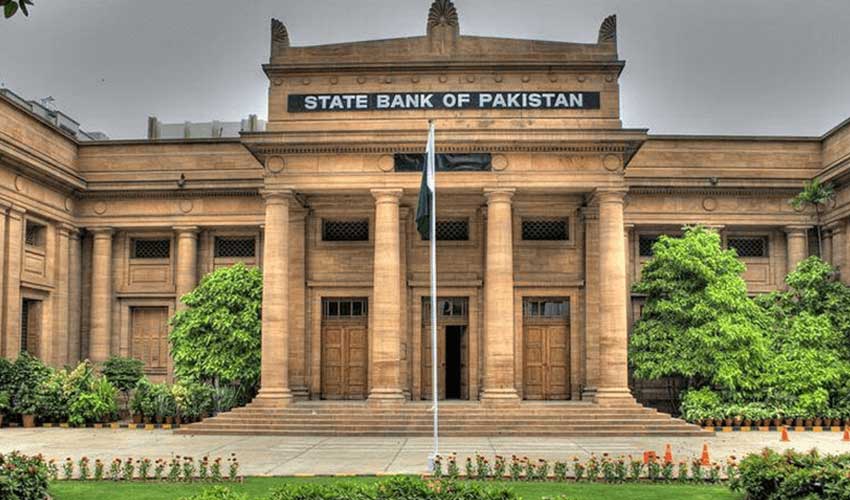
KARACHI (MNN); The State Bank of Pakistan (SBP) on Monday decided to keep its key policy rate unchanged at 10.5 percent, citing growing global uncertainty and economic risks stemming from the ongoing conflict in the Middle East.
The announcement was initially shared through the central bank’s social media account, while a detailed statement from the Monetary Policy Committee (MPC) was released later in the day.
According to the MPC, recent economic data broadly aligned with the macroeconomic projections presented after the January policy meeting. However, the committee noted that the overall economic outlook had become increasingly uncertain following the outbreak of war in the Middle East.
The committee observed that the conflict has triggered a sharp rise in global fuel prices, freight charges and insurance costs. It has also disrupted cross-border trade and international travel, adding further uncertainty to the economic environment.
The MPC emphasized that the eventual impact on Pakistan’s economy will depend largely on the intensity and duration of the conflict. The committee stated that the evolving geopolitical situation makes it difficult to predict the full economic consequences at this stage.
At the same time, the central bank acknowledged that prudent monetary and fiscal policies adopted in recent years have strengthened the economy’s ability to withstand external shocks.
According to the MPC, Pakistan’s macroeconomic fundamentals are currently stronger than they were at the beginning of the Russia–Ukraine conflict in early 2022. The committee’s initial evaluation suggests that projections for key macroeconomic indicators for the fiscal year 2026 remain within previously estimated ranges. However, it warned that risks to the economic outlook have increased significantly.
The MPC also highlighted several recent economic developments. Inflation rose to 5.8 percent in January and further increased to 7 percent in February. Meanwhile, the country recorded a current account surplus in January and saw a buildup in foreign exchange reserves.
The committee noted that large-scale manufacturing registered a modest year-on-year growth of 0.4 percent, while consumer confidence and inflation expectations have shown improvement.
However, the statement also pointed out that tax collection by the Federal Board of Revenue (FBR) remained below the target during January and February. In addition, the committee referenced the recent announcement by the United States administration regarding uniform global tariffs, which could affect global trade dynamics.
The MPC stressed that international commodity prices and supply chains remain highly uncertain due to the war in the Middle East. In view of these uncertainties, the committee concluded that maintaining the current policy rate was the most appropriate decision at this time.
The central bank reiterated its commitment to maintaining price stability and emphasized the need for accelerating structural reforms to ensure sustainable economic growth.
Market analysts had largely anticipated the decision to keep the policy rate unchanged. Financial experts noted that rising global energy prices and regional tensions have limited the central bank’s ability to continue reducing interest rates.
Earlier surveys among economists also suggested a consensus that the central bank would adopt a cautious approach amid rising uncertainty in the global economic environment.
The State Bank has already reduced the policy rate by a cumulative 1,150 basis points since mid-2024. The rate had previously reached a historic high of 22 percent in 2023 before gradually declining as inflation eased from multi-decade highs.
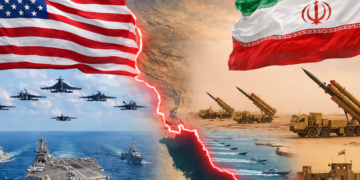
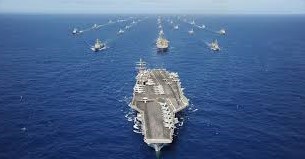
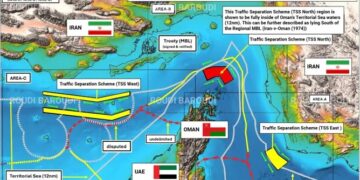
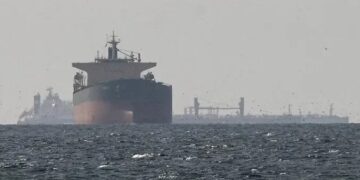
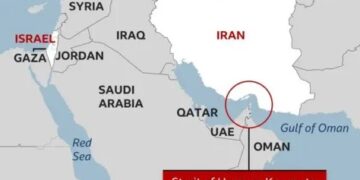
Pakistan has recently started experiencing the economic repercussions of the escalating conflict involving the United States, Israel and Iran. The situation has led to the closure of the Strait of Hormuz, which plays a critical role in global oil supply, pushing fuel prices sharply higher in international markets.
Brent crude oil prices have surged amid mounting geopolitical tensions, placing significant pressure on global energy markets. At the same time, gold prices recorded a decline of about two percent.
As Pakistan imports the majority of its energy requirements, domestic inflation remains highly sensitive to fluctuations in global oil prices.
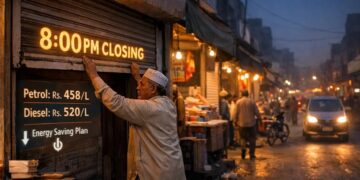
Reflecting the rising international fuel costs, the government last week increased the prices of petrol and high-speed diesel by Rs55 per litre, marking the largest single price hike in the country’s history.
Pakistan is also currently implementing a $7 billion programme with the International Monetary Fund (IMF). The Fund has advised the government to maintain tight and data-driven monetary policies in order to stabilize inflation expectations and strengthen the country’s external financial buffers.