




















































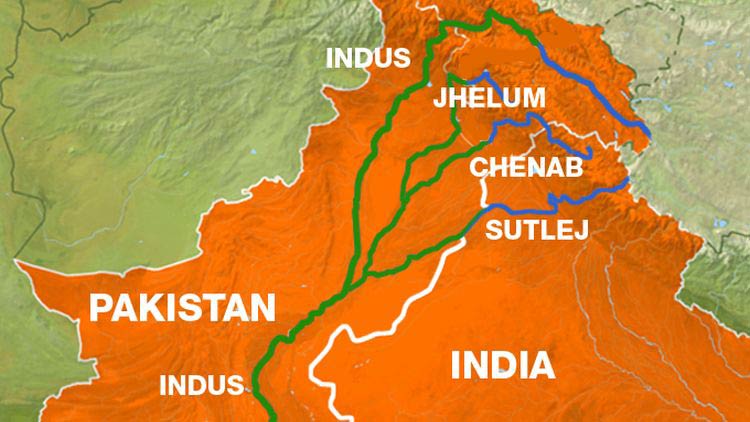
ISLAMABAD (MNN); After disruptions in the Chenab River, irregular water flows have also been reported in the Jhelum River, apparently due to abrupt holding and release of water by Indian authorities upstream.
A day earlier, Pakistan’s Foreign Office sought an explanation from India through a formal letter after sudden fluctuations in the Chenab River’s flow severely affected wheat and other crops irrigated through the Marala-Ravi link canal and other waterways across Punjab.
Officials from the office of Pakistan’s Commissioner for Indus Waters said that reduced inflows from India were now being observed in the Jhelum River downstream at Mangla Dam.
A senior irrigation department official warned that the situation was “serious and alarming”, noting that nearly 15 million out of Pakistan’s 25 million acres of irrigated farmland was currently receiving insufficient or no water.
According to an internal report, inflows into the Jhelum River at Mangla on December 14 were recorded at 5,000 cusecs, while outflows stood at 33,000 cusecs. Inflows dropped to 3,300 cusecs on December 15 and remained at that level until December 19, even as outflows continued at 33,000 cusecs.
During the same period last year, inflows were recorded at 4,400 cusecs with outflows of 25,000 cusecs.
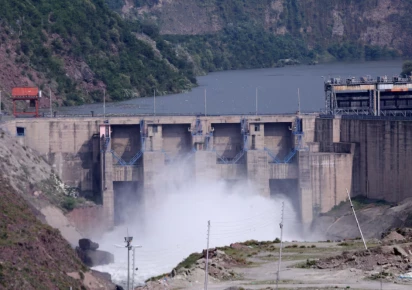
Officials said data from the Kerot Hydropower Project, located upstream of Mangla Dam, closely matched these figures, suggesting that water was being abruptly stored and released by Indian authorities at run-of-the-river hydroelectric facilities.
Another senior irrigation official said India was regulating river flows through its hydropower plants, disrupting the natural flow of both the Jhelum and Chenab rivers, which irrigate vast agricultural areas in Punjab through dams, barrages and link canals.
He added that similar sudden releases had worsened flooding during recent monsoon spells, when water was released without prior warning.
Meanwhile, the Ministry of Water Resources said on Friday that water levels in the Chenab River had stabilised after a period of sharp fluctuation. The ministry said monitoring at Marala headworks showed the river’s discharge had normalised following several days of volatility.
Hydrological data from early December confirmed that unusually low flows were recorded between December 10 and December 16. Satellite imagery from December 8 to 13 showed a reduction in the surface area of India’s Baglihar reservoir, followed by a gradual increase, indicating that the reservoir may have been emptied and subsequently refilled.
The ministry said such actions were not permitted under the Indus Waters Treaty, which bars India from emptying dead storage at run-of-the-river hydropower projects.
Pakistan’s Commissioner for Indus Waters has formally taken up the matter with his Indian counterpart, seeking detailed data and explanations under the framework of the treaty.
The ministry noted that water levels began improving on December 17, reaching 6,399 cusecs by 7am. As of December 19, river flows were within the historical range of the past ten years.
Authorities said river flows would continue to be closely monitored to respond to any future irregularities.
Earlier this year, India placed the Indus Waters Treaty in abeyance following an attack in occupied Kashmir’s Pahalgam, a move Pakistan termed an act of war, stressing that the treaty does not allow unilateral suspension.
In June, the Permanent Court of Arbitration ruled that India could not unilaterally suspend the treaty, reaffirming Pakistan’s position in a dispute over Indian hydropower projects.