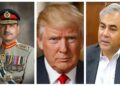


































UNITED STATES (Reuters): U.S. President Donald Trump on Tuesday expanded the list of countries subject to a full travel ban, barring citizens from seven additional nations including Syria from entering the United States. In a statement, the White House said Trump signed a proclamation aimed at “expanding and strengthening entry restrictions on nationals from countries with demonstrated, persistent and severe deficiencies in screening, vetting and information-sharing,” citing national security and public safety concerns.
Under the new measures, a full travel ban will apply to citizens of Burkina Faso, Mali, Niger, South Sudan, Syria, Laos and Sierra Leone, as well as individuals holding Palestinian Authority–issued travel documents. Laos and Sierra Leone were previously subject only to partial restrictions. The expanded ban will take effect on January 1.The move comes despite Trump’s earlier pledge to support Syria’s recovery following landmark talks in November with Syrian President Ahmed al-Sharaa, a former al-Qaeda commander who has sought to portray himself as a moderate leader after toppling longtime ruler Bashar al-Assad.
Washington had previously sanctioned Sharaa as a foreign terrorist. The White House cited high visa overstay rates and weak document controls in Syria to justify the decision, saying the country lacks a reliable central authority for issuing passports and does not have adequate screening and vetting systems in place.
The announcement also follows a recent attack in Syria in which two U.S. Army soldiers and a civilian interpreter were killed when a suspected Islamic State militant targeted a joint U.S.-Syrian convoy.
More Countries Face Partial Restrictions
Trump had already imposed a full travel ban on 12 countries in June and partial restrictions on seven others, measures that remain in force. He has now added partial entry limitations on 15 more countries, including Nigeria, which has drawn scrutiny from the administration over the treatment of Christians. Nigeria has rejected accusations of religious persecution, saying they oversimplify a complex security situation.
Since returning to office in January, Trump has intensified immigration enforcement, deploying federal agents to major cities, tightening border controls and sharply limiting asylum access. The latest expansion follows last month’s fatal shooting of two National Guard members in Washington, D.C. Authorities say the suspect was an Afghan national who entered the U.S. in 2021 through a resettlement program that Trump officials argue lacked sufficient vetting.In the aftermath, Trump vowed to “permanently pause” migration from what he termed “Third World countries,” without specifying which nations would be affected.