















































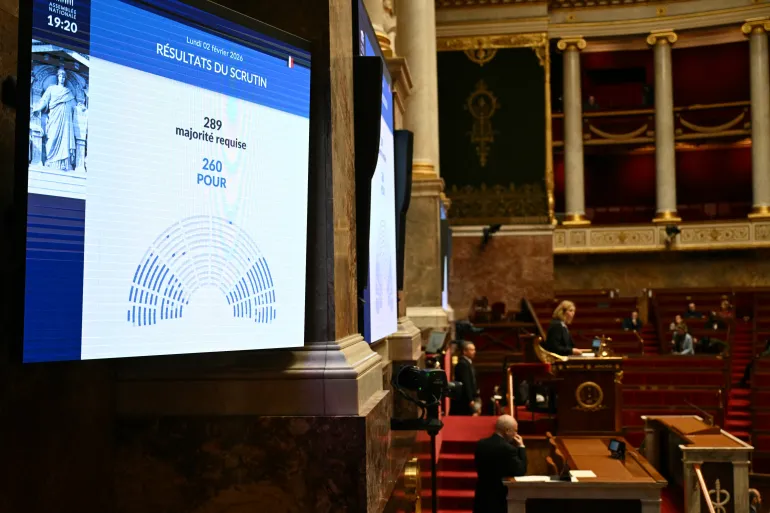
PARIS (MNN); France has approved its 2026 budget after two no-confidence motions failed in parliament, allowing the legislation to pass and offering a measure of stability to Prime Minister Sebastien Lecornu’s fragile minority government.
The budget was adopted on Monday, bringing an end to nearly four months of political stalemate over public spending. It includes steps to reduce the country’s budget deficit while significantly increasing military expenditure.
Budget negotiations have dominated French politics for almost two years, following President Emmanuel Macron’s 2024 snap election that resulted in a hung parliament at a time when France’s public finances were already under severe strain.
The prolonged deadlock has led to the fall of two prime ministers, unsettled debt markets and raised concerns among France’s European partners. However, Lecornu managed to push the budget through by securing Socialist support via targeted but costly concessions.
France is facing mounting pressure from the European Union to curb its debt-to-GDP ratio, which is the third highest in the bloc after Greece and Italy and stands at nearly double the EU’s 60 percent limit.
Under the new budget, France aims to reduce its deficit to five percent of GDP in 2026 from an estimated 5.4 percent in 2025, revising an earlier target of 4.7 percent.
The budget introduces higher taxes on certain businesses, expected to generate around 7.3 billion euros in 2026. However, Socialist lawmakers failed to secure approval for a proposed wealth tax on the super-rich.
Military spending will rise by 6.5 billion euros, a move Lecornu has described as the core element of the budget. In return for their backing, the Socialists secured several measures, including a one-euro meal scheme for students and higher top-up payments for low-income workers.