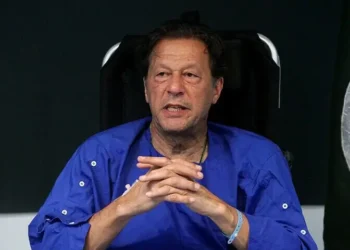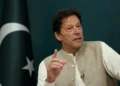
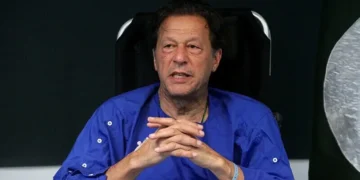
































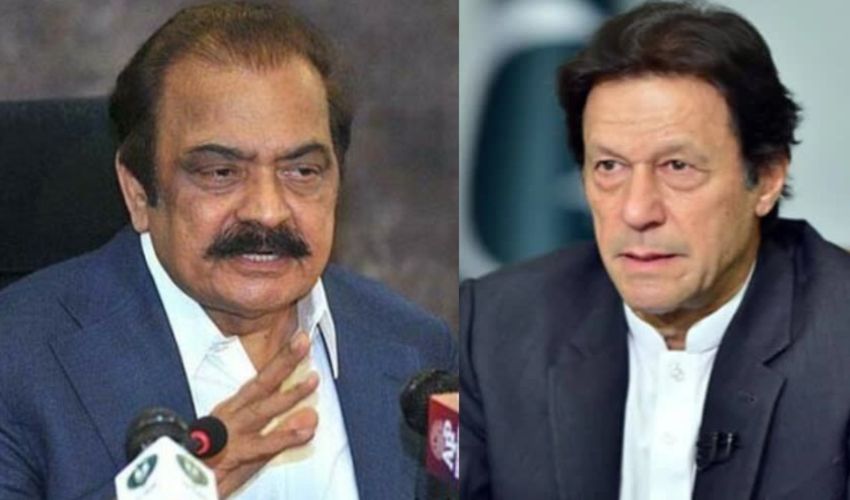
Web Desk (MNN); Prime Minister’s Adviser on Political and Public Affairs, Rana Sanaullah, said on Tuesday that former Prime Minister Imran Khan is unwilling to sit with political parties to reform Pakistan’s political system.
Speaking on Samaa TV’s programme Red Line with Talat Hussain, Rana Sanaullah recalled that even 11 years after the Army Public School (APS) tragedy, the nation continues to condemn terrorism and its consequences. He pointed out that a recent attempted attack on Cadet College could have been even deadlier than the APS attack had it succeeded.
Rana Sanaullah said that before the APS incident, Pakistan lacked unity on counterterrorism. “There was a debate about ‘good’ and ‘bad’ Taliban, and the nation was divided,” he added. He noted that terrorism only declined after a national consensus emerged post-APS but confusion returned when militants were allowed back into the country.
He questioned who authorized negotiations with terrorists, stating that those talks failed and violence resumed. “Why is it being suggested today that there should be no operations against terrorists? Why should we negotiate with them?” he asked, warning that such narratives create confusion. He also criticised opposition to intelligence-based operations, calling it dangerous for national security.
Rana Sanaullah claimed that former army chief General Qamar Javed Bajwa and Lt Gen (retd) Faiz Hameed had briefed the government about allowing militants to return, arguing they would keep their arms and integrate into society under the law.
He alleged that PTI founder Imran Khan remains committed to an “armed struggle,” citing incidents on May 9, May 25, and November 26, with a failed attempt at violence on the latter date. “Pakistan Tehreek-e-Insaf is waiting for an incident,” he said.
Rana Sanaullah emphasised that the government has made a clear decision to eliminate terrorism, leaving no ambiguity in state policy. “The nation has decided to deal with terrorists with an iron hand,” he added, warning that those advocating talks must also be prepared for strict action.
Addressing the sentencing of Faiz Hameed, he said Nawaz Sharif’s response was limited, calling it “retribution.” He alleged that Hameed violated discipline and misused authority, particularly in the Top City case, stressing that accountability should target the broader system, not just individuals.
Rana Sanaullah concluded that if Pakistan’s political system is corrected, no greater revenge or relief would be necessary. He claimed that after the PML-N and PPP agreed on a democratic charter, a “third force” disrupted the process, and institutions should ensure accountability without discrimination.