



























UNITED NATIONS: Pakistan categorically told the United Nations Security Council (UNSC) that Jammu and Kashmir is not, and will never be, part of India, rejecting New Delhi’s claims during an open debate at the world body.
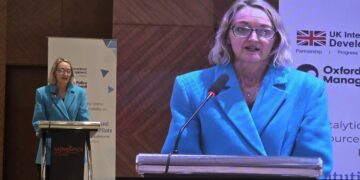
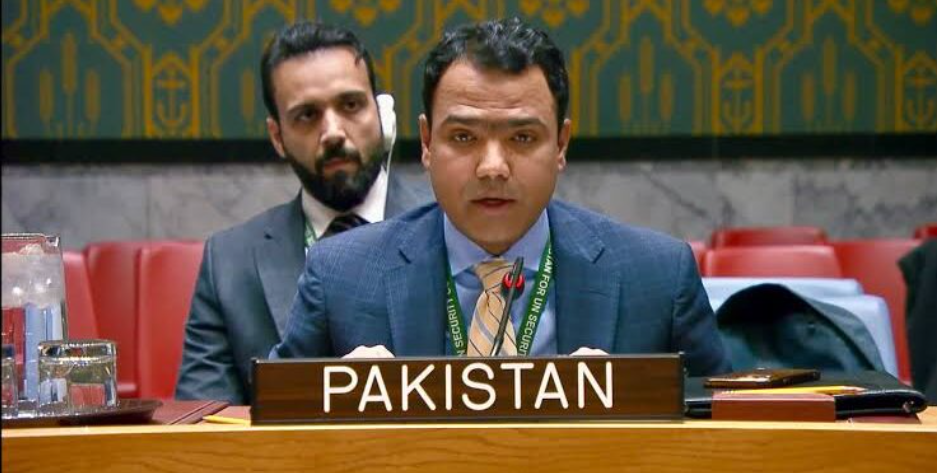
Speaking at the UNSC Open Debate on Leadership for Peace, Gul Qaiser Sarwani, Counsellor and Political Coordinator at Pakistan’s UN Mission, said Jammu and Kashmir is an internationally recognised disputed territory, a position endorsed by the United Nations itself.“Let me make it clear, Kashmir is not, it never was, and it will never be so-called part of India,” Sarwani said, adding that India had taken the issue to the Security Council and accepted the obligation to allow the people of Jammu and Kashmir to decide their future through a UN-supervised plebiscite an undertaking that remains unfulfilled nearly eight decades later.
He said India is maintaining a massive military presence in the territory, suppressing fundamental freedoms, silencing independent voices and pursuing measures to alter the region’s demographic character, in violation of international law and its obligations as an occupying power.
Rejecting India’s terrorism allegations against Pakistan, Sarwani said New Delhi was attempting to deflect attention from its own record, including sponsorship of terrorism across borders, state terrorism in occupied Jammu and Kashmir, and a state-backed assassination campaign abroad. He claimed there was credible evidence of India’s support for groups such as the TTP, Fitna Alkhwarij and the BLA, which have carried out attacks in Pakistan.
Sarwani also said India has repeated acts of aggression against Pakistan in violation of international law and the UN Charter. He said Pakistan had acted with responsibility and restraint, noting that Islamabad joined other Security Council members in condemning the Pahalgam incident and offered an independent, credible investigation, which India rejected.
Describing India’s actions as those of a “rogue actor,” he said there was no justification of self-defence for what he termed naked aggression against a sovereign state. He added that Pakistan responded “befittingly,” inflicting losses on Indian military and aviation assets.
On the Indus Waters Treaty, Sarwani said India’s remarks amounted to a distortion of facts and a misinterpretation of a binding international agreement, stressing that no provision allows unilateral suspension or modification. He cited the Court of Arbitration’s 2025 award, which reaffirmed the treaty’s continuing validity and dispute-resolution mechanisms, and said Pakistan had conveyed its concerns to the Security Council. He also questioned India’s claims of democracy, pointing to what he described as the erosion of civil liberties, suppression of dissent, marginalisation of minorities and the rise of majoritarian extremism.
Rejecting India’s criticism of Pakistan’s laws, Sarwani said Pakistan’s constitutional and legislative processes were decided by its elected parliament and were not subject to external scrutiny. Concluding his remarks, Sarwani said genuine leadership for peace required India to end its occupation of Jammu and Kashmir, cease state-sponsored terrorism, uphold international obligations, implement UNSC resolutions and choose dialogue and good neighbourly relations.