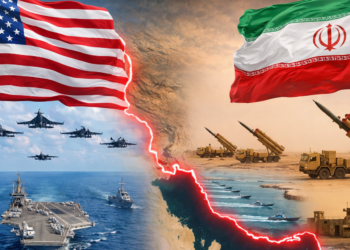































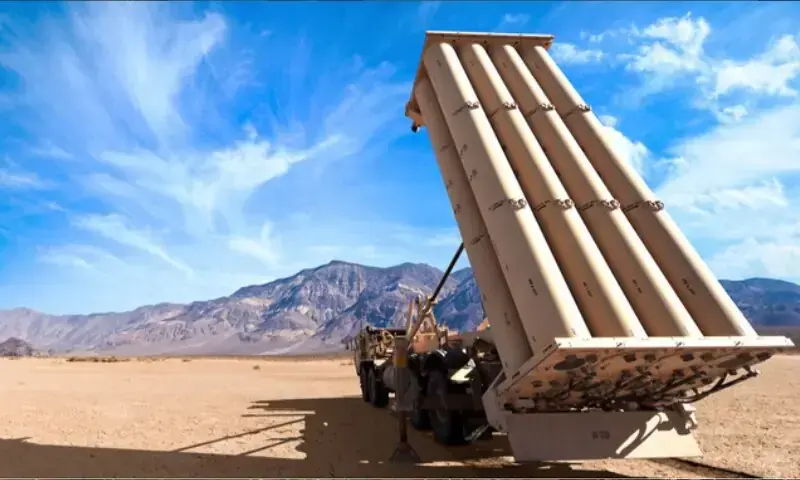
NEWS DESK (MNN); A crucial American missile-defence radar system stationed in Jordan has been destroyed during the early phase of the latest confrontation between Iran and the United States, raising serious concerns about regional air-defence capabilities and the security of US military installations in the Middle East.
According to American officials and satellite imagery cited by international media reports, the radar was located at the Muwaffaq Salti Air Base in Jordan and formed an essential component of the advanced Terminal High Altitude Area Defense (THAAD) missile defence system. The sophisticated system was manufactured by RTX Corporation and is considered one of the most powerful missile-interception technologies deployed by the United States.
A US official revealed that the radar alone had an estimated value of around $300 million and played a critical role in detecting and tracking ballistic missile threats across the Gulf region. Its destruction is being viewed as a significant blow to American defensive capabilities in the region.
Defence analysts say the THAAD system is specifically designed to intercept ballistic missiles at the upper edge of the Earth’s atmosphere, making it far more powerful and capable than the shorter-range Patriot missile defence system. With the radar now out of service, much of the burden of intercepting potential missile attacks will likely fall on Patriot systems deployed across the Gulf.
However, military experts have already warned that Patriot systems are facing shortages of interceptor missiles due to the increasing frequency of attacks in the region. A full THAAD battery costs approximately $1 billion, and the United States currently operates only eight such systems worldwide. Analysts say replacing the destroyed radar could prove difficult because a spare unit is not immediately available.
Reports from defence research organisations also indicate that another US radar facility in Qatar had previously been damaged during an Iranian strike, adding to growing concerns over the vulnerability of American defence infrastructure.
Meanwhile, air-defence systems across Gulf states are facing mounting pressure amid continued waves of Iranian ballistic missiles and drone attacks. US officials fear that if the current pace of attacks continues, stockpiles of advanced interceptor missiles could drop to dangerously low levels.
Attacks on Ships and Rising Regional Tensions
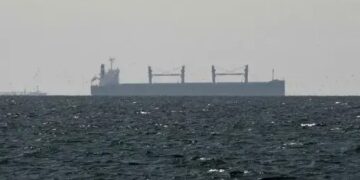
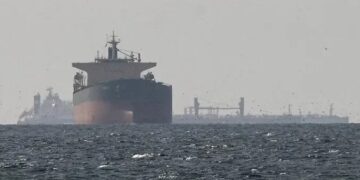
Amid the escalating conflict, a new maritime incident was reported in the Gulf on Saturday. The United Kingdom Maritime Trade Operations (UKMTO) confirmed receiving information that a commercial vessel was attacked approximately 10 nautical miles north of the Saudi Arabian city of Jubail.
Authorities said the report came from a third-party source and that investigations were underway to determine the details and extent of the incident.
Shortly before the maritime alert, Iran’s Islamic Revolutionary Guard Corps (IRGC) claimed responsibility for targeting an oil tanker sailing under the Marshall Islands flag in Gulf waters. Iranian officials identified the vessel as Louis P, stating that it had been struck near Jubail on Saudi Arabia’s eastern coast.
Explosions and Air-Raid Sirens in Israel
At the same time, tensions intensified inside Israel. Residents of Tel Aviv reported hearing a powerful explosion, prompting authorities to issue a red alert across the city. Air-raid sirens triggered panic among residents, many of whom rushed toward underground shelters and safe locations.
In a separate statement, the IRGC said it had shot down 82 drones since the latest round of hostilities began. Iranian officials reported that 13 advanced drones were destroyed within the past 24 hours alone.
The drones reportedly included models such as MQ-9, Hermes and Orbiter, which Iranian forces claimed were intercepted using a coordinated air-defence system.
US Accelerates Weapons Production
In response to growing military pressure, the United States Department of Defence recently held meetings with major defence contractors at the White House to speed up weapons production. The discussions focused on increasing the supply of missile interceptors and other military equipment as existing stockpiles come under strain.
Iran Warns of Strong Response
Iran’s President Masoud Pezeshkian has vowed that the country will defend its sovereignty “to the last breath,” delivering a strong response to threats issued by US President Donald Trump.
In a statement posted on the social media platform X, the Iranian leader said his nation would not bow to pressure or intimidation and would continue defending its territory and citizens.
“Iran will protect its homeland and its people at all costs,” Pezeshkian stated.
He emphasized that Iran’s military operations target only locations used for hostile actions against the country. According to him, any facility or resource used as a base for attacks on Iran would be considered a legitimate target.
His statement came shortly after President Trump warned on his social media platform Truth Social that the United States could launch “very severe” strikes against additional Iranian targets if tensions continued to escalate.
Israeli and Regional Developments
Meanwhile, the Israeli military claimed it had struck the central air-defence command centre of the IRGC Air Force in Tehran. According to Israeli statements, the strikes targeted air-defence systems, headquarters, warehouses and facilities allegedly involved in the production and launching of ballistic missiles.
Iran’s judiciary chief Gholamhossein Mohseni Ejei warned that Iran would continue targeting locations in neighbouring countries that it believes are being used for attacks against the Islamic Republic.
He stated that evidence gathered by Iran’s armed forces suggests that the territory of some regional states is being used openly or secretly by Iran’s adversaries. He warned that heavy attacks on such targets would continue if threats persisted.
Gulf Nations on High Alert
Regional tensions have also spread to Gulf countries. Iran’s Revolutionary Guards claimed they had launched missiles at a US military base in Juffair, Bahrain, in response to an alleged American strike on a desalination plant in Iran’s Qeshm Island.
Explosions were reported in several Gulf capitals. Journalists reported hearing blasts in Doha, Qatar, while air-raid sirens were also heard in the city centre. Loud explosions were also reported in Manama, the capital of Bahrain.
Qatar’s Interior Ministry issued an emergency alert to residents via mobile phones, raising the security threat level and advising people to remain indoors.
UAE President Issues Warning
The President of the United Arab Emirates, Sheikh Mohammed bin Zayed Al Nahyan, addressed the situation in his first public remarks since Iranian missile strikes in the region.
He said the UAE was going through a difficult time but assured that the country remained strong and capable of defending itself.
“The UAE has thick skin and bitter flesh — we are no easy prey,” he said while visiting people injured in recent strikes.
He added that the government would continue fulfilling its duty to protect citizens, residents and all those living in the country.
An Emirati official also called for an immediate end to Iranian attacks against Gulf states not directly involved in the conflict, warning that further escalation could expand the war across the region.
Drone Strikes in Iraqi Kurdistan
In another development, Iran’s Revolutionary Guards announced that they had carried out drone strikes against what they described as “separatist groups” in Iraq’s Kurdistan region.
According to Iranian media, three locations belonging to Kurdish militant groups were targeted. However, an official from an exiled opposition group stated that although drones struck positions belonging to three Iranian Kurdish parties, the attacks caused no casualties.
The IRGC warned that if separatist groups in the region attempt to threaten Iran’s territorial integrity, they would face severe military action.