























ISLAMABAD (MNN); A sharp political confrontation unfolded on Tuesday as the opposition alliance Tehreek Tahafuz Ayeen-i-Pakistan (TTAP) and the sisters of jailed former prime minister Imran Khan rejected Interior Minister Mohsin Naqvi’s detailed account of the PTI founder’s recent medical examination.
The opposition alliance accused Naqvi of attempting to “distort” facts in order to conceal what it described as the deteriorating health and alleged mistreatment of the incarcerated leader. The allegations came after Naqvi addressed a press conference earlier in the day, insisting that the government had no intention of politicising Imran Khan’s health and instead blaming the opposition for turning a medical issue into a political controversy.
Concerns over the former prime minister’s health intensified in late January after reports emerged about an eye ailment that required medical attention. Since then, PTI leaders, members of Imran’s family and allied opposition groups have repeatedly expressed apprehension about his condition and demanded transparency in his treatment.
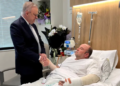
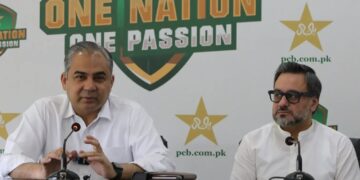
Addressing reporters in Lahore, Mohsin Naqvi referred to a recent medical report prepared by a team of doctors who examined Imran Khan at Rawalpindi’s Adiala Jail on Sunday. He said the findings were clear and showed that appropriate care had been provided.
“The medical report came forward yesterday and everything is clear as per it. Neither we nor the government want to politicise this matter,” Naqvi said, adding that certain requests had been accommodated by authorities but were not suitable for public disclosure at this stage.
The minister criticised what he termed as “putting up a show” and misleading the public. He maintained that the government had assembled a team of its “best government and private doctors” to conduct the examination after a delay of three days.
Naqvi revealed that PTI Chairman Gohar Ali Khan had been invited to Adiala Jail at 2:30pm on Sunday to witness the check-up in person. However, according to the minister, Gohar declined after consulting his party.
“We kept waiting for an hour but Gohar sahib responded in the negative, saying he had consulted with his party and would not be able to come,” Naqvi stated. He insisted that the government’s intention was for the medical examination to take place “in front of everyone” and said doctors remained at the jail for approximately 75 to 90 minutes.
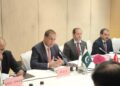
He further explained that Gohar, along with Senate Opposition Leader Allama Raja Nasir Abbas and National Assembly Opposition Leader Mehmood Khan Achakzai, was subsequently invited to the Pakistan Institute of Medical Sciences (PIMS) in Islamabad. There, the examining doctors briefed opposition leaders and also spoke by phone to two doctors nominated by PTI. Each call, he said, lasted around 45 minutes and involved detailed questioning.
Quoting the PTI-recommended doctors, Naqvi claimed they had described the care as “excellent” and equivalent to what they themselves would have provided. He added that opposition representatives had expressed satisfaction and pledged to inform their supporters accordingly.
Responding to remarks by Khyber Pakhtunkhwa Chief Minister Ali Amin Gandapur, who claimed Naqvi had made significant efforts for Imran’s release, the interior minister reiterated his long-held belief that dialogue is the solution to political disputes.
“This is not just my personal view; the prime minister has also emphasised dialogue. If you ask me personally, I will always say talks are the answer,” he said.
Naqvi also suggested that had “sensible people” within PTI been heeded, the party would not have found itself in its current predicament or engaged in events such as those of May 9.
On allegations that the former Adiala Jail superintendent had aggravated Imran’s health condition, the minister said the matter would be reviewed in coordination with the Punjab government, adding that steps were already under consideration.
However, Naqvi accused Imran Khan’s sister Aleema Khanum of obstructing the medical process. He alleged that the check-up was delayed for three days because of her stance and claimed that she had told PTI leadership the issue would “die down” if government arrangements were accepted.
“One the one hand they claim empathy, on the other hand maximum politics has been done over this,” he remarked.
The minister also questioned why roads were being blocked amid PTI protests despite the steps taken for treatment. He argued that if the opposition’s intentions were sincere, they would have agreed on the first day. He alleged that Aleema Khanum had vetoed proposals that were otherwise supported by political leaders.
Naqvi further explained that the eye procedure in question involved an injection and could have been administered inside the jail. However, as a precautionary measure to avoid infection, Imran was taken to PIMS.
“When any prisoner requires treatment, it is our duty,” he said, asking whether thousands of other inmates receive comparable facilities. He suggested that journalists be given prison tours to observe available facilities.
Dismissing claims of political revenge, Naqvi said that if such an intention existed, the first step would have been to restrict facilities in accordance with the jail manual.
Separately, Parliamentary Affairs Minister Tariq Fazal Chaudhry posted on X that Imran would receive another injection in the coming days and a second one after a month, which was expected to further improve his condition. He assured that treatment would continue at the best hospital in Islamabad or Rawalpindi under expert supervision.
Chaudhry said the family had been taken into confidence at every stage and emphasised that all prisoners were equal before the law, with their health being the state’s responsibility. He accused PTI of giving a “political colour” to a sensitive matter to conceal internal divisions.
In response, TTAP issued a strongly worded statement calling Naqvi’s press conference “blatantly misleading and contrary to facts.” The alliance alleged that the government was fabricating a narrative to cover up rights violations and deteriorating health conditions.
It said the demand for the presence of Imran’s personal physician during examinations was a unanimous decision by his family, PTI leadership and TTAP, not an act of stubbornness. The alliance insisted that only the family had the right to decide matters concerning his health.
TTAP also alleged that prolonged solitary confinement constituted torture under international human rights standards and noted that Imran last met his personal physician in November 2024, while family meetings had been suspended for two-and-a-half months.
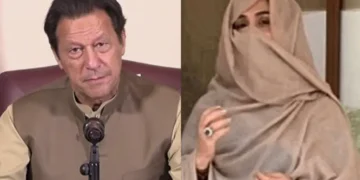
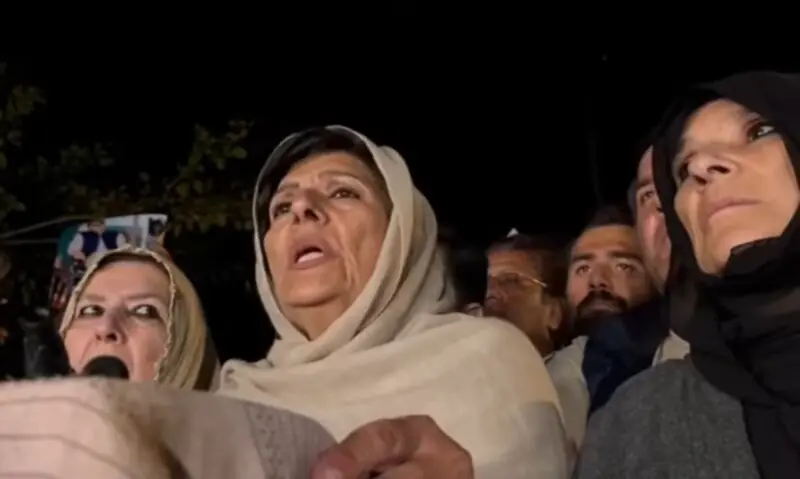
Separately, Imran’s sisters Aleema Khanum, Uzma Khanum and Noreen Niazi addressed a press conference in Islamabad, disputing the government’s version of events.
Aleema said Imran had complained about worsening vision and requested that his reports and blood tests be shared with his personal physicians Dr Faisal Sultan and Dr Aasim Yusuf. She claimed he had informed jail authorities about vision problems three months ago but did not receive treatment for three weeks.
She alleged that the family had initially sought his transfer to Shifa International Hospital and that while the government first agreed, it later changed course. She further claimed that requests to allow Dr Nosherwan Barki to examine Imran were denied.
Uzma Khanum criticised the medical report, saying it lacked diagnostic detail and a treatment plan. She questioned whether injections could be safely administered in jail and expressed fears regarding transparency.
Meanwhile, PTI took strong exception to Naqvi’s remarks suggesting that if the government wanted to harm Imran it could have tightened his conditions. The party described the statement as alarming, saying it raised concerns about custodial treatment amid reports of deteriorating eyesight and prolonged solitary confinement.
“Prolonged solitary confinement is internationally recognised as harmful,” PTI said, warning that threats combined with lack of transparency could heighten risks of custodial abuse.
The controversy has further deepened mistrust between the government and opposition, with both sides trading accusations over transparency, political motives and the treatment of the jailed former premier.