



















































By Asif Naveed
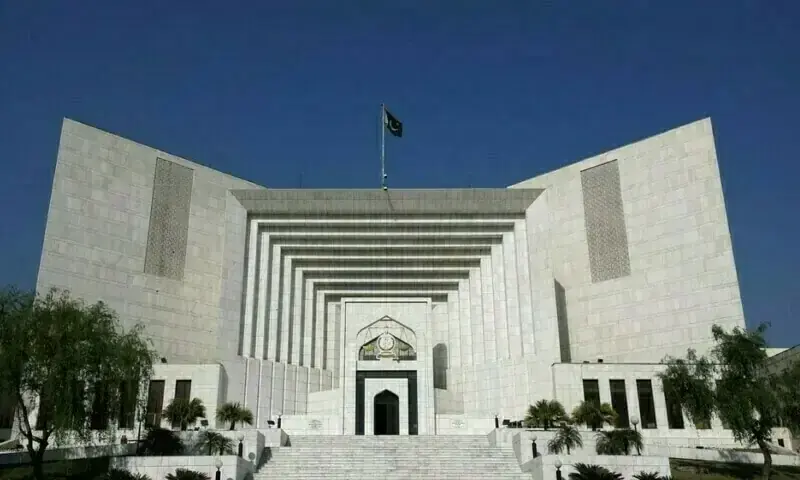
ISLAMABAD (MNN); The federal government on Monday assured the Supreme Court (SC) that Pakistan Tehreek-e-Insaf (PTI) founder Imran Khan had been allowed to speak with his children and that a medical examination of the former prime minister had been conducted by a specialized team of experts.
Last week, a two-judge SC bench, led by Chief Justice of Pakistan (CJP) Yahya Afridi, had directed the government to form a medical team to examine incarcerated Imran Khan following a report submitted by his lawyer, Salman Safdar, which revealed that the former premier had lost 85 percent vision in his right eye. The court also asked the authorities to arrange calls between Imran Khan and his children.
On Monday, Deputy Attorney General Raja Muhammad Shafqat Abbasi filed a fresh application in the SC on behalf of the federal government. The application included a report prepared by the Adiala Jail superintendent, highlighting compliance with the Supreme Court’s previous directions issued on August 24, 2023, under Article 184 of the Constitution (a provision later removed by the 27th Constitutional Amendment).
The report stated that Imran Khan had been provided “better-class” prison facilities at Adiala Jail. His place of confinement consisted of a specially designed compound with seven cells, a corridor for walking and exercise, and an adjacent lawn where he could read newspapers and books. He had access to a cycling machine, stretching bands, a chin-up rod, and other fitness equipment, as per orders issued by a special court on October 23, 2023.
Regarding food, the report noted that Imran was provided meals according to his preference, including dates, honey, walnuts, coffee, porridge, lassi, milk, chia seeds, orange juice, chicken, mutton, lentils, salad, mixed pickles, dry fruits, and green tea. A laborer was assigned for cooking in a designated kitchen, and strict measures were taken for purchasing raw materials.
The report further detailed that adequate healthcare facilities, sanitation, and toiletries were provided. Jail medical officers visited him thrice daily to monitor his vitals, and multiple consultants from public tertiary care hospitals also examined him. Imran had access to filtered drinking water, proper toilet facilities, natural light, fresh air, and the freedom to move within the compound from dawn to dusk. Seasonal clothing, bedding, and hygiene kits were also available, ensuring he had access to all essential items without restriction.
The SC, in its seven-page order dated February 12, reiterated that the three petitions related to the Toshakhana case had become infructuous, as they originated from the same criminal trial. It confirmed that the petitioner retained the right to appeal any grievances before the Islamabad High Court (IHC), where his appellate proceedings were ongoing. The SC adjourned the petitions sine die, to be resumed after the decision on Imran Khan’s appeal before the IHC.
Separately, PTI leader Latif Khosa submitted a letter to CJP Yahya Afridi expressing concerns about Imran Khan’s medical examination conducted “in secrecy” at Adiala Jail on February 15, without informing family members or personal doctors. Khosa said the examination raised serious doubts and caused distress among the family, friends, and supporters. He requested that Imran be granted immediate access to his personal doctors, Dr. Faisal Sultan and Dr. Asim Yousaf, and that he be provided treatment at Al-Shifa Hospital if required. He also urged that the petitioner’s family be fully informed and granted access regarding his medical condition.
Khosa highlighted that the former prime minister had repeatedly sought independent medical examination for his deteriorating eye condition and stressed that his age and health made transparent and timely care essential.