
















































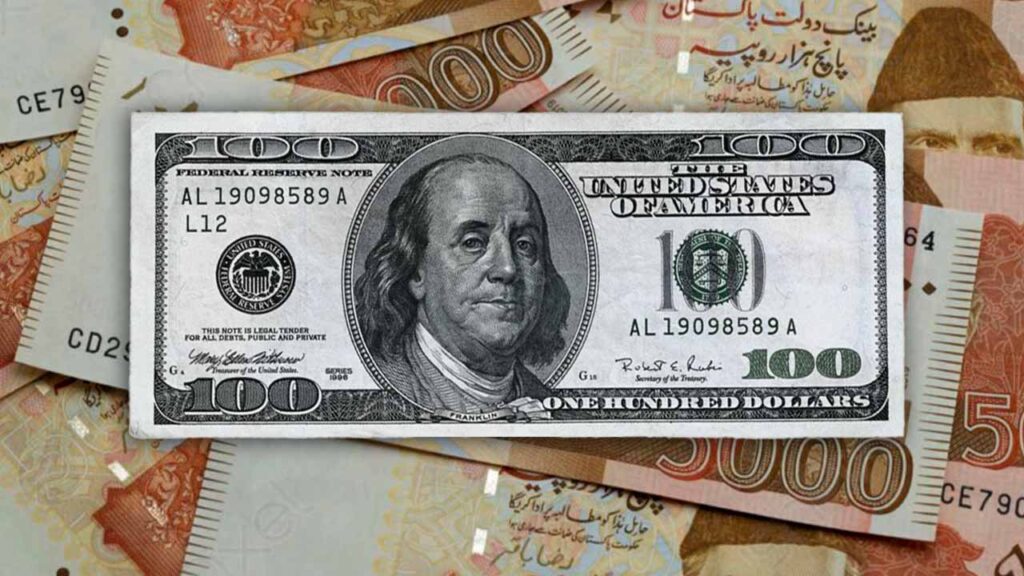
KARACHI (MNN); Banks received about 30 percent fewer US dollars from exchange companies during the first half of the current fiscal year, according to official data.
Exchange companies sold approximately $1.4 billion to banks from July to December FY26, compared with around $2 billion during the same period last year, reflecting a sharp decline of nearly 30 percent.
Under regulations, exchange companies must sell surplus foreign currency to banks, but they are also permitted to sell dollars to individuals for specific purposes. Malik Bostan, Chairman of the Exchange Companies Association of Pakistan (ECAP), said, “Customers purchased about $1.2 billion in six months from exchange companies, kept $400 million in bank accounts, and the remaining $800 million is not traceable.”
The untraceable $800 million is believed to have been invested in virtual currencies. Although cryptocurrency trading is currently unregulated in Pakistan, the State Bank is developing a regulatory framework. The government has expressed willingness to legalize cryptocurrency trading with the SBP’s support.
Selling dollars to the general public is not straightforward. Exchange companies typically issue cheques for encashment through banks or transfer funds directly into buyers’ accounts rather than providing cash.
Data show that currency sales to banks have been declining from June to December 2025. The highest inflow was $408 million in June, followed by $279 million in July, a sharp fall to $163 million in August, a partial recovery to $187 million in September, a rise to $243 million in October, a slight dip to $238 million in November, and $271 million in December.
Despite growing remittance inflows this year, dollar sales by exchange companies to banks have continued to decline. Malik Bostan noted that online platforms and apps offering attractive rates around Rs292 are drawing dollars from Pakistan, often guiding holders to sell or invest in cryptocurrencies.
Exchange Rate Outlook
Faisal Mamsa, CEO of Tresmark, said the State Bank of Pakistan’s latest liquidity profile shows aggregate short positions of less than $2 billion, aligning with IMF targets. This indicates that reserve accumulation has been driven by mopping up excess liquidity rather than buy-sell swaps.
He added that while the current trajectory could push the dollar above Rs280, the central bank is likely to maintain stability given stretched competitiveness and gradually recovering import demand. Mamsa expects the dollar-rupee parity to remain range-bound with two-way movement in the near term.