



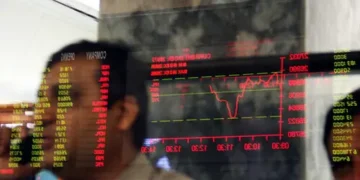






















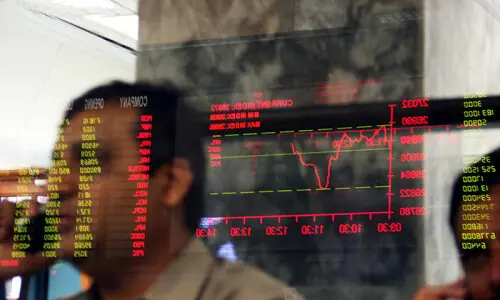
NEWS DESK (MNN); The benchmark KSE-100 index at the Pakistan Stock Exchange recorded a strong gain of over 1,200 points on Tuesday, closing at 153,966.36 — up 1,225.99 points or 0.80 percent from the previous session.
The index witnessed sharp fluctuations during the day, reaching an intraday high of 157,442.68 in early trading before slipping to a low of 153,382.00 later in the afternoon, eventually settling well below its peak.
According to Topline Securities, the market opened on a positive note, supported by upbeat global trends, easing geopolitical tensions, and declining oil prices, which encouraged early buying activity.
However, the rally lost momentum as the session progressed due to weak trading volumes, signaling limited investor participation. Despite a strong start and a surge of up to 4,702 points at one stage, the market gave up a significant portion of its gains.
Total trading volume remained modest at 375 million shares, with turnover recorded at Rs22.97 billion. K-Electric Limited led the volume chart with over 35 million shares traded, coinciding with the appointment of its new CEO.
Major contributors to the index’s gains included Engro Holdings, Fauji Fertilizer Company, Lucky Cement, Systems Limited, and Hub Power Company, collectively adding 1,184 points.
On the downside, MCB Bank, National Bank of Pakistan, Sazgar Engineering Works, Kohat Cement Company, and Nestlé weighed on the index, dragging it down by 237 points.
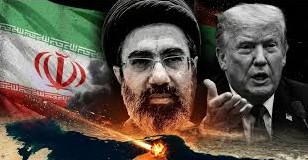
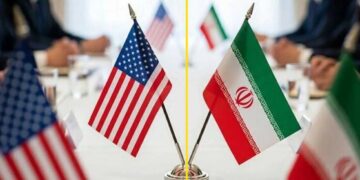
The rebound follows a challenging previous week, where the KSE-100 declined for the eighth consecutive week amid geopolitical tensions, particularly the ongoing US-Israel-Iran conflict, which affected global energy markets and investor sentiment.
Analysts noted that future market direction will largely depend on geopolitical developments, energy policy decisions, and progress in the International Monetary Fund review.
Meanwhile, regional markets also showed gains. Stock indices in the United Arab Emirates rose in early trading, supported by higher oil prices after Donald Trump delayed potential strikes on Iran’s energy infrastructure.
Dubai’s main index surged 4 percent, led by Emaar Properties and Dubai Electricity and Water Authority, while Abu Dhabi’s index gained 1.2 percent, driven by TAQA and Aldar Properties.
Oil prices, a key driver for Gulf markets, rose nearly 2.8 percent to $102.66 per barrel.