

































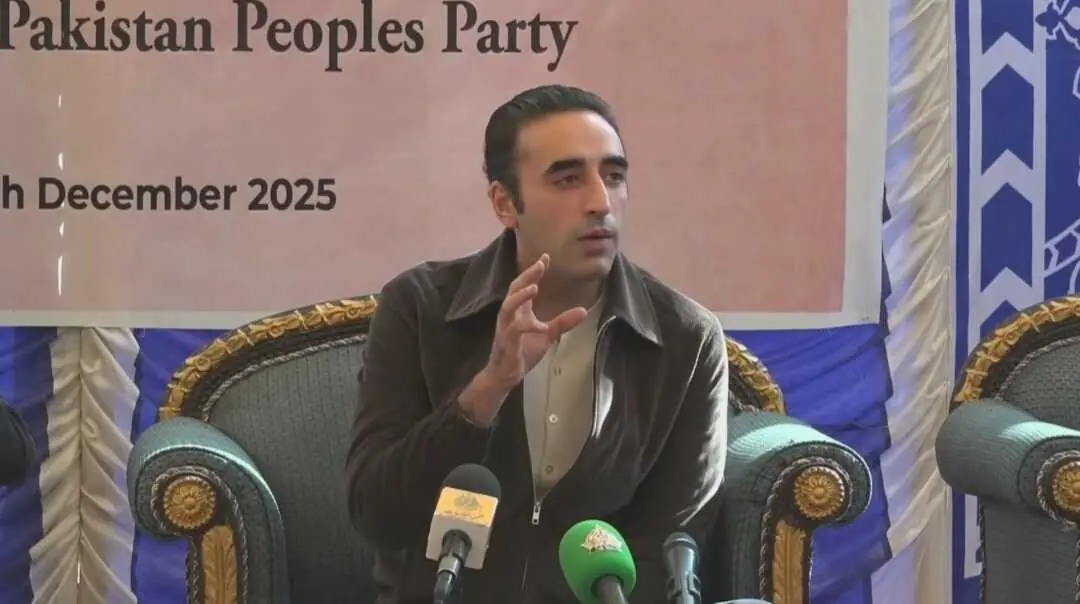
LARKANA (MNN); PPP Chairperson Bilawal Bhutto-Zardari on Sunday underlined the importance of political reconciliation, calling on the opposition to act responsibly while urging the ruling coalition to take concrete steps to create space for dialogue.
Speaking to the media at the inauguration of the Sindh Institute of Child Health and Neonatology in Larkana, Bilawal recalled former prime minister Benazir Bhutto’s message of “truth and reconciliation” and said reconciliation in politics was essential for national progress and economic prosperity.
He said both the government and the opposition had roles to play, warning that responding to extremism with strict measures should not come as a surprise. Referring to PTI, he said attacks on national institutions over minor legal cases or arrests would invite action under the law and Constitution.
Bilawal remarked that if the PPP were in PTI’s position, it would have faced even harsher consequences. He advised PTI to abandon what he termed “politics of extremism,” saying it neither benefited the party nor the country and only deepened political divisions.
Highlighting President Asif Ali Zardari’s role, Bilawal said the president had not only a proven track record but also public confidence to steer reconciliation in politics. However, he noted that current circumstances were complex due to border tensions with India and Afghanistan and a rise in internal terrorism.
He said opposition parties’ conduct was crucial in such times, adding that an extremist approach would trigger a firm state response, whereas a political attitude could help reduce polarization and create space for reconciliation.
Responding to a question about JUI-F chief Maulana Fazlur Rehman’s demand for fresh elections, Bilawal said all political parties must ensure free and fair polls whenever they are held. He stressed the need for electoral reforms to strengthen public trust in the Election Commission and warned against elections that only fuel allegations of rigging and political instability.
Bilawal also called for making parliament functional and using it as the primary forum for dialogue to promote tolerance in politics. Earlier, he noted that despite claims of economic improvement, the public was facing a serious affordability crisis, reiterating PPP’s preference for public-private partnership models in privatisation.
He concluded by saying that long-term solutions to economic and security challenges lay in genuine political stability and responsible conduct by all political forces.