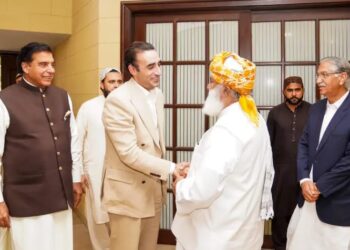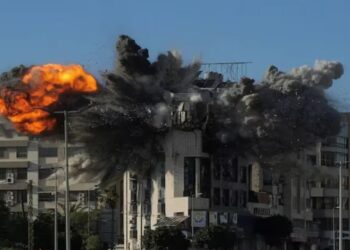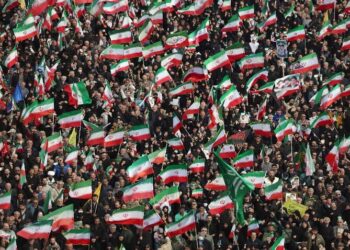

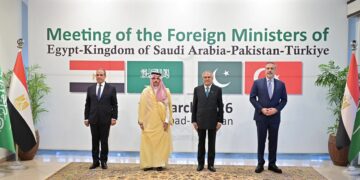



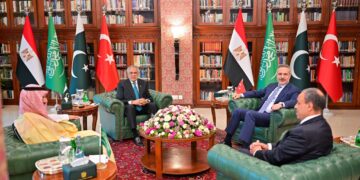

























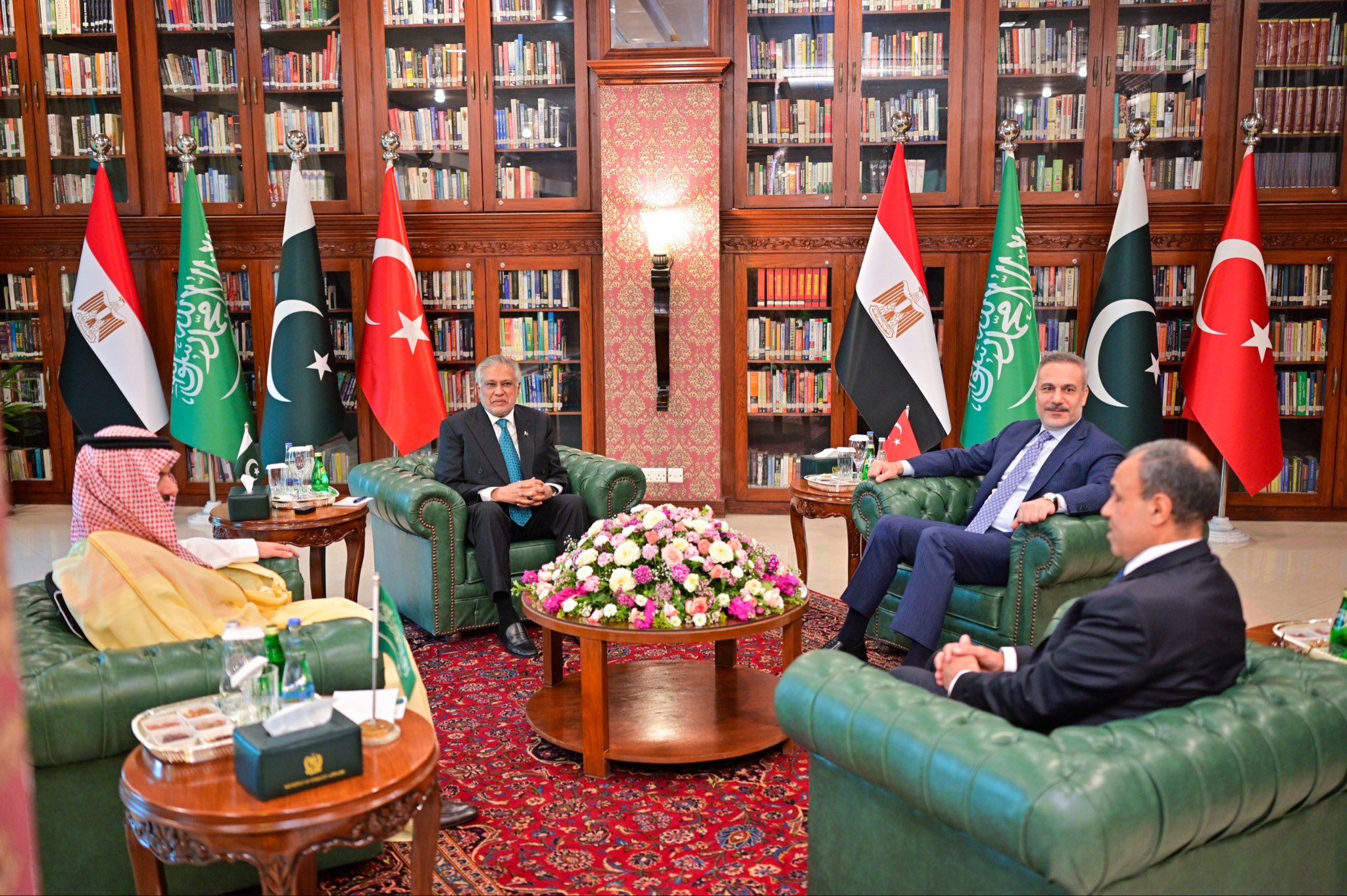
ISLAMABAD (MNN); Media reports from Turkey and Israel indicate that a recent high-level meeting in Islamabad involving Pakistan, Saudi Arabia, Egypt and Turkey extended beyond discussions on ending the ongoing US-Iran conflict, with deliberations reportedly exploring the formation of a new regional “security quartet.”
According to Turkish media, the idea behind such a grouping is rooted in a growing perception among regional states that Western powers primarily safeguard Israel’s security interests, prompting calls for a self-reliant regional defence framework. Israeli media outlets similarly highlighted concerns that diplomatic efforts to de-escalate the Iran war may also be laying the groundwork for a broader military and strategic alignment in the region.
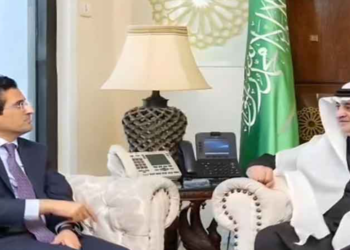
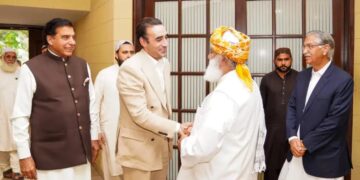
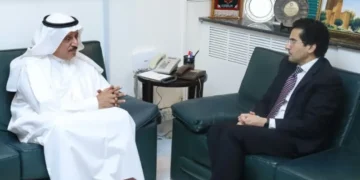
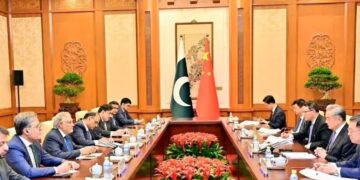
The emergency meeting, held in Islamabad, was officially framed as an initiative to reduce tensions and potentially facilitate a ceasefire between Iran and the United States. However, reports suggest that participating foreign ministers also sought to formulate a joint diplomatic position that could be presented to both Washington and Tehran as a foundation for negotiations.
Analysts cited by Israeli media noted that the initiative could help prevent further escalation, including potential US strikes on Iranian infrastructure, while positioning the four countries as possible guarantors of any future agreement. At the same time, the discussions reportedly focused on lessons learned from previous regional policies aimed at containing Iran, which many now view as ineffective.
A notable aspect of the meeting, highlighted in both Turkish and Israeli reports, was the absence of several Gulf states, including the United Arab Emirates, Kuwait, Bahrain and Oman. Despite being directly affected by Iranian missile and drone attacks, these countries either declined participation or were not included, raising questions about divisions within the Gulf bloc.
Officials and analysts in the UAE, as quoted in Israeli media, expressed skepticism about engaging Tehran diplomatically, arguing that any political settlement must include firm guarantees against future aggression. Additionally, underlying tensions between Abu Dhabi and Islamabad, as well as broader rivalries with Riyadh, were cited as contributing factors to the UAE’s absence.
The reports also pointed to the complex geopolitical positioning of participating countries. Egypt and the UAE maintain diplomatic relations with Israel, while Turkey, a NATO member, has balanced its ties with both the West and Iran. Pakistan, for its part, maintains close relations with both Saudi Arabia and the United States, while also sharing a sensitive border and security concerns with Iran.
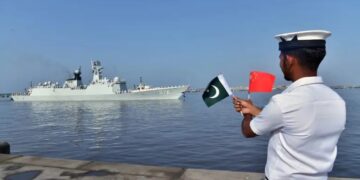
Turkish media emphasized Ankara’s growing military capabilities, including advancements in drone technology and missile systems, positioning it as a key player in any prospective regional security arrangement. Similarly, Pakistan’s military strength, including its status as a nuclear-armed state, was highlighted as a significant factor in the emerging alignment.
Saudi Arabia’s role was described as pivotal, given its influence in the Muslim world and its cautious approach to direct military confrontation despite tensions with Iran. Egypt, with one of the largest armed forces in the region, is also expected to play a central role in shaping any future security framework.
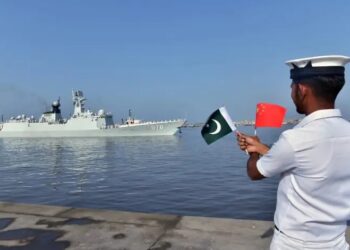
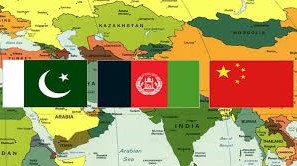
Chinese diplomatic engagement and mediation efforts were also noted in the broader context of regional realignments, although the Islamabad meeting itself was not formally described as a mediation initiative.
Israeli media assessments suggested that the evolving partnership reflects a shift away from traditional alliances, such as the Gulf Cooperation Council, towards new configurations involving both Arab and non-Arab powers. The reports added that longstanding proposals for an “Arab NATO”-style alliance may be giving way to alternative models driven by regional priorities rather than Western frameworks.
While no formal announcement has been made regarding the creation of a security bloc, the discussions signal a potential reconfiguration of regional dynamics as countries seek to balance security concerns, economic interests and geopolitical pressures amid the ongoing Iran conflict.