



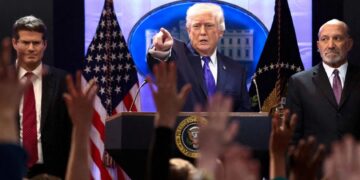


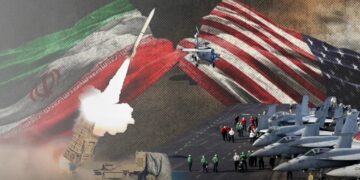













NEWS DESK (MNN); The United States and Israel on Saturday carried out what they described as a pre-emptive joint military strike on Iranian targets, with US President Donald Trump announcing the start of “major combat operations”.
According to US officials, the first wave of strikes — named “Operation Epic Fury” by the Pentagon — targeted senior Iranian officials and key installations. An Israeli official claimed that Iran’s Supreme Leader Ayatollah Ali Khamenei and President Masoud Pezeshkian were among the intended targets, though the outcome remained unclear.
Iranian state media reported that President Pezeshkian was “safe and sound”, while Khamenei was moved to a secure, undisclosed location. In an interview with NBC News, Iran’s Foreign Minister Abbas Araghchi said Khamenei was alive “as far as I know”.
Iran Retaliates Across Region
Iran’s Islamic Revolutionary Guard Corps confirmed it had launched a first wave of missile and drone attacks against Israel in response. Iranian officials said US bases and interests across the Middle East were within reach.
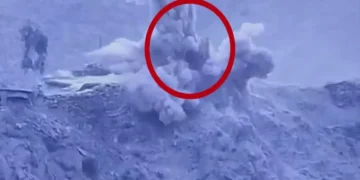
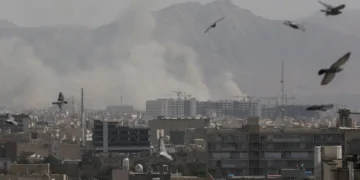
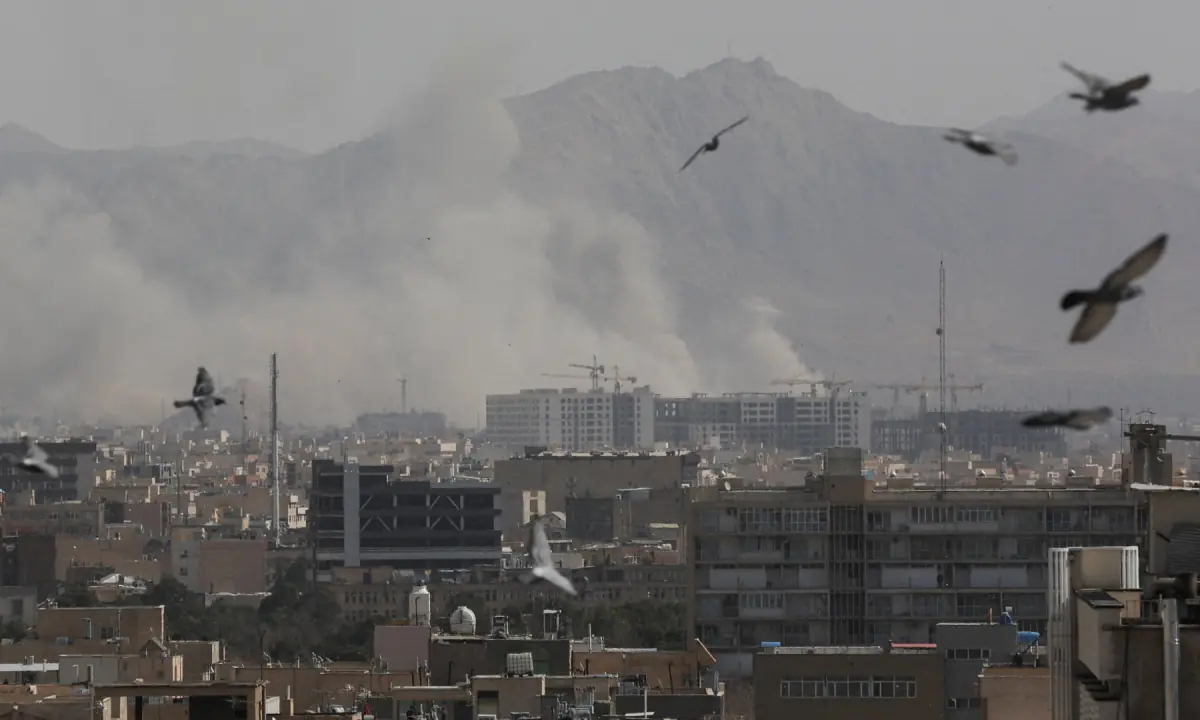
Explosions were reported in Tehran and several other Iranian cities. Blasts were also heard in Abu Dhabi and Dubai in the United Arab Emirates, while Bahrain said the service centre of the US Fifth Fleet had come under missile attack. Qatar claimed it had intercepted missiles targeting its territory and reserved the right to respond.
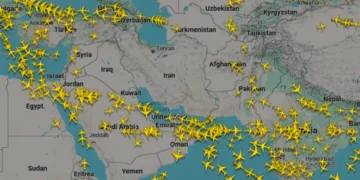
Airspace across Iran, Israel and Iraq was closed, with Gulf nations including Qatar, Kuwait and the UAE also suspending civilian flights amid the escalating confrontation.
Civilian Casualties Reported
Iran’s state news agency IRNA reported that an Israeli strike on a girls’ school in Hormozgan province killed at least 57 students and wounded 60 others. Minab’s provincial governor Mohammad Radmehr said 53 students were still trapped under the rubble as rescue operations continued. The report could not be independently verified.
Diplomatic Hopes Fade
The renewed confrontation has severely undermined hopes of resolving Iran’s nuclear dispute with Western powers through diplomacy. Recent indirect talks between Washington and Tehran failed to achieve a breakthrough.
President Trump said the operation was aimed at eliminating imminent threats posed by Iran and preventing it from obtaining a nuclear weapon. He cited decades of hostility, including the 1979 US embassy hostage crisis in Tehran, and urged Iranians to “take over your government” once the operation concludes.
Israeli Prime Minister Benjamin Netanyahu said the joint offensive would create conditions for the Iranian people to determine their future and remove what he described as tyranny.
Regional Panic and Uncertainty
Witnesses across Iran reported panic buying, long queues at petrol stations and banks, and families fleeing major cities. Schools and universities were ordered closed until further notice.
Iran’s Supreme National Security Council warned that further attacks were likely and advised citizens to move to safer areas where possible.
While some Iranians expressed hope that the strikes might weaken the clerical establishment, others voiced fear that foreign intervention could plunge the country into prolonged chaos similar to Iraq.
The scope and duration of US and Israeli operations remain unclear, though US officials indicated the campaign could last several days. The situation continues to evolve rapidly, with the risk of a wider regional war growing by the hour.