




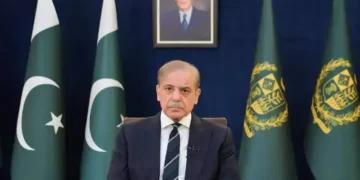

























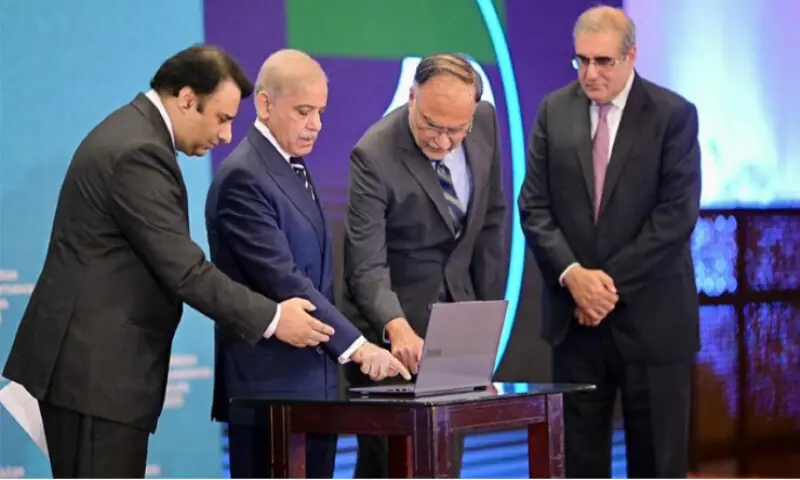
ISLAMABAD (MNN); Prime Minister Shehbaz Sharif on Wednesday inaugurated the Public Sector Development Programme Data Portal, describing it as a major move towards transparency and open governance.
The launch took place at the Pakistan Governance Forum 2026 in Islamabad, where the premier emphasised adopting a “whole-of-government” strategy to enhance exports and stabilise the economy. He noted that electricity tariffs had been reduced by nearly Rs9 per unit and stressed the need for joint efforts to curb power theft, which he said causes losses of around Rs200 billion.
The prime minister said that the Utility Stores Corporation and the Pakistan Works Department had been shut down to plug financial leakages. He added that during Ramazan, Rs38 billion in direct subsidies were provided to deserving families through digital wallets.
Shehbaz Sharif underlined the importance of lowering direct taxes in the upcoming federal budget to facilitate businesses. He called for eliminating sales tax evasion and reiterated that the government’s responsibility was to support the private sector rather than compete with it.
Federal Planning Minister Ahsan Iqbal said global financial institutions and rating agencies were presenting Pakistan’s economic turnaround as a case study. He credited structural reforms for preventing a sovereign default and said governance reforms were central to the government’s “Uraan Pakistan” agenda.
Iqbal expressed confidence that Pakistan could achieve a one trillion dollar economy by 2035 if it fully harnessed its resources. He urged political and economic stakeholders to prioritise an “economic long march” over political confrontation. He added that the PSDP Data Portal would enable citizens to track development projects and enhance accountability.
Samuel Rizk, Resident Representative of the United Nations Development Programme, said governance was a strategic decision that shapes a nation’s future, linking inclusive governance with economic stability, climate resilience and public trust.
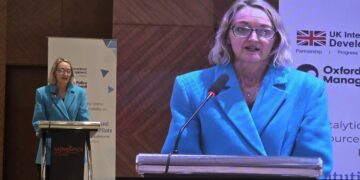
British High Commissioner Jane Marriott appreciated Pakistan’s reform efforts, especially initiatives aimed at formulating a comprehensive export strategy. She noted that effective governance lowers costs and strengthens investor confidence.
Gilgit-Baltistan Chief Minister Yar Mohammad said digital governance initiatives were bringing transformation to the region, highlighting that the civil secretariat now runs an integrated system for case management, asset tracking, biometric attendance and district monitoring.
Adviser to the Chief Minister of Khyber Pakhtunkhwa Muzammil Aslam stated that the province had completed a five-year digitalisation roadmap in less than a year. He said 170 services were identified for digitalisation, with 56 fully digitised and 73 offering electronic payment facilities.
Federal Law Minister Azam Nazeer Tarar said legal reforms were fundamental to governance improvements. He noted that over 900 updated federal laws were now accessible online through the Pakistan Code and that 176 years of legislative history had been digitised. New case management systems were also processing thousands of federal cases.
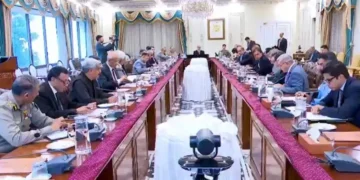
Separately, Prime Minister Shehbaz Sharif assured full federal cooperation for timely completion of development projects in Sindh during a meeting with Sindh Chief Minister Syed Murad Ali Shah.
According to a statement issued by the Prime Minister’s Office, the Sindh chief minister briefed the premier on the progress of ongoing projects in the province. The prime minister directed federal ministries to maintain close coordination with the Sindh government to expedite public welfare initiatives.
Shehbaz Sharif described the Pakistan Peoples Party as a key ally in the coalition government and said stronger collaboration among partners would further advance national development. He stressed that political harmony and consultation were essential for stability and policy continuity.
Deputy Prime Minister and Foreign Minister Ishaq Dar, Federal Ministers Azam Nazeer Tarar and Ahsan Iqbal, as well as Adviser to the Prime Minister Rana Sanaullah, were also present at the meeting.