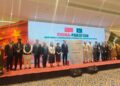



















































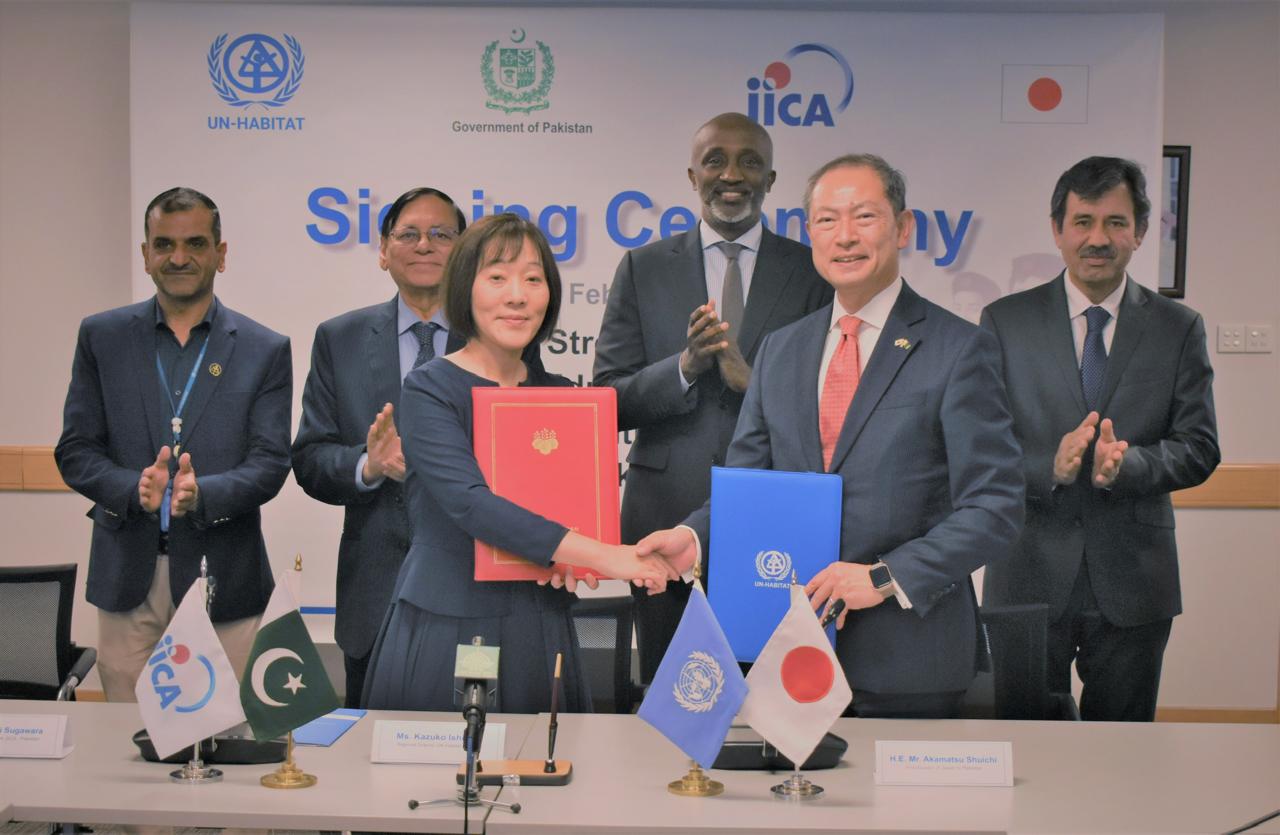
ISLAMABAD (MNN); The Government of Japan, UN-Habitat and the Japan International Cooperation Agency (JICA) on Wednesday signed an agreement to strengthen disaster resilience of schools in Khyber Pakhtunkhwa (KP), particularly in flood-affected districts.
The Exchange of Notes and Grant Agreement were signed at a ceremony held on February 11, 2026, for the project titled “Strengthen the Disaster Resilience of Educational Infrastructure in Khyber Pakhtunkhwa Province.” The initiative is backed by a grant of 427 million Japanese Yen (approximately $2.7 million) from the Government of Japan.
Rebuilding Flood-Damaged Schools
Khyber Pakhtunkhwa remains vulnerable to climate-induced hazards due to its geography. In 2025, cloudbursts and flash floods damaged 437 schools across the province, severely disrupting educational activities, particularly in Swat and Buner, which were among the worst-affected districts.
Under the new project, damaged schools in Swat and Buner will be rehabilitated and retrofitted to restore safe and functional learning environments. The initiative will focus on strengthening school structures, improving ventilation and lighting, and reinstating gender-sensitive water, sanitation and hygiene (WASH) facilities to ensure dignity, privacy and accessibility for girls and children with disabilities.
Japan Reaffirms Support
Speaking at the ceremony, Japan’s Ambassador to Pakistan, Akamatsu Shuichi, reaffirmed Japan’s commitment to supporting Pakistan’s resilience agenda. He said investing in stronger school infrastructure is essential to protect children and ensure continuity of education during climate-related disasters.
UN-Habitat’s Regional Director for Asia and the Pacific, Kazuko Ishigaki, highlighted the organization’s role in creating safer learning spaces. She said retrofitted schools would offer structurally secure classrooms, improved ventilation and essential WASH facilities, enabling students to study in a safe and dignified environment. She added that schools would also serve as community hubs for disaster preparedness and first aid, enhancing local resilience.
JICA’s Senior Representative, Sugawara Takayuki, said the initiative reflects JICA’s disaster risk reduction approach under the principle of “Build Back Better.” He stressed the importance of rebuilding infrastructure in a more resilient manner to prevent repeated damage and ensure sustainable economic and social development.
Advancing Global and National Resilience Goals
UN Resident and Humanitarian Coordinator Mohamed Yahya thanked the Government of Japan and JICA for their continued partnership. He said the project aligns with the UN Sustainable Development Cooperation Framework and supports Pakistan’s implementation of the Sendai Framework for Disaster Risk Reduction.
Through the construction and rehabilitation of disaster-resilient schools and provision of resilience training, the project aims to reduce loss of life, minimize the number of people affected by natural disasters, and curb economic losses, while promoting human security in flood-hit communities.