










































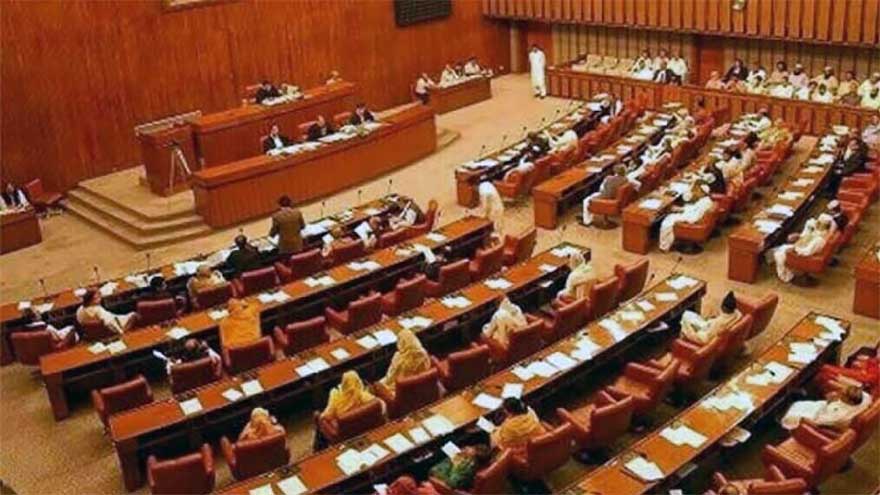
ISLAMABAD (MNN); Strong protests were witnessed in the Senate on Tuesday over the power regulator’s decision to alter contracts for solar energy consumers, with opposition parties terming the move unjust and the government defending it as a necessary regulatory step.
The National Electric Power Regulatory Authority (Nepra) on Monday revised the terms for all existing and future net-metered solar consumers, commonly known as prosumers. The new notification effectively ended the net-metering system and replaced it with net-billing, citing the need to manage rising solar penetration and protect the costly and inefficient state-run power distribution network.
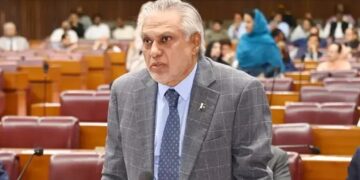
Initiating debate on the issue, PTI Senator Syed Ali Zafar strongly condemned the decision, calling it a serious breach of trust and an act of cruelty against the public. He said promises made by the state were sacred and must be honoured, recalling that citizens were encouraged to invest in solar energy with the assurance of fair net-metering terms.
Senator Zafar said solar adoption was promoted not merely as a personal benefit but as a national mission to reduce fuel imports, cut electricity costs and move towards clean energy. Acting on this assurance, people across Pakistan invested heavily in solar systems, often using life savings, selling assets or taking loans that they were still repaying.
He regretted that despite solar systems now being installed in homes, businesses and farms nationwide, the government had abruptly attempted to roll back its commitment retrospectively. Such retrospective withdrawal, he said, amounted to grave injustice and violated the legal principle of promissory estoppel.
Calling the move “the most cruel act of the government”, he said it would further burden citizens already crushed by high electricity bills and economic hardship. He questioned how Pakistan could attract foreign investment when it failed to honour commitments made to its own people.
Rejecting claims that Nepra acted independently, Senator Zafar asserted that the regulator was acting on government directives. He challenged the government to demonstrate sincerity by withdrawing the decision, warning that it would erode public trust, harm the investment climate and punish citizens who acted in good faith.
PPP Senator Sherry Rehman also criticised the decision, saying it was incomprehensible and had left the middle class questioning why solar incentives were offered in the first place. She said the real issue lay in the faulty distribution system and asked what message repeated tariff changes were sending to investors.
She lamented that electricity bills had become a tool for imposing multiple taxes, adding that instead of investing in advanced technologies like artificial intelligence, Pakistan was increasing the financial burden on consumers. She stressed that industries and households needed access to cheaper electricity, warning that high taxes and energy costs were forcing manufacturers to leave the country.
JUI-F Senator Kamran Murtaza and PTI Senator Zeeshan Khanzada echoed similar concerns.
Responding to the criticism, Power Minister Awais Leghari defended the move, stating that Nepra acted within its constitutional and legal authority to protect consumer interests. He clarified that the changes were regulatory, not policy-based, and insisted there was no retrospective application.
He said consultations had been held with solar associations and stakeholders last June, and the Solar Association of Pakistan had acknowledged the necessity of the changes to safeguard public interest. The minister said the association had warned that delaying reforms could lead to greater damage and financial burden for the majority of consumers.
Leghari rejected claims of 20-year contracts, stating that net-metering contracts were for seven years and none of their terms had been altered. He said out of more than 30 million electricity consumers, only 466,506 had net-metering arrangements, contributing around 7,000 megawatts to the grid.
He argued that allowing electricity purchases at existing net-metering rates would impose a Rs200 billion burden on the remaining 30 million consumers, which could rise to Rs550 billion. He clarified that existing contracts would remain intact and that the new regulations primarily applied to future consumers.
“These regulations will continue to evolve with time,” he said, adding that revising rates and regulations was not unprecedented.