




















































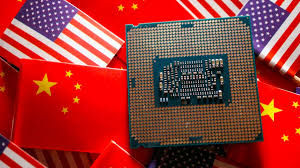
BEIJING (MNN); Leading Chinese artificial intelligence researchers say China has the potential to narrow its technological gap with the United States through increased innovation and risk-taking, although restrictions on advanced chipmaking tools continue to weigh heavily on the sector.
China’s emerging “AI tiger” startups, including MiniMax and Zhipu AI, made strong debuts on the Hong Kong Stock Exchange this week, signaling growing investor confidence as Beijing accelerates AI and semiconductor listings to strengthen domestic alternatives to advanced U.S. technologies.
Yao Shunyu, a former senior researcher at OpenAI and recently appointed chief AI scientist at Tencent, said there is a strong likelihood that a Chinese company could emerge as the world’s leading AI firm within the next three to five years. However, he identified the shortage of advanced chipmaking equipment as the sector’s primary technical obstacle.
Speaking at an AI conference in Beijing, Yao said China currently enjoys advantages in electricity supply and infrastructure, but faces bottlenecks in production capacity, particularly in lithography machines and the broader software ecosystem.
China has developed a working prototype of an extreme-ultraviolet lithography machine that could eventually produce cutting-edge semiconductor chips comparable to those made in the West, according to a Reuters report last month. However, sources said the machine has yet to manufacture functional chips and may not do so before 2030.
Investment Gap Remains
Industry leaders at the conference acknowledged that the United States still holds a substantial edge in computing power due to massive investments in digital infrastructure.
Lin Junyang, technical lead for Alibaba’s flagship Qwen large language model, said U.S. computing infrastructure is likely one to two orders of magnitude larger than China’s. He added that American firms such as OpenAI are investing aggressively in next-generation research.
Lin noted that Chinese companies face tighter financial constraints, with most computing resources being consumed by day-to-day operations. He was speaking during a panel discussion at the AGI-Next Frontier Summit hosted by Tsinghua University’s Beijing Key Laboratory of Foundational Models.
Despite limited resources, Lin said Chinese researchers have been driven to innovate, particularly through algorithm-hardware co-design, allowing large AI models to run on smaller and more affordable hardware.
Tang Jie, founder of Zhipu AI, which raised HK$4.35 billion in its initial public offering, highlighted the growing willingness of younger Chinese AI entrepreneurs to pursue high-risk ventures, a trait long associated with Silicon Valley.
Tang said creating an environment that gives talented risk-takers more time and space to innovate is an area where government support could play a key role in strengthening China’s AI ecosystem.