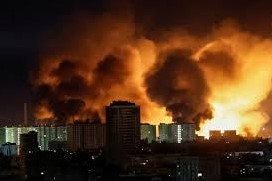











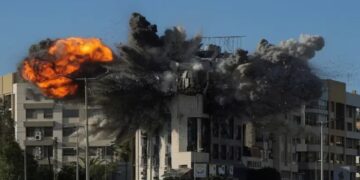



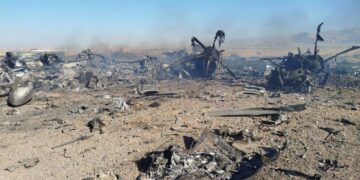


















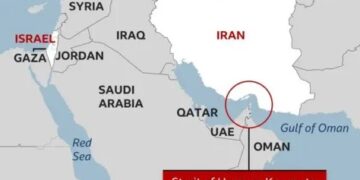










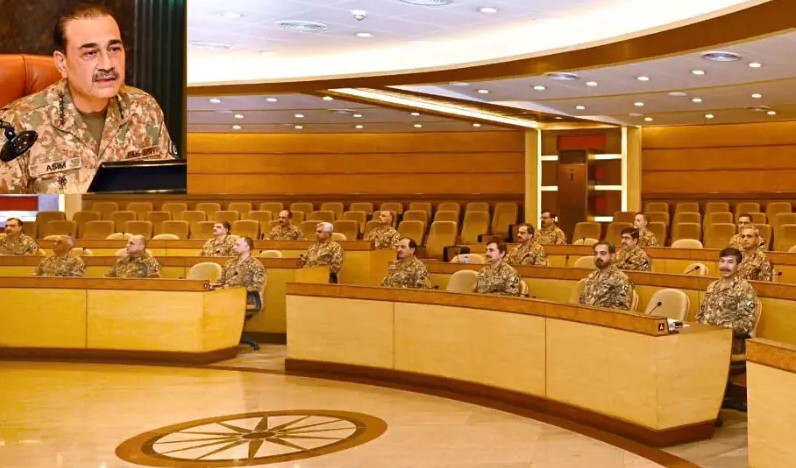
RAWALPINDI (MNN); Pakistan’s military leadership on Tuesday strongly condemned recent attacks on Saudi Arabia’s energy infrastructure, terming them an “unnecessary escalation” amid the ongoing conflict involving the United States, Israel, and Iran.
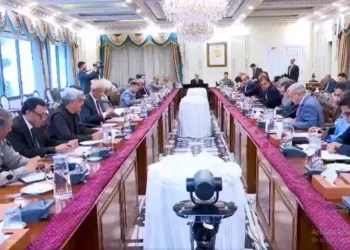
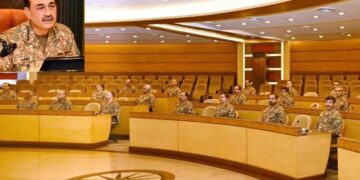
The remarks came during the 274th Corps Commanders’ Conference chaired by Asim Munir, Chief of Defence Forces and Chief of Army Staff, at the General Headquarters, according to a statement issued by the Inter-Services Public Relations.
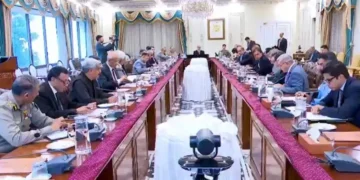
The forum appreciated the government’s “hectic efforts” to help bring an end to the Middle East conflict, emphasizing restraint, dialogue, and de-escalation while reaffirming Pakistan’s commitment to principled diplomacy and constructive engagement.
The military leadership reiterated Pakistan’s role as a responsible regional stakeholder, highlighting its contribution to peace and stability. It also expressed deep concern over attacks targeting Saudi Arabia’s petrochemical and industrial facilities, warning that such actions undermine ongoing diplomatic efforts for peaceful resolution.
The statement noted that Saudi Arabia’s measured and restrained response despite “grave provocations” had helped create space for mediation and diplomatic solutions. However, it cautioned that continued aggression could jeopardize the fragile environment needed for peace.
Earlier, Pakistan’s Foreign Office had also condemned the attacks, calling them a “dangerous escalation” that threatens regional stability.
The development comes in the backdrop of a “Strategic Mutual Defence Agreement” signed between Pakistan and Saudi Arabia in Riyadh last year, under which an attack on one country would be considered an act of aggression against both.
The conference also conducted a comprehensive review of the internal and external security environment. The forum reaffirmed its resolve to eliminate all terrorist proxies allegedly operating with the backing of India and other external sponsors, along with their facilitators.
It was further decided that the pace of Operation Ghazab lil-Haq, launched on February 26 against militant elements linked to the Afghan Taliban, would continue until terrorist sanctuaries are dismantled and the use of Afghan soil against Pakistan is decisively ended.
The military leadership rejected what it termed as “persistent disinformation and baseless allegations” attributed to India, stating that such narratives have been widely discredited internationally.
Concern was also expressed over ongoing human rights violations in Indian Illegally Occupied Jammu and Kashmir, including reports of staged encounters allegedly used to cover up extrajudicial killings.
In his concluding remarks, Field Marshal Asim Munir praised the armed forces for their professionalism and operational excellence, reaffirming their commitment to defending the country and sustaining intelligence-based counter-terrorism operations.
He stressed that through coordination between the government, armed forces, and the public, Pakistan continues to strengthen its security, economic resilience, and global standing. He also directed commanders to maintain the highest levels of readiness and adaptability to counter evolving threats.
At the start of the meeting, participants offered Fateha for the martyrs of the armed forces, law enforcement agencies, and civilians who sacrificed their lives for the country, reaffirming that their legacy remains central to Pakistan’s national security.