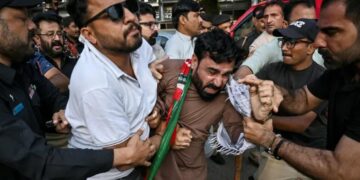













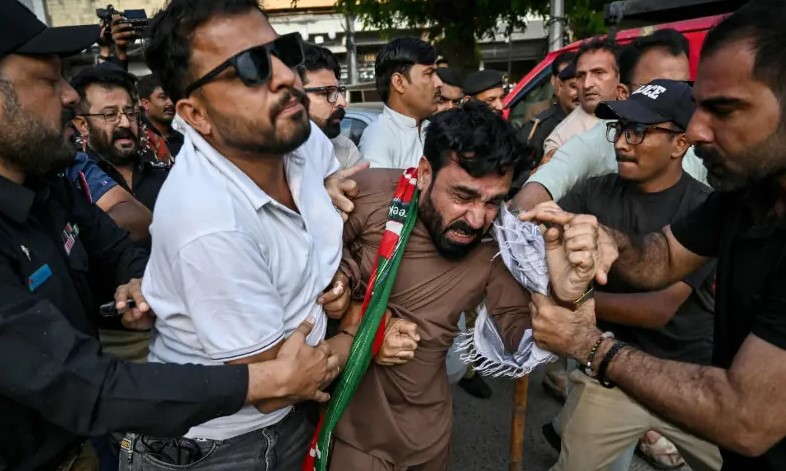
KARACHI (MNN); Police on Sunday arrested 23 leaders and workers of the Pakistan Tehreek-e-Insaf (PTI), including two former lawmakers, after clashes broke out near the Karachi Press Club (KPC), officials said.
PTI supporters had gathered at the site to stage a demonstration against soaring fuel prices. The party had announced the protest outside KPC at 4:00 pm to highlight “rising inflation and record-high petroleum prices.”
The protest turned violent as PTI alleged that police used force against demonstrators. A video shared by PTI Sindh showed policewomen dragging female protesters. The party claimed, “Women participating in the protest against inflation were beaten and arrested.”
However, South Senior Superintendent of Police (SSP) Mahzor Ali said in a video statement that “some miscreants” threw stones at police, who were deployed to maintain law and order. He added that police responded with controlled shelling and baton-charge.
South Deputy Inspector General Syed Asad Raza told Dawn that the police had arrested 23 PTI workers and leaders, including former lawmakers Dawa Khan and Alamgir Khan, and lawyers Maqsood Alam and Khalid Mehmood. An FIR was registered at Artillery Maidan police station under Sections 147, 149, 186, and 188 of the Pakistan Penal Code.
According to authorities, about 100–150 PTI workers led by Sindh President Haleem Adil Sheikh gathered at Fawara Chowk, carrying sticks and banners. Police informed them that Section 144 had been imposed in the Red Zone and asked them to disperse. The protesters allegedly attacked police with stones and sticks, prompting reinforcements.
PTI Karachi condemned the arrests, demanded immediate release of the detained leaders, and called on the Sindh High Court Chief Justice to take notice.
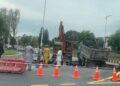
Earlier, roads leading to the KPC had been closed by Karachi Traffic Police for security reasons. KPC President Fazil Jamili criticized the blockade, saying the press club is a “sanctuary of free speech, not a tactical blockade.” Former KPC President Saeed Sarbazi also condemned the closures as a “direct assault on press freedom and democratic rights.”
The blocked roads were reopened at night, according to Karachi Traffic Police alerts.