




















































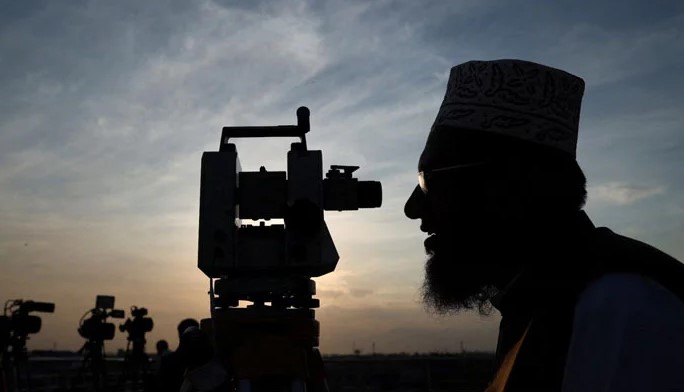
ISLAMABAD (MNN); The Central Ruet-e-Hilal Committee announced on Thursday that the Shawwal crescent was not sighted anywhere in Pakistan, and Eidul Fitr will be celebrated across the country on Saturday, March 21, 2026.
The meeting of the Central Ruet-e-Hilal Committee was held in Islamabad under the chairmanship of Maulana Abdul Khabir Azad. Zonal and district moon sighting committees also convened at their respective headquarters to observe the Shawwal crescent, but no confirmed reports of sighting were received.
The announcement aligns with astronomical predictions, which had suggested a low probability of moon sighting on the evening of March 19. As a result, Pakistan will complete 30 days of Ramadan this year before marking Eid.
Regionally, the Shawwal moon was also not sighted in several Gulf countries, including Saudi Arabia, where Eid will be observed on Friday. Meanwhile, Afghanistan has already marked Eidul Fitr earlier, reflecting differences in moon sighting practices across countries.
Pakistan began fasting for Ramadan on February 19, 2026. According to the SUPARCO, the new moon of Shawwal 1447 AH was expected to be born on March 19 at 6:23 PST.
The agency noted that by sunset, the moon’s age would be approximately 12 hours and 41 minutes, with a short interval of around 28 minutes between sunset and moonset along coastal areas, making visibility difficult.
Eidul Fitr, one of the most significant Islamic festivals, marks the end of a month-long period of fasting, prayer, and reflection observed by Muslims worldwide. The festival is celebrated with communal prayers, charity, and gatherings among family and friends.
Islamic months are determined by the lunar cycle and typically last 29 or 30 days depending on the sighting of the crescent moon. Due to this system, the Islamic calendar is about 10 days shorter than the Gregorian calendar, causing Ramadan and Eid to shift earlier each year.