










































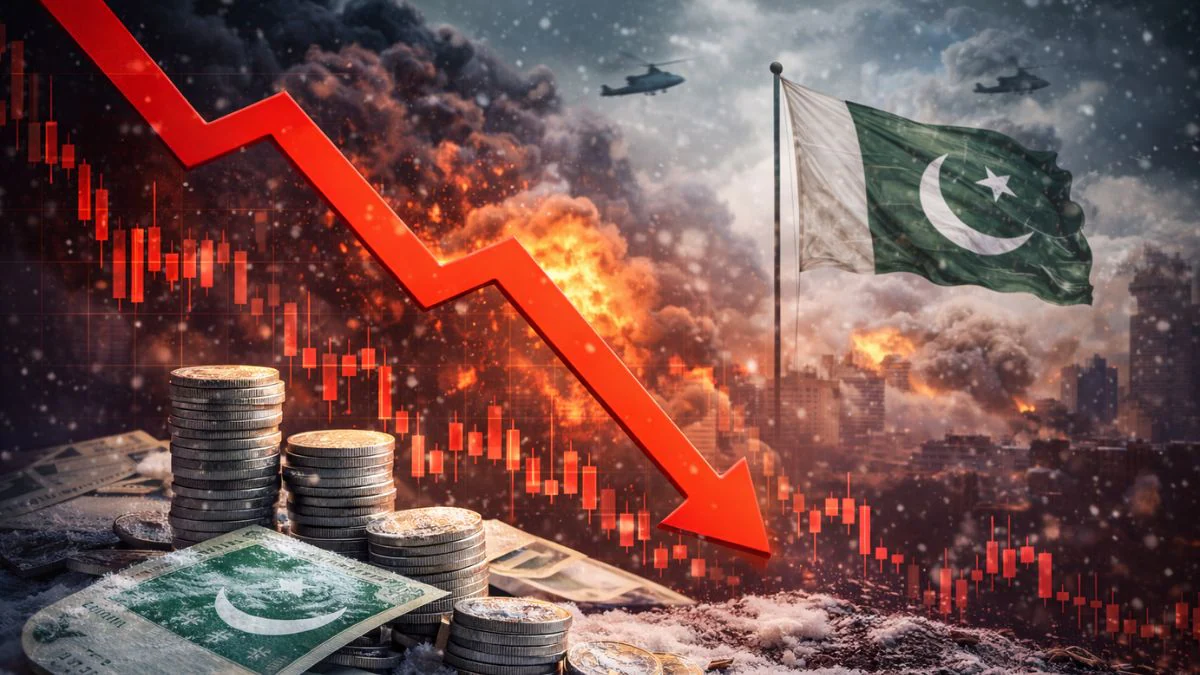
KARACHI (MNN); The benchmark KSE-100 index at the Pakistan Stock Exchange witnessed its steepest single-day decline in history on Monday, plunging by 16,089.17 points after an initial crash forced a temporary halt in trading.
The dramatic downturn unfolded at the start of the trading week, following a weekend marked by heightened geopolitical tensions. Within minutes of the opening bell, the market tumbled by more than 15,000 points, prompting the Pakistan Stock Exchange to suspend trading under its circuit breaker mechanism to prevent panic selling.
According to Mohammed Sohail, Chief Executive Officer of Topline Securities, the market initially overreacted due to aggressive selling by certain funds and leveraged investors. He said the early slide reflected nervous sentiment rather than a fundamental shift in economic indicators.
When trading resumed at around 10:30am, the index was down 12,334.88 points from its previous close of 168,062.16 points, representing a drop of 7.34 per cent. However, some stability returned shortly afterward as investors began to assess valuations.
By 11:07am, the benchmark index had trimmed part of its losses, narrowing the decline to 9,164.62 points, or 5.45 per cent, as selective buying emerged. Analysts attributed the partial recovery to the realisation that the market had already fallen roughly 20 per cent from its recent peak, making several blue-chip stocks appear attractively priced.
Despite the midday rebound, selling pressure intensified again during the latter half of the session. By the close of trading, the KSE-100 index settled at 151,972.99 points, slightly above its intraday low of 151,747.96 points. This marked an overall decline of 9.57 per cent from the previous session’s close and a historic single-day erosion of 16,089.17 points.
Among the most actively traded shares, K-Electric Limited led the volume chart, falling 12.53 per cent to Rs6.70 on a turnover of 163,349,544 shares. Worldcall Telecom Limited followed, declining 13.18 per cent to Rs1.12 with 82,602,451 shares traded. First National Equities Limited also posted a steep loss, dropping 20.13 per cent to Rs1.23 on a volume of 41,849,359 shares.
Topline Securities reported that major index heavyweights exerted substantial downward pressure. These included Fauji Fertilizer Company, United Bank Limited, Engro Holdings Limited, Hub Power Company, and Meezan Bank Limited, which together shaved approximately 5,167 points off the benchmark index.
Despite the sharp correction, trading activity remained robust throughout the session. Total market volume reached 809 million shares, while turnover amounted to Rs48.5 billion, indicating heightened investor participation amid volatility.
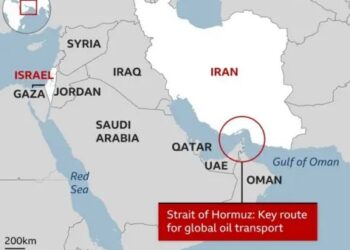
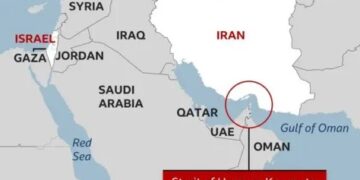
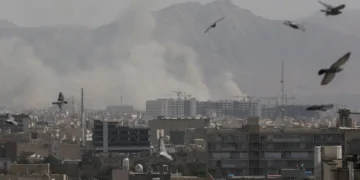
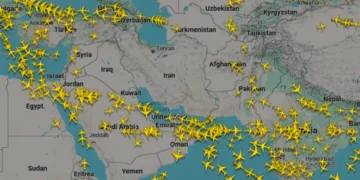
The market turmoil coincided with escalating regional geopolitical tensions. Over the weekend, the United States and Israel carried out what they termed a pre-emptive joint strike on Iranian targets. US President Donald Trump announced the commencement of major combat operations, fuelling fears of a broader conflict in the Middle East.
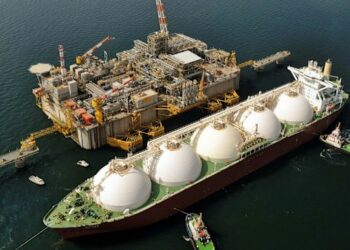
The developments sent shockwaves through global commodity markets. Brent crude surged 6.4 per cent to $77.57 per barrel in early Monday trading, briefly touching levels above $82.00. US crude oil prices rose 6.2 per cent to $71.17 per barrel. Meanwhile, safe-haven gold climbed 1.6 per cent to $5,360 per ounce as investors sought protection against uncertainty.
In its commentary, AKD Research noted that it expected the KSE-100 to recover in the coming sessions. The firm argued that the direct economic impact of the conflict on Pakistan appeared manageable and that the country was not a direct participant in the hostilities.
Market analysts suggested that while external shocks had triggered the sell-off, long-term fundamentals and improved macroeconomic indicators could help restore confidence once global uncertainty subsides.