





































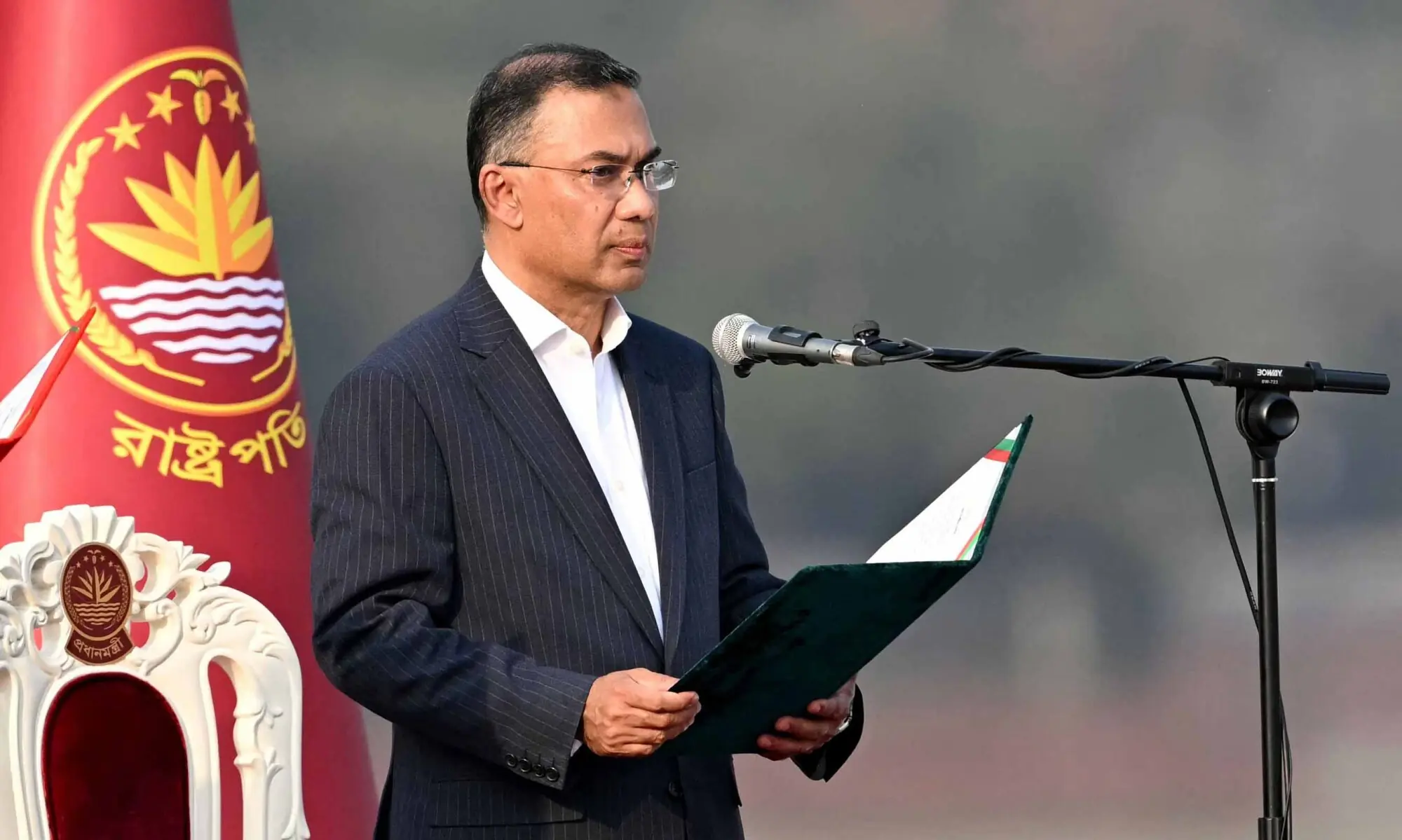
DHAKA (MNN); In a major political development, Bangladesh Nationalist Party (BNP) leader Tarique Rahman was sworn in as the Prime Minister of Bangladesh on Tuesday, marking a significant shift in the country’s political landscape following his party’s sweeping victory in the parliamentary elections.
Rahman, 60, is the son of former Prime Minister Khaleda Zia and assassinated President Ziaur Rahman. He assumes office at a critical time, facing pressing challenges that include restoring political stability, rebuilding investor confidence, and reviving key sectors of the economy—particularly the garment industry, which has suffered in the aftermath of last year’s political unrest.
End of Transitional Period
The elections followed a turbulent period in Bangladesh’s history. In 2024, a youth-led uprising—driven largely by Generation Z activists—resulted in the ousting of Sheikh Hasina’s government. Subsequently, an interim administration headed by Nobel laureate Muhammad Yunus was formed to oversee the transition and ensure credible elections.
Under Yunus’s leadership, the caretaker government managed the country through the sensitive transitional phase, paving the way for democratic elections and a peaceful transfer of power.
Unconventional Swearing-In Ceremony
Breaking with tradition, the swearing-in ceremony was held outdoors at the South Plaza of the Jatiya Sangsad Bhaban, the national parliament building, rather than at Bangabhaban, the official residence of the president where such ceremonies are typically conducted.
President Mohammed Shahabuddin administered the oath to Rahman and his cabinet in the presence of senior political leaders, diplomats, civil and military officials, and representatives from several invited countries, including China, India, and Pakistan.
The decision to hold the ceremony at the parliament complex was widely seen as a symbolic gesture emphasizing transparency, public engagement, and democratic renewal.
Election Results Reshape Political Landscape
The BNP secured a commanding two-thirds majority in parliament, marking its return to power after nearly two decades. The BNP-led coalition won 212 seats, giving it a decisive mandate to govern.
Jamaat-e-Islami, contesting its first election since a 2013 ban was lifted following Sheikh Hasina’s removal, secured a record 68 seats. Along with its allies, including the National Citizen Party—led by youth activists prominent in last year’s uprising—Jamaat will form the opposition.
The Awami League, led by Sheikh Hasina, was barred from contesting after its registration was revoked by the Election Commission, dramatically altering the electoral contest.
A Long Political Journey
Tarique Rahman’s rise to the premiership marks the culmination of a long and often turbulent political journey. He returned to Bangladesh last year after 17 years of self-imposed exile in London, arriving shortly before the death of his mother, Khaleda Zia.
Over the years, political rivals have criticized Rahman and raised corruption allegations against him, which he has consistently denied. His return to the country reinvigorated BNP supporters and significantly reshaped the party’s election campaign.
In his first remarks after the election, Rahman called for calm and discipline, emphasizing the importance of maintaining peace and law and order. He urged his supporters to avoid retaliation and warned against any form of chaos, signaling a commitment to stability and national reconciliation.
Lawmakers Sworn In
Earlier on Tuesday, newly elected lawmakers were sworn into parliament, becoming the first elected representatives since the deadly 2024 uprising. Chief Election Commissioner AMM Nasir Uddin administered the oath, with members pledging loyalty to Bangladesh and its constitution.
Although only seven women were directly elected, an additional 50 seats reserved for women will be allocated to parties in proportion to their share of the vote. Four members of minority communities secured seats, including two Hindus, who represent approximately seven percent of Bangladesh’s predominantly Muslim population.
Economic Priorities and Public Expectations
Despite weeks of tension ahead of the polls, election day passed without major incidents, and the country has so far reacted to the results with relative calm.
Analysts believe the new government’s success will largely depend on its ability to stabilize and strengthen the economy. Reviving the garment sector, boosting exports, attracting foreign investment, and generating employment opportunities are expected to top Rahman’s agenda.
Observers argue that if the BNP can effectively address economic challenges, it will create broader stability and make it easier for the government to tackle other pressing national issues.
Regional and International Reactions
Following Rahman’s swearing-in, Pakistani President Asif Ali Zardari congratulated him on becoming prime minister and described the BNP’s victory as decisive. In a statement shared by the President’s Secretariat, Zardari expressed best wishes for Bangladesh’s stability and prosperity and voiced hope for stronger bilateral ties and regional peace.
Prime Minister Shehbaz Sharif also extended warm congratulations, expressing his desire for close and meaningful engagement to further strengthen cooperation between the two countries.
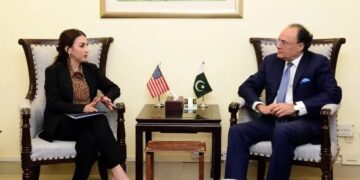
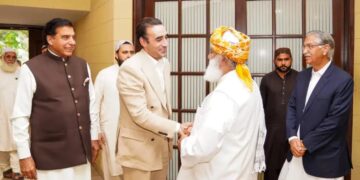
Pakistan’s Planning Minister Ahsan Iqbal, who attended the ceremony in Dhaka, conveyed good wishes on behalf of the Pakistani government and people. He described the event as a historic moment in Bangladesh’s democratic journey.
Iqbal also met with former interim leader Muhammad Yunus, congratulating him on successfully guiding the country through the transitional period. Discussions reportedly focused on enhancing trade, restoring direct air connectivity, strengthening people-to-people contacts, and promoting economic cooperation in light of evolving regional and geopolitical dynamics.
He highlighted the shared cultural and historical ties between Pakistan and Bangladesh and emphasized the importance of transforming those affinities into structured economic partnerships, academic exchanges, and collaborative regional initiatives.
A New Chapter Begins
Tarique Rahman’s leadership signals the beginning of a new political chapter for Bangladesh. With a strong parliamentary majority, his government has the mandate to pursue reforms and implement its policy agenda.
However, significant challenges remain. Restoring political trust, healing divisions from recent unrest, strengthening democratic institutions, and delivering tangible economic improvements will determine the long-term success of the new administration.
As Bangladesh enters this new phase, both domestic and international observers will be closely watching how the Rahman government navigates the complex political and economic realities ahead. The coming months are expected to shape not only the country’s internal trajectory but also its role within the broader South Asian region.