




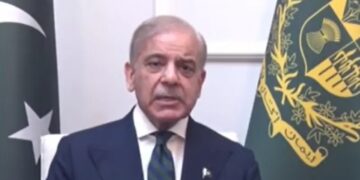
















































ISLAMABAD (MNN); Prime Minister Shehbaz Sharif on Wednesday took notice of recent changes introduced by the National Electric Power Regulatory Authority (Nepra) concerning solar consumers and directed the Power Division to file a review appeal against the decision.
Earlier this week, Nepra revised the terms for all existing and future net-metered solar consumers, commonly known as prosumers. The move effectively ends the current net-metering regime and replaces it with a net-billing system. The regulator said the step was aimed at managing the growing share of solar energy in the system and protecting the costly and inefficient state-run power network.
According to a statement issued by the Prime Minister’s Office (PMO), the premier took “immediate notice” of the matter amid widespread criticism from lawmakers across party lines, including the ruling ally PPP and opposition PTI.
The PM directed the Power Division to promptly submit a review petition before Nepra to ensure maximum protection of existing consumer contracts. He observed that the burden of around 466,000 solar users should not be shifted onto 37.6 million domestic consumers who rely on electricity from the national grid.
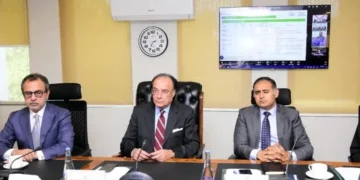
He further instructed the Power Division to formulate a comprehensive strategy on the issue. The directives were issued during a high-level meeting chaired by the prime minister and attended by Deputy PM Ishaq Dar, Power Minister Awais Leghari, Economic Affairs Minister Ahad Cheema, Information Minister Attaullah Tarar, Minister of State for Finance Bilal Azhar Kiyani and PM’s adviser Muhammad Ali.
Power Minister Defends Nepra Move
Speaking in the Senate a day earlier, Power Minister Awais Leghari defended Nepra’s decision, saying the changes were intended to ease the financial burden on consumers.
“Amending regulations in line with the law and Constitution is the regulator’s mandate,” he said, adding that he would not retreat from the position. He clarified that the move was regulatory in nature and not a policy shift.
Shift from Net-Metering to Net-Billing
Energy stakeholders and policy experts have cautioned that the proposed Prosumer Regulations 2025 could undermine a decade of citizen-driven solar growth.
Under the new rules, all existing registered prosumers will immediately transition from net-metering to net-billing. Their exported electricity units will now be credited for only one month instead of the current three-month adjustment period. However, other contract terms will remain valid until the completion of their seven-year agreements.
Under net-billing, electricity generated by a prosumer is purchased by the distribution company (Disco) at the National Average Energy Purchase Price (NAEPP), around Rs10 per unit. Meanwhile, electricity consumed from the grid will be billed separately at Rs37 to Rs55 per unit, depending on the slab, excluding taxes and surcharges.
The new regulations also restrict prosumers from installing solar capacity beyond their originally sanctioned load, effectively cutting the allowable expansion by half.
For new prosumers, contracts will be limited to five years. Their exported units will be purchased at Rs11 per unit, compared to Rs26 under existing agreements. Surplus generation will be calculated separately, and consumers will be billed for the net difference instead of benefiting from the previous unit-for-unit adjustment mechanism.
Concerns and Regulatory Justification
Both the government and Nepra have attributed grid instability and rising capacity payments to prosumers with excess solar installations and unregistered systems. However, critics note that the new regulations do not clearly address these issues.
Nepra maintains that the updated framework introduces clearer procedures, stricter technical standards and a revised billing system to better integrate distributed solar generation into the national grid while ensuring system stability and financial sustainability.