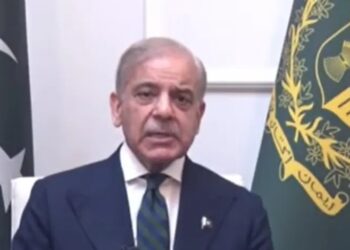
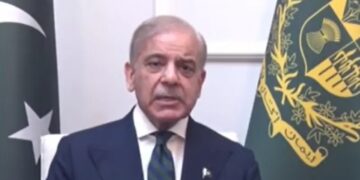



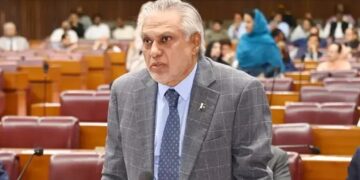



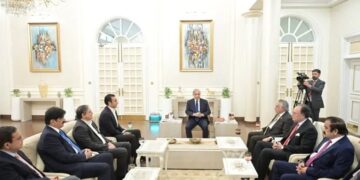
































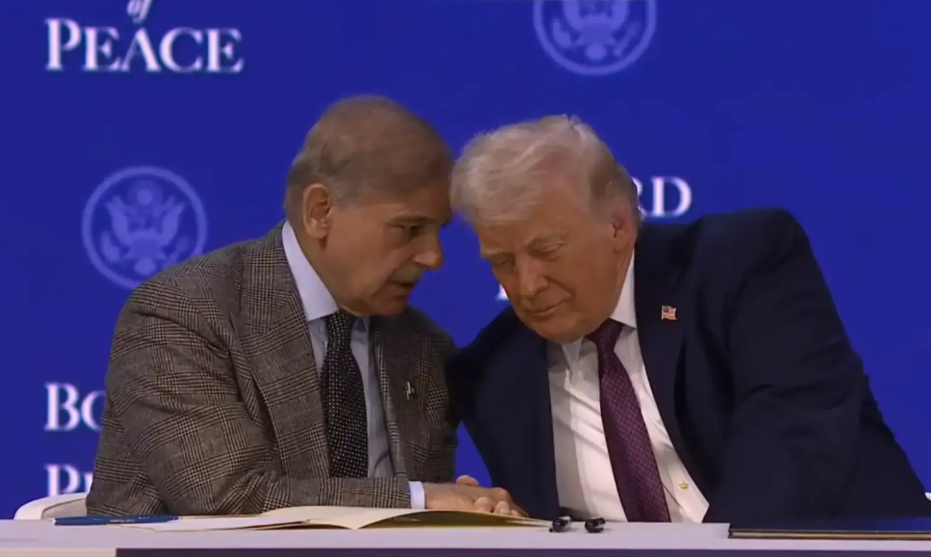
ISLAMABAD: Prime Minister Shehbaz Sharif is likely to travel to Washington on February 18 to represent Pakistan at the inaugural leaders’ meeting of US President Donald Trump’s Board of Peace, scheduled for February 19 at the US Institute of Peace.
The first session will centre on Gaza’s post-war reconstruction. The formal invitation highlights the anticipated attendance of “heads of state, heads of government, and international figures,” while the gathering is also expected to finalise the board’s mandate, structure, and operational framework.
Eight Muslim-majority countries are set to participate Saudi Arabia, Turkey, Egypt, Jordan, Indonesia, Pakistan, Qatar, and the UAE with an expectation that Muslim participants will present a coordinated stance on Gaza-related concerns. These are expected to include calls to stop Israeli ceasefire violations and to secure durable peace guarantees, viewed as critical for reconstruction to move forward. Mechanisms to ensure long-term stability may also come under discussion.
All 22 invitees have already joined the Board of Peace. Pakistan became a member in late January and signed the founding charter on January 22 during the World Economic Forum in Davos, alongside representatives from around two dozen countries.
Islamabad’s participation reflects its ongoing diplomatic engagement on Gaza, with officials reiterating Pakistan’s continued support for Palestinian rights and international law, stressing that this position remains unchanged.
Diplomatic sources describe the February 19 meeting as largely organisational and financial, with expectations that it will also serve as a fundraising conference. Talks will address the board’s structure, mandate, secretariat, and operational direction. While troop contributions may be discussed, any decision is expected only after the framework is fully established.
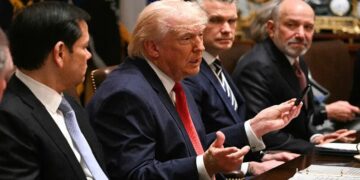
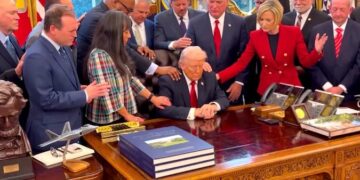
President Trump launched the Board of Peace late last month as part of his broader Gaza peace and transition initiative and will chair the Washington meeting. He has presented the board as a platform for reconstruction and international cooperation.
While analysts have welcomed the board’s stated aims, others have expressed concerns over its broader implications. Israeli Prime Minister Benjamin Netanyahu, who is scheduled to meet President Trump on February 18, is expected to attend, though his participation has not yet been officially confirmed.
The meeting will also address the implementation of the ceasefire and Gaza’s future governance.
The Board of Peace was initially proposed in September 2025 as part of a 20-point Gaza peace plan following a ceasefire between Israel and Hamas earlier that year. Its creation was later endorsed by a UN Security Council resolution.
Resolution 2803, adopted in November, authorized international cooperation for Gaza’s reconstruction. The board’s charter assigns humanitarian and reconstruction responsibilities and allows for wider conflict resolution roles a scope that has drawn mixed reactions globally. Several Western allies have voiced reservations related to structure, financing, and long-term authority, while some countries have opted not to participate.
Pakistan has taken what officials describe as a cautious approach, stressing that its engagement is not unconditional and is aimed at advocating Palestinian self-determination in line with UN resolutions and international law.
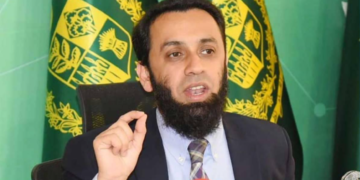
Foreign Office spokesperson Tahir Andrabi previously outlined Pakistan’s position, emphasising the need for a lasting ceasefire, humanitarian access, and reconstruction.
Hungarian Prime Minister Viktor Orbán has confirmed his attendance, as has Indonesian President Prabowo Subianto, along with several other Muslim leaders. Some countries, including India, are expected to stay away from the meeting.