































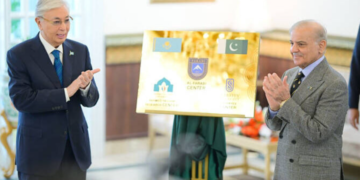




ISLAMABAD (MNN); The Institute of Regional Studies (IRS), Islamabad, through its Central Asia Program for Regional Cooperation and Connectivity, on Saturday unveiled an Action Plan aimed at strengthening Pakistan–Kazakhstan relations ahead of the first official visit of Kazakh President Kassym-Jomart Tokayev to Pakistan scheduled for February 2026.
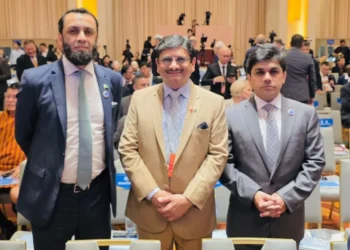
The curtain-raiser event, titled “Understanding the Action Plan of Cooperation Between Astana and Islamabad,” brought together diplomats, academics, and policy experts to review the bilateral cooperation framework and explore new avenues for enhancing ties between the two countries.
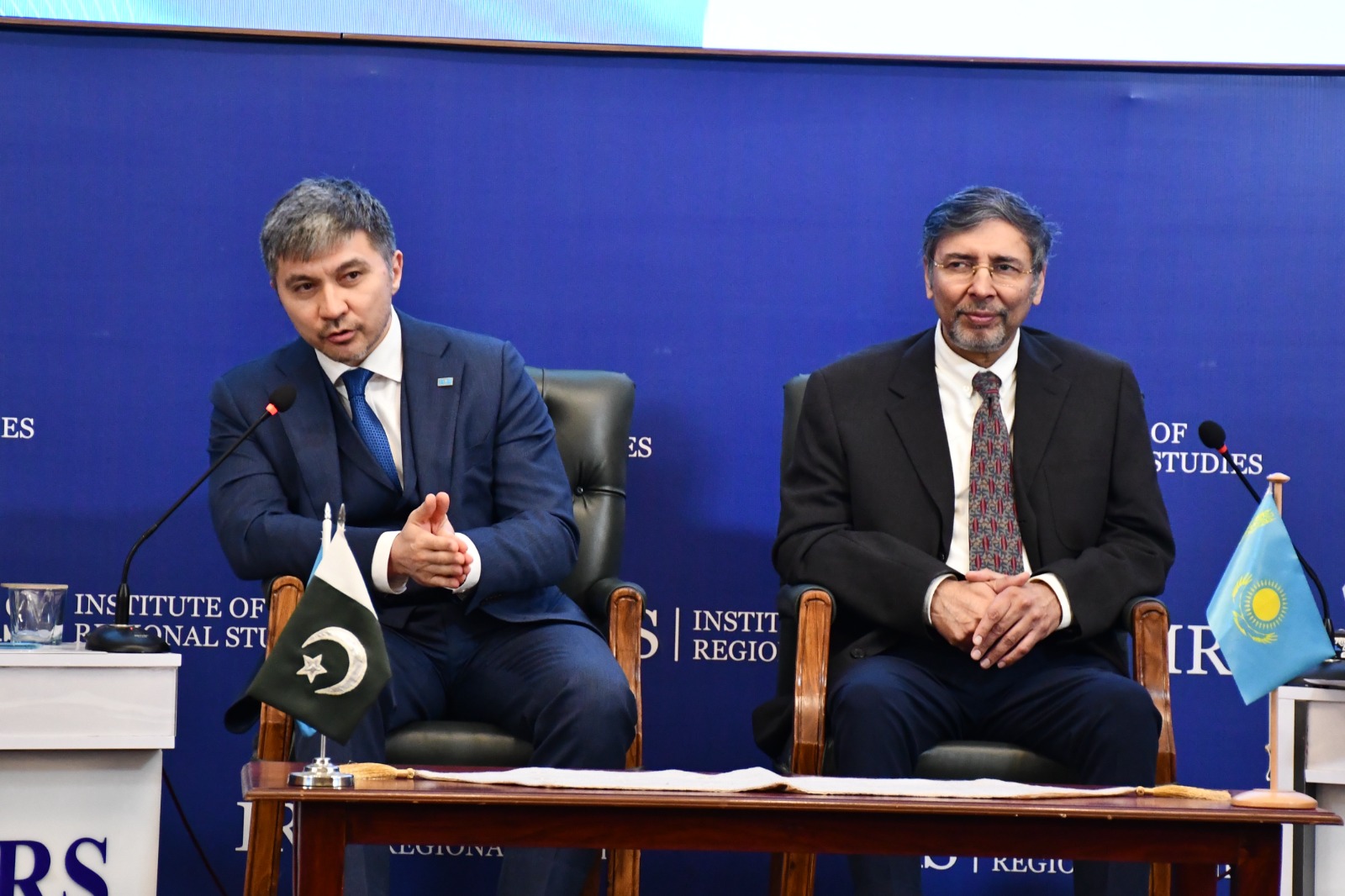
In his opening remarks, IRS President Ambassador Jauhar Saleem welcomed Kazakhstan’s Ambassador to Pakistan, Yerzhan Kistafin, and underscored the importance of President Tokayev’s upcoming visit. He said Pakistan and Kazakhstan share strong political relations and deep cultural links, stressing the need to convert these historic bonds into practical, outcome-oriented cooperation. He added that the visit would play a pivotal role in strengthening bilateral mechanisms, operational linkages, and regional diplomatic engagement.
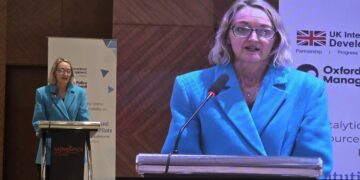
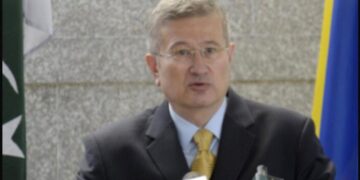
Delivering the keynote address, Ambassador Yerzhan Kistafin recalled the longstanding friendship between Pakistan and Kazakhstan, noting that Pakistan was among the first countries to recognize Kazakhstan after its independence in 1991. He highlighted early high-level exchanges that laid the foundation for sustained diplomatic relations over the decades.
The Kazakh envoy outlined his country’s strategic emphasis on regional connectivity and economic cooperation, with a focus on trade facilitation, infrastructure development, and business-to-business engagement. He said Kazakhstan aims to transform from a landlocked to a land-linked country by connecting Central Asia with the Middle East, Europe, and China, emphasizing the significance of the Karakoram Highway and prospective railway links in enhancing Pakistan–Kazakhstan connectivity.
Ambassador Kistafin also pointed to strong potential for cooperation in textiles, pharmaceuticals, finance including Islamic banking, education, tourism, sports, and culture to deepen people-to-people contacts. He stressed the need for joint efforts to address shared regional challenges such as security concerns, drug trafficking, and language barriers, while highlighting youth engagement, academic collaboration, and cultural exchanges as key drivers of mutual understanding.
A question-and-answer session followed, featuring in-depth discussions on transport and railway connectivity, regional security, trade facilitation, defence cooperation, and youth exchanges. Participants reiterated the shared commitment to regional peace, enhanced connectivity, and expanded economic and cultural cooperation.
In his concluding remarks, Ambassador Jauhar Saleem expressed confidence in the future of Pakistan–Kazakhstan relations and reaffirmed the IRS’s commitment to advancing regional understanding through its Central Asia Program, led by Hamzah Rifaat. He also welcomed Azerbaijan’s inclusion in the wider Central Asian development framework and reiterated the Institute’s guiding principle, “Know thy neighbours,” emphasizing sustained dialogue as the foundation of long-term cooperation.