
















































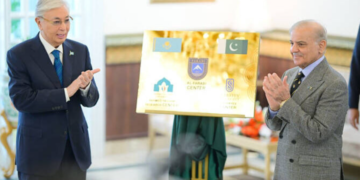





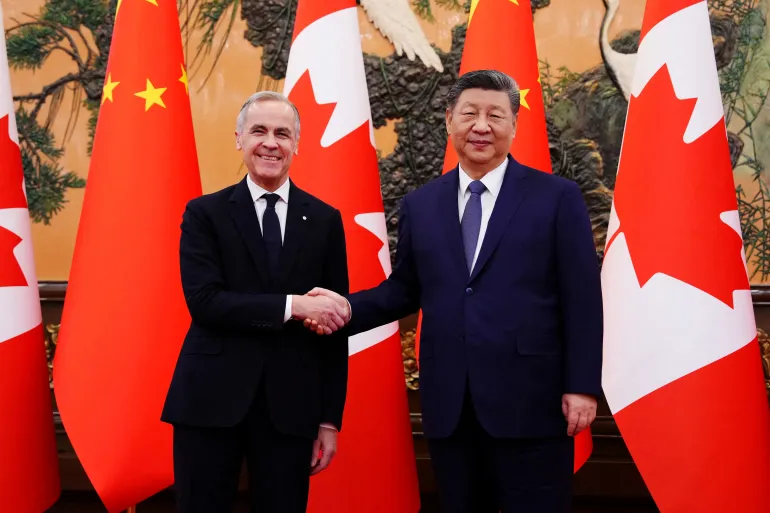
BEIJING (MNN); Canada and China have agreed on a preliminary trade arrangement aimed at reducing tariffs on electric vehicles and canola, Prime Minister Mark Carney announced on Friday during his visit to Beijing. Both countries also pledged to dismantle trade barriers and deepen strategic cooperation.
This marks the first visit by a Canadian prime minister to China since 2017, as Carney seeks to restore relations with Canada’s second-largest trading partner after the United States, following months of diplomatic engagement.
Under the agreement, Canada will initially permit the import of up to 49,000 Chinese electric vehicles at a tariff rate of 6.1 percent under most-favoured-nation terms. Carney did not specify the duration of the arrangement. The move contrasts sharply with the 100 percent tariff imposed on Chinese EVs in 2024 by the previous government, which followed similar measures by the United States. In 2023, China exported more than 41,000 electric vehicles to Canada.
Carney said the deal restores trade conditions to pre-friction levels while offering broader benefits for Canada. He noted that building a competitive domestic EV industry would require learning from innovative partners, accessing global supply chains and stimulating local demand. He also highlighted opportunities for cooperation with China in clean energy storage and production, which could attract fresh investment.
The prime minister expressed confidence that the EV agreement would lead to significant Chinese investment in Canada’s auto sector, generate employment and accelerate progress toward net-zero targets. However, Ontario Premier Doug Ford criticised the deal, warning it could open the door to an influx of low-cost Chinese vehicles without firm guarantees of reciprocal investment in Canada’s economy or supply chains.
China had earlier imposed retaliatory tariffs on more than $2.6 billion worth of Canadian agricultural and food exports, including canola products, following Canada’s earlier trade restrictions. These measures contributed to a notable decline in China’s imports of Canadian goods in 2025.
Under the new understanding, Canada expects China to reduce tariffs on canola seed to about 15 percent by March 1, down sharply from the existing combined rate of 84 percent. Tariffs on canola meal, lobsters, crabs and peas are also expected to be lifted on a non-discriminatory basis until at least the end of the year. Carney said the agreement could unlock nearly $3 billion in export orders for Canadian farmers and seafood producers.
Carney also said Chinese President Xi Jinping had committed to facilitating visa-free travel for Canadians, though further details were not provided. Both sides agreed to resume high-level economic and financial dialogue and expand cooperation in agriculture, energy and green technology.