

























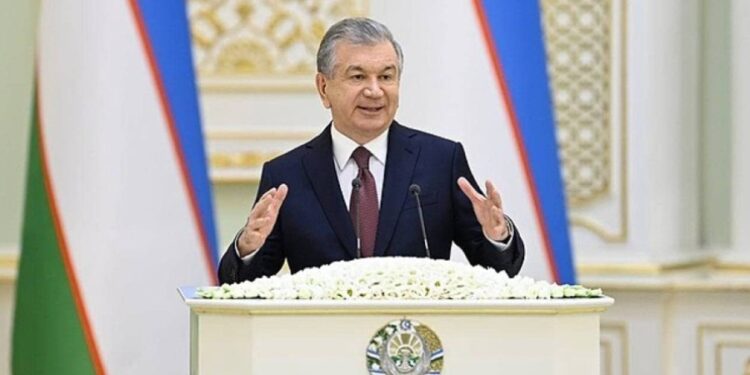
TASHKENT (MNN); President of Uzbekistan Shavkat Mirziyoyev on December 26 delivered a wide-ranging address to the Oliy Majlis and the people of Uzbekistan, outlining major achievements of recent years and declaring 2026 as a decisive year for deep and fundamental reforms across all sectors of the country.
Opening his address, President Mirziyoyev said that over the past nine years Uzbekistan has travelled a significant path of transformation alongside its people. He noted that the economy has acquired new quality, market mechanisms have expanded, social protection has strengthened, and the rule of law has been reinforced. Most importantly, he said, the results of reforms are now visible in every mahalla, household and individual’s daily life.
Despite difficult global and regional circumstances, the president said democratic reforms continued consistently. With public support, the energy of youth, entrepreneurial initiative, and a foreign policy rooted in mutual benefit, Uzbekistan achieved notable progress in all spheres during 2025.
For the first time in the country’s history, gross domestic product exceeded $145 billion. Exports rose by 23 percent to $33.4 billion, while gold reserves surpassed $60 billion for the first time. Foreign investment reached $43.1 billion, accounting for nearly one-third of GDP, and international rating agencies upgraded Uzbekistan’s sovereign credit rating from BB– to BB.
Major progress was also recorded in the energy sector, with electricity generation increasing to 85 billion kilowatt-hours following structural reforms. Access to clean drinking water was expanded to 715,000 residents in 188 mahallas for the first time, while water supply improved for an additional 2.3 million people.
The president said five million people gained sustainable sources of income during the year, reducing unemployment from 5.5 percent to 4.9 percent. Around 1.5 million citizens were lifted out of poverty, and for the first time 1,435 mahallas were declared poverty-free. The national poverty rate declined from 8.9 percent at the start of the year to 5.8 percent.
Highlighting social reforms, President Mirziyoyev said that a completely new social protection system now provides over 100 types of services through mahallas, including loans, subsidies and compensation. As a result, more than 8.5 million people have emerged from poverty since reforms began, and the original target to halve poverty by 2026 has already been achieved ahead of schedule.
He also praised the role of talented youth, noting their achievements in education, science, culture, sports and the arts, which are contributing to the development of a New Uzbekistan.
On the international front, Uzbekistan has increasingly positioned itself as a platform for global dialogue. In 2025, the country hosted major international events including the Inter-Parliamentary Union Assembly, UNESCO General Conference session, the Central Asia–EU Summit and an International Climate Forum.
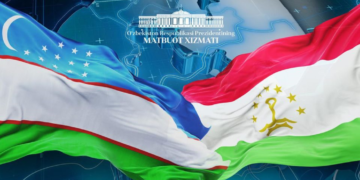
The president highlighted a historic agreement signed in March between Uzbekistan, Tajikistan and Kyrgyzstan in Khujand, marking the first-ever trilateral border junction agreement and the adoption of a Declaration of Eternal Friendship. He also welcomed the decision to admit Azerbaijan as a full member of the Central Asian cooperation format, calling it a step that will strengthen regional connectivity and stability.
Uzbekistan’s global partnerships were further expanded through the signing of an Enhanced Partnership and Cooperation Agreement with the European Union, the Central Asia–US Summit, the Central Asia–Japan leaders’ meeting, and engagements within the Commonwealth of Independent States.
Emphasising social cohesion, President Mirziyoyev underscored the central role of the mahalla system, describing it as a cornerstone of unity, solidarity and national identity. He proposed declaring 2026 as the “Year of Mahalla Development and Social Prosperity,” an initiative warmly endorsed by those present.
Looking ahead, the president said Uzbekistan is entering a decisive stage in its national transformation, with the goal of joining the ranks of upper-middle-income countries. He stressed that citizens across all regions must tangibly feel the impact of reforms in their daily lives.
Six key priority areas were outlined for 2026. These include comprehensive development of mahalla infrastructure, transitioning the economy toward innovation and technology, stimulating domestic demand, reshaping the labour market, ensuring ecological balance, and continuing reforms in public administration and the judicial system.
Among major economic initiatives, the government plans to launch 782 new industrial and infrastructure projects worth $52 billion in 2026, with GDP projected to reach $167 billion. Artificial intelligence development will accelerate through new data centers, supercomputers and AI labs, while Uzbekistan will begin preparations to launch its first satellite and send its first national astronaut into space.
The president also announced ambitious plans for housing, tourism, transport and vocational education, alongside strong environmental measures aimed at reducing emissions, expanding green zones and conserving water resources.
Concluding his address, President Mirziyoyev called for unity, accountability and determination, stating that corruption would be treated as a national emergency in 2026. He reaffirmed commitment to openness, freedom of speech and a balanced foreign policy, expressing confidence in the strength and potential of the Uzbek people and youth to achieve the nation’s long-term goals.