































Web Desk (MNN): Pakistan has formally registered a diplomatic protest with the United Kingdom after threats were made against Chief of Defence Forces Field Marshal Asim Munir during a Pakistan Tehreek-e-Insaf (PTI) protest outside the Pakistani consulate in Bradford.
The Foreign Office confirmed on Friday that a demarche was issued to the UK’s Acting Head of Mission in Islamabad, Matt Cannell. FO spokesperson Tahir Hussain Andrabi said the move followed what authorities described as alarming and provocative conduct by demonstrators at the overseas PTI gathering.
United Kingdom’s Deputy Head of Mission, Cannell, was summoned to the Ministry of Foreign Affairs at around 2pm as British High Commissioner Jane Marriott was not present in the country.
Moments later, a British High Commission spokesperson maintained that the UK police and prosecutors operate independently of government.
“Where a foreign government believes a crime has been committed, they should provide all relevant material to their UK police liaison,” the spokesperson said.
“Any material that appears to break UK law will be reviewed by the police and may lead to a criminal investigation,” it added.
According to a video circulated by the “UKPTIOFFICIAL” social media account, a woman speaking at the protest issued a threat involving a car bomb against Field Marshal Munir, drawing a reference to the 1988 plane crash that killed former president General Zia-ul-Haq. Officials said the remarks amounted to explicit death threats.
Sources said PTI’s official platforms were used to mobilise protesters in the UK, while demonstrators employed inflammatory and objectionable language against Pakistan’s senior military leadership. The government stressed that British territory must not be used for activities aimed at destabilising Pakistan and urged UK authorities to take strict legal action against those involved.
As British High Commissioner Jane Marriott was out of the country, Deputy Head of Mission Matt Cannell was summoned to the Ministry of Foreign Affairs to receive the demarche. Earlier, Pakistan shared the video footage and its transcript with UK authorities in Islamabad and London.
In a formal communication, Islamabad expressed grave concern over what it termed a serious misuse of British territory to incite terrorism, violence and internal destabilisation of a sovereign state. The letter noted that PTI UK’s official social media account circulated content in which individuals present in the UK openly called for the assassination of Field Marshal Munir.
Officials warned that the messaging was deliberately amplified for audiences inside Pakistan with the apparent aim of provoking unrest, street violence and confrontation with state institutions. Pakistan recalled that it has raised similar concerns in the past, but said the current incident marked a serious escalation.
“Freedom of expression does not include the freedom to incite murder or civil violence,” the communication said, adding that political asylum does not grant immunity to promote terrorism or destabilisation abroad.
Earlier, Two ministers of state from the Pakistan Muslim League-Nawaz (PML-N) said on Friday that the Pakistani government has formally approached British authorities, requesting legal action over what it termed “inciteful” statements circulating on social media.
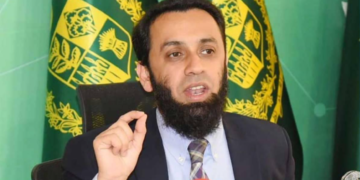
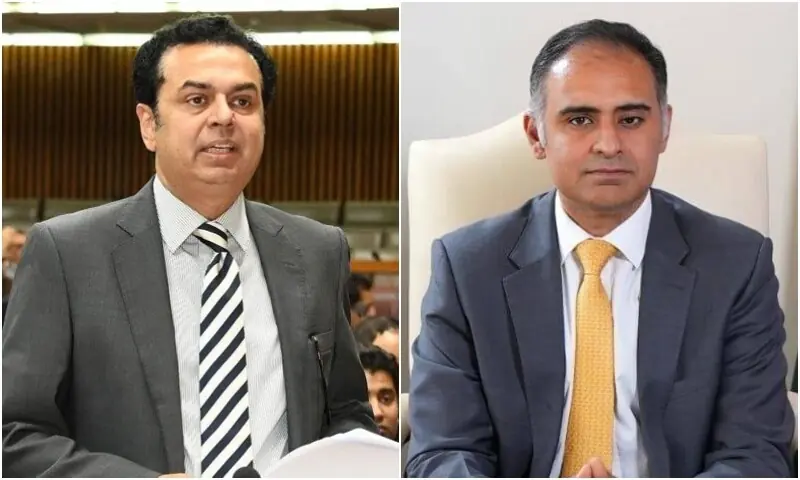
Minister of State for Interior Tallal Chaudhry and Minister of State for Finance Bilal Azhar Kayani confirmed the development, with Kayani stating that the video in question contained threats against the head of the armed forces.
Kayani also pointed to the involvement of the opposition Pakistan Tehreek-e-Insaf (PTI), while Chaudhry refrained from naming any political party.
The video shows a woman, surrounded by individuals holding PTI flags, making a violent remark in which she wishes that a person be “blown up in a car,” without explicitly naming anyone.
Speaking on the matter, Tallal Chaudhry said Pakistan had officially written to the UK government and expected action in line with British laws and judicial procedures. He stressed that Pakistan reserves the right to pursue legal remedies against individuals who target its institutions.
Chaudhry said similar complaints had been raised in the past regarding the misuse of social media to incite hatred against state institutions and political figures, adding that video evidence of the incident was available.
“This is neither a political issue nor a matter of free speech,” he said, describing the remarks as a clear violation of international law as well as the UK’s Terrorism Act 2006. He emphasised that states are responsible for ensuring that individuals residing within their borders do not incite violence or rebellion against other sovereign countries.
He expressed concern over the specific reference to a car bomb, calling it a targeted and deliberate threat rather than a general remark. Pakistan, he said, had conveyed these serious concerns to the British authorities and would expect appropriate action.
Chaudhry reiterated that promoting violence or terrorism could not be justified as freedom of expression and warned that Pakistan had other options should the UK fail to respond.
Minister of State for Finance Bilal Azhar Kayani termed the incident “unacceptable” and “deeply unfortunate,” alleging that PTI had a pattern of promoting threats and violence under the guise of political activism.
He said the party had crossed all limits by allegedly threatening the army chief, calling it a serious national security issue rather than political dissent. Referring to past incidents, including May 9 violence, Kayani claimed PTI had repeatedly used politics as a cover for violent actions.
He said the government’s immediate priority was to seek legal action by the UK authorities but added that Pakistan was also considering other legal avenues.
Earlier this month, Interior Minister Mohsin Naqvi had said the government would pursue the repatriation of individuals from the UK involved in targeting Pakistan’s state institutions online. On December 4, Naqvi submitted extradition requests for former SAPM Shahzad Akbar and YouTuber Adil Raja, accusing them of spreading anti-state propaganda.