





































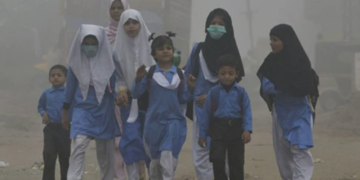
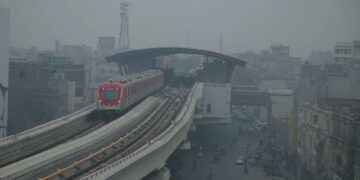











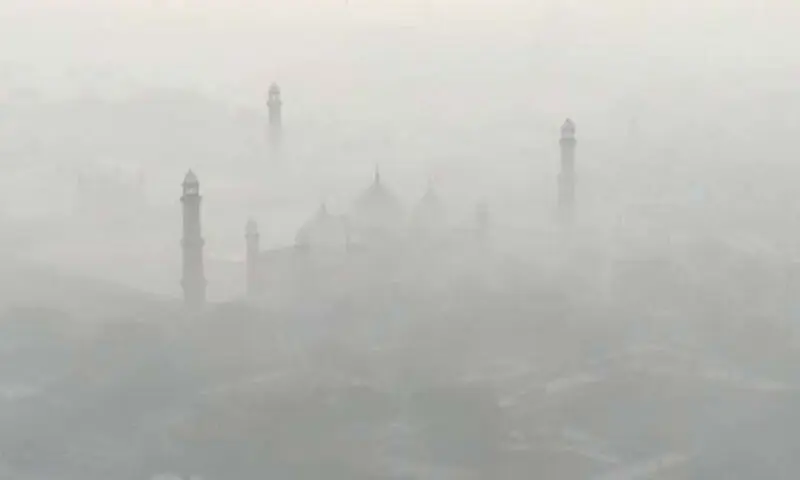
ISLAMABAD (MNN); A comprehensive national assessment released on Tuesday by the Pakistan Air Quality Initiative (PAQI) has concluded that hazardous air quality levels in Pakistan’s major urban centres are primarily driven by local emission sources.
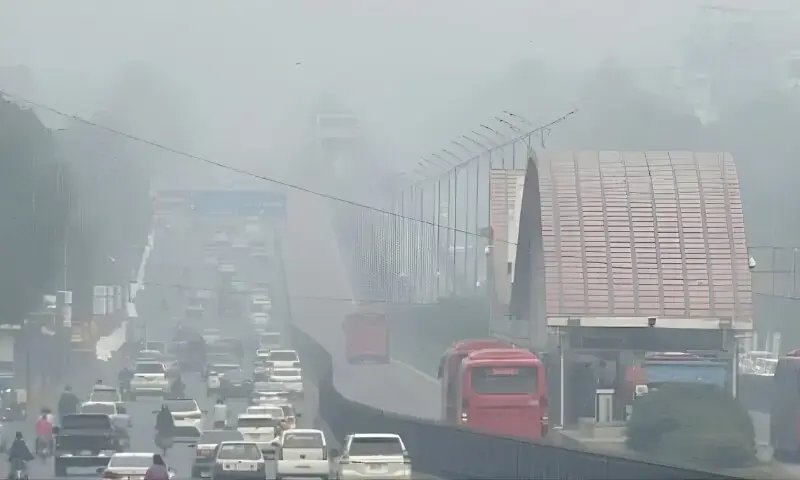
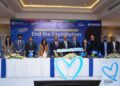
PAQI, an independent research and advocacy organisation focused on combating air pollution, published its landmark study titled Unveiling Pakistan’s Air Pollution: A National Landscape Report on Health Risks, Sources and Solutions. The report compiles Pakistan’s first multi-sectoral emissions inventories and asserts that urban smog originates largely within the country’s own airsheds.
According to the study, toxic air pollution shortens the life expectancy of the average Pakistani by 3.9 years.
The analysis is based on satellite-derived aerosol data, chemical transport modelling and PAQI’s nationwide real-time monitoring network, the largest open-access air-quality system in Pakistan. It maps the sources, intensity and health implications of PM2.5 pollution across major cities including Karachi, Lahore, Islamabad, Rawalpindi and Peshawar.
PM2.5 refers to microscopic cancer-causing particles that can penetrate the bloodstream. The World Health Organisation (WHO) recommends an annual average concentration of no more than 5 µg/m³ and a 24-hour limit of 15 µg/m³.
The report highlights considerable variation in emission profiles among cities. In Lahore, transport, industrial activity and brick kilns are identified as the main contributors to particulate pollution. Karachi’s emissions are dominated by industrial output, which accounts for nearly half of its PM2.5 levels. In Islamabad and Rawalpindi, transport remains the leading source, while Peshawar shows the highest per-capita exposure due to valley topography and transit trade movement.
The publication represents almost a decade of work aimed at establishing a transparent, evidence-based framework for air-quality governance. Its chapters place emissions data within a broader context of constitutional rights, environmental justice and institutional reform. Contributors include former justice Syed Mansoor Ali Shah, Senator Sherry Rehman and Abid Suleiri, among others.
PAQI founder Abid Omar said, “This inventory ends the era of speculation. For the first time, Pakistan has a scientific, data-backed map of its pollution sources. The evidence is clear: our crisis is local and structural. The next step is implementation.”
Punjab EPA disputes findings, calls report ‘inaccurate’
Punjab Environment Protection Agency (EPA) spokesperson Sajid Bashir rejected PAQI’s conclusions regarding local emission sources, telling Dawn that the organisation lacked sufficient data to produce the report.
He stated that the government was investing billions of rupees to curb emissions and that more than 80 per cent of Lahore’s industries had adopted cleaner technologies.
Bashir criticised the report for lacking accurate data on light and heavy vehicles, motorcycles, rickshaws and brick kilns operating nationwide. He described traffic and brick kilns as the true major contributors to pollution and urged PAQI to disclose its data sources, satellite imagery origin and laboratory processes.
He further argued that the report unfairly targeted the government’s efforts, noting that educational institutions had not been closed this year due to smog and insisting that the smog crisis had been significantly reduced.
Lahore sees major improvement in November air quality
Separately, PAQI said last week that Lahore saw substantial relief from severe smog this November compared to the emergency conditions recorded in 2024.
Data for November 2025 shows a 56 per cent drop in daily peak PM2.5 levels. The maximum concentration fell to 237 µg/m³, compared to a dangerous 539 µg/m³ recorded on November 14, 2024.
In October, global monitoring platform IQAir ranked Lahore as the second most polluted city in the world.