



















































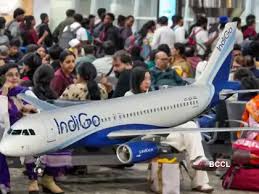
Web Desk (MNN); Thousands of flights by India’s largest airline, IndiGo, have been cancelled over the past week, causing major disruption during the peak travel period in the world’s most populous country.
The crisis began last week due to a shortage of pilots, following IndiGo’s failure to comply with new government guidelines on pilots’ rest and duty hours. The situation has highlighted working conditions for Indian pilots and the airline’s policies that adversely affect pay scales.
IndiGo, operating around 2,200 flights daily, has cancelled roughly 3,400 flights since December 2, marking the worst disruption in the carrier’s 20-year history. Flights were affected in major cities including New Delhi, Mumbai, Ahmedabad, and Hyderabad, stranding thousands of passengers. The airline expects operations to normalize by December 15.
With IndiGo holding 65% of India’s domestic market, travel disruption and fare increases have been significant, prompting government intervention and fare caps. Together with Air India, these two carriers control 92% of the market. IndiGo remains the only airline connecting many smaller cities, giving it a near-monopoly in these routes.
Flight cancellations peaked on Friday with around 1,600 flights grounded, followed by 700 on Saturday, 650 on Sunday, and more than 400 on Monday.
The disruption follows the introduction of the Flight Duty Time Limitations (FDTL) regulations in early 2024, aimed at improving pilots’ working hours, rest periods, and fatigue management. Key measures included increasing mandatory weekly rest from 36 to 48 hours, capping night flying hours at 10, limiting late-night landings to two per week, and submitting quarterly fatigue reports to India’s aviation regulator, DGCA.
Experts and pilot unions criticized IndiGo for poor preparation and lack of adaptation to the new rules. Vijay Gopalan, former AirAsia CFO, called the crisis a result of the airline’s “nonchalant attitude” towards compliance. The Federation of Indian Pilots highlighted hiring freezes, pay caps, and short-sighted planning as contributing factors.
Pilot salaries in India remain relatively stagnant despite long working hours, with new commercial pilots earning around 400,000 rupees ($4,400) annually and senior captains earning over 10 million rupees ($120,000), according to aviation institutes. Pay scales are lower compared to international standards, and benefits are limited mostly to staff travel, basic insurance, and compensation for license loss due to medical reasons.
Globally, aviation bodies like ICAO, EASA, and national authorities set varying rest and duty guidelines. For example, Australian pilots receive minimum 48-hour breaks per week and earn up to $268,000 AUD annually, while Canadian pilots receive at least 36 hours off per week with night duty limits of 8–10 hours. In Europe, salaries range from €32,299 ($35,000) to €113,672 ($122,776) annually, and in the US, median pilot pay was $198,100 in 2024.