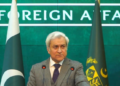





































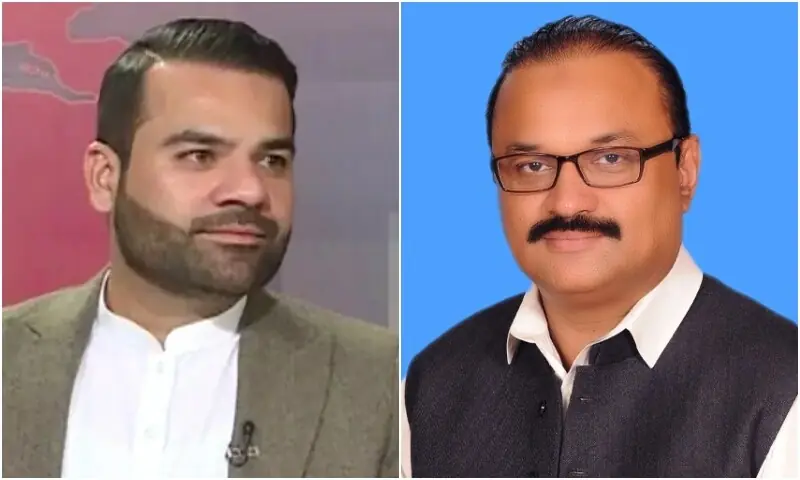
Web Desk (MNN); Minister of State for Law and Justice Barrister Aqeel Malik said on Monday that Pakistan gained nothing from the PTI’s political “project”, insisting that its actions were aimed at damaging the country rather than strengthening it.
His remarks follow ISPR Director General Lt Gen Ahmed Sharif Chaudhry’s fiery press conference on Friday, in which he accused PTI founder Imran Khan of promoting an “anti-army” narrative that he said had crossed political boundaries and turned into a “national security threat”.
The PTI, however, rejected the allegations as “ridiculous”, stressing that Imran Khan was not a security threat and criticising what it described as ongoing assaults on democracy, especially after recent constitutional amendments.
Speaking on Geo News’ programme ‘Capital Talk’, Aqeel Malik said the PTI government had actively worked against the state by writing letters to the International Monetary Fund (IMF) and lobbying US lawmakers.
He questioned whether PTI had taken a single step that benefitted Pakistan and asked what progress had been achieved in Khyber Pakhtunkhwa under the party’s long-running provincial government.
Malik argued that unlike PTI, the PML-N had never compromised on sovereignty or national security, adding that there was a stark difference between the policies of both parties.
Referring to Imran Khan’s own previous statements, he recalled that the former premier once referred to the army chief as the “father of the nation”, insisting no one could criticise him — a stark contrast to his current attacks on the military leadership, including the Chief of Defence Forces Field Marshal Asim Munir.
The minister said Pakistan’s youth had now realised that nations do not progress on slogans, empty promises or mere popularity. He acknowledged concerns regarding the 2024 elections but questioned whether Nawaz Sharif had ever written letters to the IMF or engaged in foreign lobbying.
Later in the programme, PTI Chief Whip in the National Assembly Amir Dogar joined the discussion. Responding to the allegation that Imran Khan had become a security threat, Dogar dismissed the accusations, taking a swipe at Information Minister Atta Tarar, whom he labelled a “Form 47 politician” with only 16,000 votes.
Dogar said no power could silence Imran Khan or stop the PTI from speaking and protesting, adding that the party had already endured severe hardship over the past three years.
He also reminded the audience of past examples where prominent political figures — including Fatima Jinnah, Sheikh Mujibur Rahman and Zulfikar Ali Bhutto — were labelled security threats by military rulers, noting that Pakistan’s most popular leaders had repeatedly been targeted throughout history.
He asserted that political ideas never die, even when leaders are suppressed, and argued that Pakistan’s future had been “imprisoned under a hybrid system”, drawing parallels with historical findings in the Hamoodur Rahman Commission.
Regarding Imran Khan’s social media activity, Dogar clarified that the accounts were neither handled by the party nor by Imran himself. He revealed that PTI lawmakers agreed in a parliamentary committee meeting that messages from jail should not be circulated like videos from vloggers outside prison gates.
Dogar concluded by saying the party was focused on doing whatever it could to secure the release of its leader and detained workers.