










































ISLAMABAD (MNN); Muslim and Arab nations on Friday issued a joint statement expressing their absolute rejection of any move aimed at displacing Palestinians from their homeland.
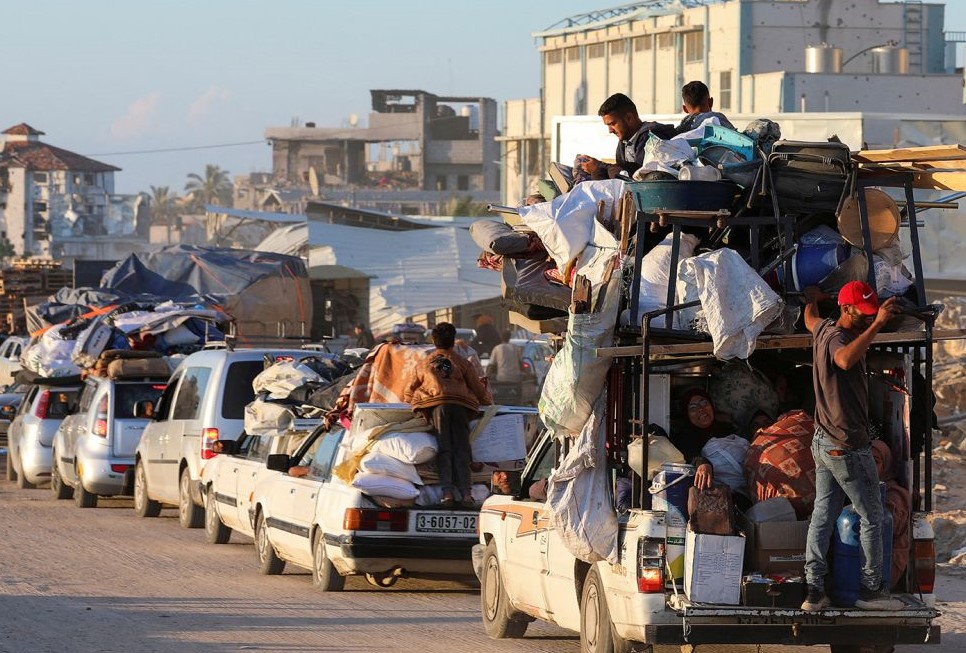
The statement came after Israel announced it would unilaterally open the Rafah border crossing to allow Gaza residents to leave the besieged enclave—an initiative swiftly dismissed by Egypt, which insisted the blockade must be lifted in both directions to ease the humanitarian crisis.
Egypt refused to support what many fear could amount to forced displacement and stressed the need to uphold the US-brokered peace plan requiring full humanitarian access.
For months, the Rafah crossing—the only non-Israeli-controlled link between Gaza and the outside world—has remained closed, severely restricting the flow of life-saving supplies.
Foreign ministers of Egypt, Jordan, the UAE, Indonesia, Turkiye, Saudi Arabia, and Qatar voiced deep concern over any attempt to use the crossing to push Palestinians out.
The ministers reaffirmed their rejection of forced displacement and emphasized adherence to the peace plan attributed to US President Donald Trump, which calls for the crossing to remain open both ways, ensures freedom of movement, and prevents any coercion on Gaza’s population to leave. They stressed the need to create conditions that allow Palestinians to remain on their land and rebuild their homeland.
They also highlighted the importance of maintaining the ceasefire, ensuring unrestricted humanitarian access, launching recovery and reconstruction efforts, and enabling the Palestinian Authority to resume its governance role in Gaza.
The ministers urged full and timely implementation of the plan to strengthen regional stability and achieve sustainable peace. They reiterated their countries’ commitment to working with the United States and international partners to implement UN Security Council Resolution 2803 and other relevant resolutions, paving the way for a just and lasting peace based on the two-state solution.
The joint statement reaffirmed support for the creation of an independent Palestinian state within the pre-June 4, 1967 boundaries, including Gaza and the West Bank, with East Jerusalem as its capital.
DAR SPEAKS TO SAUDI COUNTERPART
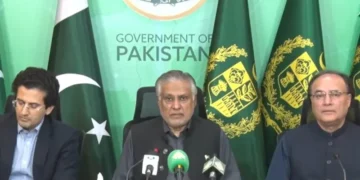
Deputy Prime Minister and Foreign Minister Ishaq Dar criticised Israel’s decision to allow only outbound movement through Rafah, describing it as a clear breach of the peace plan that ended the recent hostilities.
According to the Foreign Office, Dar spoke with Saudi Foreign Minister Prince Faisal bin Farhan and discussed regional developments, particularly the situation in Gaza.
The FO said Dar strongly condemned Israel’s unilateral move, calling it an obstacle to humanitarian access. Both sides reaffirmed their commitment to ensuring uninterrupted aid to Gaza and advancing joint efforts for lasting peace.
Meanwhile, AFP reported that negotiations on the next stage of Gaza’s ceasefire have made little progress, at a time when the truce remains extremely fragile.
The first phase involved an Israeli withdrawal on October 10 to positions that still provided control over more than half of Gaza, the release of all prisoners held by Hamas or its allies, and increased humanitarian aid entry.
All living detainees were freed on October 13, though one body remains in Gaza. Israel now demands the return of the final hostage’s remains before talks on the second phase begin, with the US, Egypt, Qatar, and Turkiye acting as mediators.
Egypt is also preparing to host a conference on Gaza’s reconstruction focused on humanitarian needs, though no date has been finalized. Progress remains stalled due to unresolved aspects of the Trump peace plan.